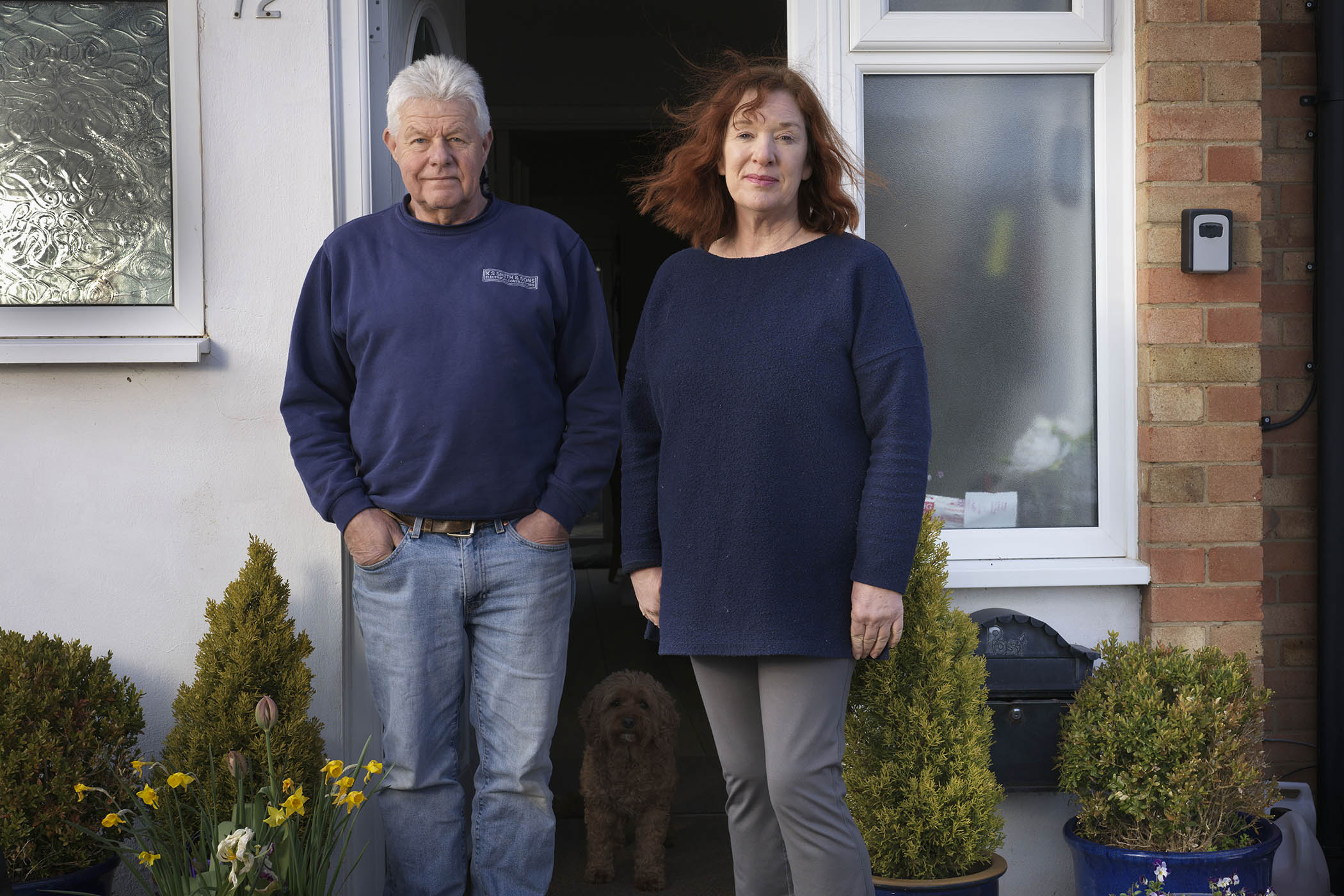



Photographs by Karen Robinson for The Observer
‘It affects your head,” says Ken Smith, an electrician in the Warwickshire town of Shipston-on-Stour. His wife, Victoria, adds: “We’re going to suffer for the rest of our lives and the value of our property is wiped.”
Six years ago their home was flooded with “raw sewage, four to five inches deep”. Then the same thing happened again. Severn Trent, the water company responsible for the area, installed no-return valves to mitigate the problem, but in the couple’s view these were only “sticking plasters”. Now sewage flooded the gardens in other houses in their row and a playing area, while “cleanish” water continues to enter the Smiths’ home. These problems are recurrent and continuing, as ample photographs and videos graphically show. “We’re stuck here in limbo just waiting for the next time it happens,” Smith says.
The cause, they believe, lies uphill from their home: a development by the housebuilder Cala Homes whose sewage drains into an existing 50-year-old system via a single pipe six inches in diameter.
The new housing was built on a site with natural springs. According to the planning permission for the project, spring water and surface water should drain separately from the sewage. It seems it doesn’t, though: the Smiths report seeing water “running like a river” through a manhole, which overloads the system. Smith says: “There were no issues with overflows before the Cala development was built.” Further developments have also been built, which means the waste water from a total of 300 new homes drain into the same old system.
This story, says Olivia Hatch, a local Green party councillor, is “one reason everyone is so scared”. The cause of their alarm is the prospect of much more of the same kind of housing, with inadequate provision for the effect on infrastructure: schools, transport and medical services, as well as drainage and flood defences. Planning applications are currently under way for 1,700 new homes on greenfield sites around the town would, according to the campaign group Save Our Shipston, increase its population by 64%.
This glut of applications has a cause. In December 2024, the Labour government revised the National Planning Policy Framework to require local authorities to identify a five-year supply of building land, which greatly strengthens the position of developers when they apply for planning permission. Appeals against refusals by local authorities have tended to go in favour of developers, and, as such processes can be expensive, cash-strapped councils are reluctant to take them on. They are incentivised, however unwillingly, to approve applications. The result, says Alice Free of Save Our Shipston, is that “the government is giving the developers carte blanche”.
Shipston’s situation is typical of many towns all over England (it’s not quite the same in Scotland, Wales and Northern Ireland). The object of these policies is to remove obstacles to the government’s stated aim of building 1.5 million new homes over the course of the current parliament – to back “the builders not the blockers”, as Keir Starmer and Rachel Reeves have put it; or, to quote a slogan on a Maga-style hat worn by the housing secretary, Steve Reed, to “Build Baby Build”. This aim is in turn driven by the palpable housing crisis.
‘If you let developers lead they’re not going to build the social housing we need, not at the quality our residents deserve’
‘If you let developers lead they’re not going to build the social housing we need, not at the quality our residents deserve’
Manuela Perteghella, Liberal Democrat MP
In Shipston, though, as in many other towns, objectors argue that the new developments don’t meet pressing housing needs. The Cotswolds town is not quite in the Jeremy Clarkson belt of what Free calls “honeypot towns”, but is still lovely enough for property values to be high. In the district of Stratford-on-Avon, of which Shipston is part, house prices are 29% above the median in England, and the house-price-to-earnings ratio is the highest in the West Midlands. For young people seeking their first home, and older people wanting to downsize, there are few existing options, and they don’t see much to help them in the new plans.
For Jack Taylor, 22, who grew up in the town and works in one of its pubs, moving into a place of his own is “a distant prospect”. He says: “I’d take whatever you can get and I’d happily share, but every time I get paid more, the prices go up.”
Newsletters
Choose the newsletters you want to receive
View more
For information about how The Observer protects your data, read our Privacy Policy
Young couples with children live with parents because they have nowhere else to go. Meanwhile, Louisa Hare, 70, a designer and printer, would like one day to find “a place that’s cheap to heat” in a community where “there’s a mixture of young and old living together”, and where people can live close to their work. She and Alice Free cite a small development of affordable and sustainable homes, built by a community land trust about 10 miles away, in Hook Norton, as an example of what they would like to see.
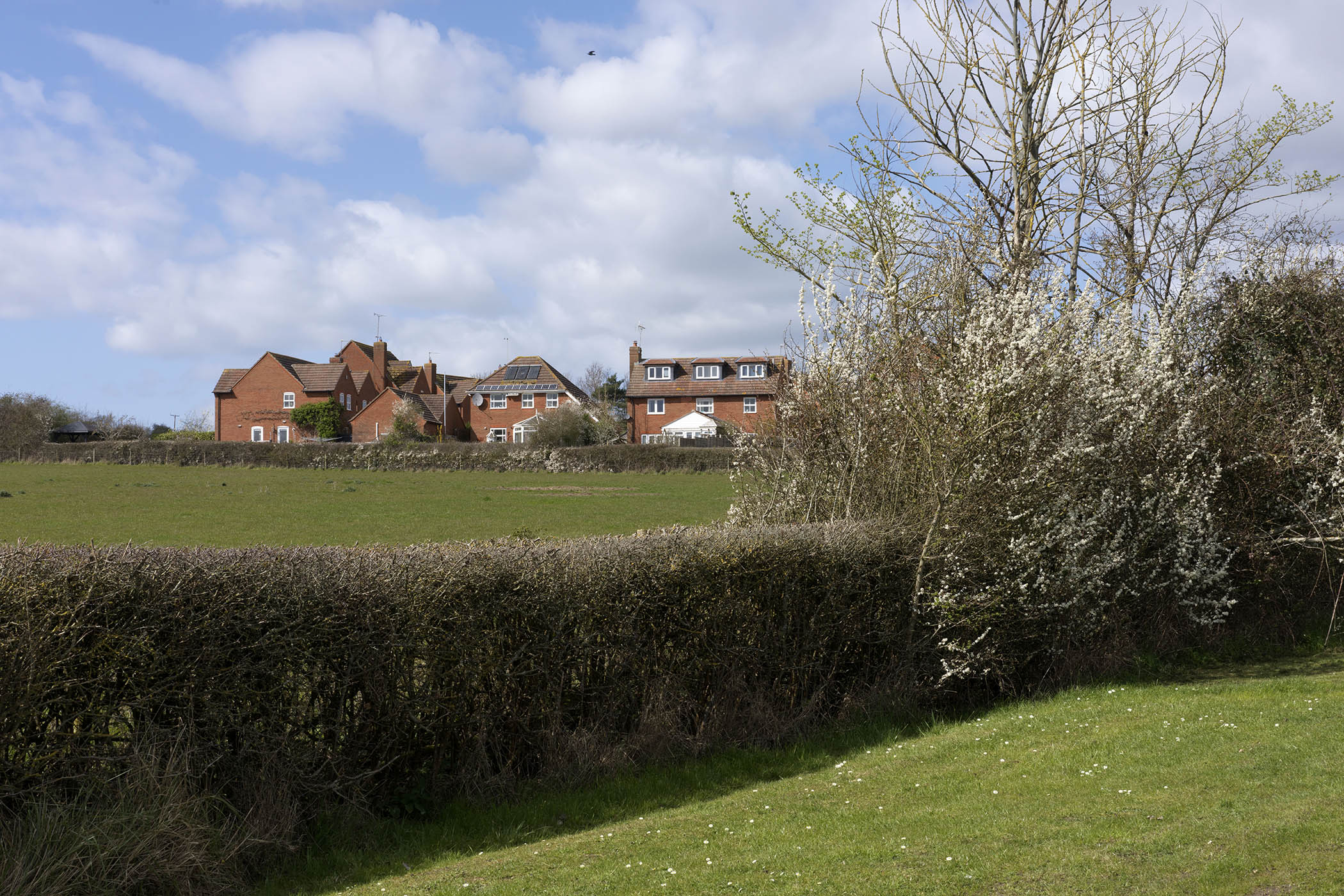
Shoulder Lane is one of the sites for the proposed housing developments
All would like affordable units, available to rent as well as to buy, with one or two bedrooms, in places where it’s easy to get to the shops and pubs in the historic centre of the town. They would like better public transport than the town’s infrequent and erratic bus service, and upgrades to schools and health services to meet the needs of its expanding population. Taylor, who has a knee condition, speaks of long waiting times for appointments. “The only way you can get one is to stop breathing,” he jokes.
Developers, says George Cowcher, portfolio holder for planning on Stratford district council, prefer to build three or four-bedroom houses for sale. On such estates, driving is often the best option for getting to work, the shops or to school. The new developments up the hill from the Smiths, for example, are about 15 minutes by foot from the town centre, but it’s an unappealing walk on narrow pavements by a busy road. This hinders cohesion between old and new parts of the town: “people don’t know each other”, says Hatch. Buyers, says Cowcher, often come from outside the district, including capital-rich retirees from the south-east of England.
Planning applications include claims about the beauty and sustainability of their proposals. The Cala Homes project that the Smiths believe poured sewage into their house was advertised with a quote about “standards of graciousness”. A recent application for 120 new homes promises “a thoughtfully designed, sustainable development that blends with and respects the natural and townscape character of Shipston-on-Stour”. To judge by what has so far been built, these fine words usually turn into car-dominated expanses of tarmac, skimpy planting and little detail.
New developments have to make contributions to infrastructure and amenities. In practice, these don’t seem to make much difference. Objectors in Shipston say a small local hospital has lost its beds and there is no sixth-form college. Manuela Perteghella, Liberal Democrat MP for Stratford-on-Avon, cites a playground in one part of her constituency and a community hall in another that failed to open months and years after the profitable developments around them were completed. Housebuilders also have ways of reducing their commitments to affordable housing: on one Shipston development a promise of 35% was reduced to 10%, on the grounds that the larger number was not viable.
“If you let developers lead,” says Perteghella, “they’re not going to build the social housing that we need, not infrastructure first, not at the quality that our residents deserve.”
Some housebuilders are shy about giving their side of the story. Mackenzie Miller, which is planning 1,150 homes on the edge of Shipston, and its agent, Lichfields, did not respond to requests for comment. The town council described an online public consultation on the same project as being “very limited” and implied that it failed to show “courtesy to and respect of the existing residents”.
Taylor Wimpey was a little more forthcoming, arguing that its existing development in Shipston provided “significant investment in schools, healthcare, transport infrastructure and open space” and that its “latest proposal is for up to 110 high-quality new homes, which include affordable housing”. It added: “Nearly two-thirds of the site will be open green space, play areas, a community garden and an orchard.” It would “make contributions to support local service”, it said.
Taylor Wimpey said: “The UK has a critical housing shortage and developments like this are vital in meeting the demand for new homes."
This, of course, is the central issue, and it could be argued that the government’s changes to planning rules are the sort of blunt instrument needed to get a dysfunctional planning system working again. But the evidence is slight that giving approval to the kind of homes proposed around Shipston-on-Stour will make much difference to the acute problems of affordability that are the essence of the crisis. The government’s target of 1.5m new homes is, in any case, looking uncertain.
As for the predicament of the Smiths and their neighbours, Cala Homes issued a statement, saying its development was completed “in line with the approved planning consent, to which Severn Trent was a statutory consultee”. The water company said it only had an “advisory” role. It added that “during heavy rain a small number of properties here have experienced flooding”, and that it is “currently working with housing developers and local councillors to find a long-term solution”. It says it has “no say if a new development can go ahead… But we do work with developers to ensure drainage meets national standards.”
If new development is indeed the cause of the devastating floods – and the evidence suggests it is – this is clearly not a consequence that any planning policy would desire. It would be a sign of the system not working.
Additional photographs by Save Our Shipston