

Photograph by Karen Robinson for The Observer
The initial intelligence identified the drug dealer by name: Gary Parkinson. It fell to DS Alex Bingham of Devon and Cornwall police to find out what his suspect was: Parkinson was a serving police officer running a cocaine ring potentially worth hundreds of thousands of pounds.
“That heightens your decision-making in relation to how we are going to move forward with investigation,” Bingham said, “when the person you’re investigating has been identified as a serving police officer, having worked in the intel[ligence] directorate of a police force.”
Parkinson, now 45, was still a serving constable with Greater Manchester police (GMP) but had been allowed to move to Devon after being signed off with depression following a suicide attempt. By the time he was jailed last month for conspiracy to deal class A drugs, he also reported a diagnosis of Huntington’s disease, a fatal neurodegenerative disorder.
“What we’ve always tried to establish is how did Parkinson move from being a police officer of 15 years in GMP and get himself involved in drug dealing?” Bingham told The Observer. “He’s never explained that. We asked in interviews numerous times. You know, what was the rationale, the reason, the cause? He never gave us anything.”
Having spent nearly two years on full pay living in Devon and running a security dog training business, Parkinson was medically released with his pension the same month that the intelligence came in, according to Bingham. Prior to that, he spent his last two years of active duty in the force’s intelligence unit.
Parkinson was sentenced just over six years for his role in the ring, which moved large quantities of cocaine and amphetamines from the Greater Manchester and Cheshire areas to small towns in the Devon countryside. To date, three other members of his gang have been jailed.
The case stands out as an example of the kind of corruption often thought in the UK to exist only in police forces in developing countries or the plotlines of Line of Duty-style dramas. But Parkinson is not alone.
A fellow GMP officer, DC Andrew Talbot, was jailed for 19 years for cocaine supply and misconduct in a public office in September 2024 after stealing almost 4kg of the drug from the force’s evidence room and selling it back on the streets. Parkinson’s time with the force overlapped with the detective, but GMP said: “It is not believed that he worked with Andrew Talbot. There is no link at all between their respective criminal convictions.”
In one of the most extreme examples of police corruption in recent years, Metropolitan police officer Kashif Mahmood was caught working for an east London drug gang taking orders from a Dubai-based kingpin. Mahmood used his uniform and patrol car to intercept cash paid to other gangs by the group after drug deals and seize it under the auspices of an investigation before returning it to his co-conspirators. He was jailed for eight years in 2021.
Newsletters
Choose the newsletters you want to receive
View more
For information about how The Observer protects your data, read our Privacy Policy
Criminal charges against police officers have soared nationwide in recent years, alongside massive investment in police professional standards and increased scrutiny in the wake of the Sarah Everard murder, in which a serving Met firearms officer used his warrant card to kidnap, rape and murder a 33-year-old marketing executive who was walking home in south London in March 2021.
In the year to March 2025, there were 323 criminal charges involving 189 serving police officers, up from 227 charges against 133 officers the year before. More than a quarter of these were for sexual offences. Drugs charges remain rare; six officers faced court for drugs offences last year.
The Independent Office for Police Conduct (IOPC) said that referrals from police forces have risen from about 4,000 in 2018, when the body was established, to more than 7,000 last year, and that the most common cases for its specialist anti-corruption unit involved officers disclosing police information and intelligence “often to those involved in criminality”.
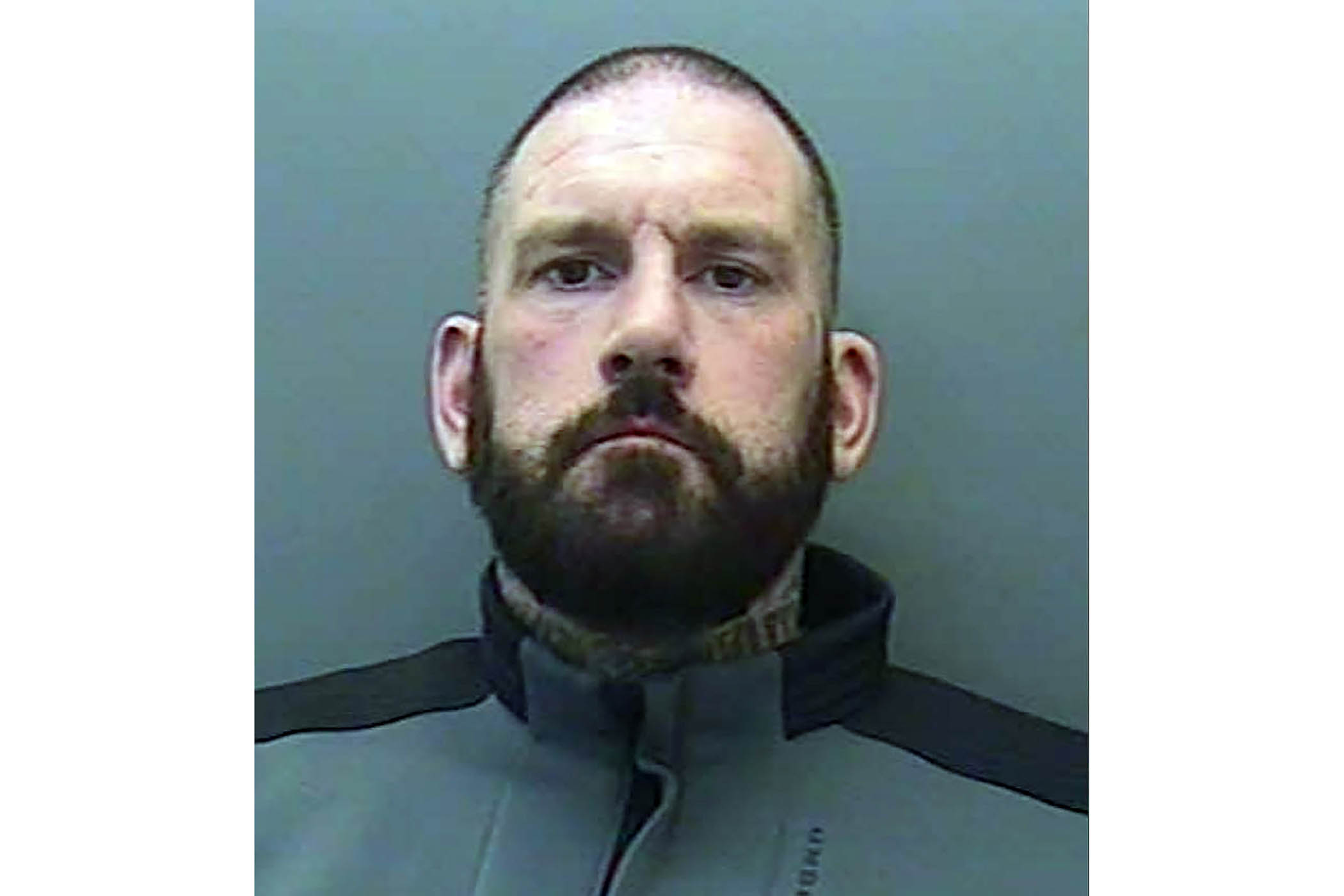
Gary Parkinson was jailed for six years and four months.
Asked if he suspected that Parkinson’s drugs plot was in any way linked to his 15 years in GMP, Bingham said: “As police officers, we meet and associate through our work with criminals on a daily or regular basis, but we can’t see anything obvious that would have caused Parkinson to move into the conspiracy to supply class A drugs.”
The court heard that Parkinson had put up funds, organised drop-off points in Devon and arranged for the onward supply of the cocaine, as well as having a substantial influence on others in the chain. The first raid on his home came as a matter of good fortune. Five months after receiving a tip-off about him, officers from Cheshire constabulary stopped a van that had been used to move furniture to Parkinson’s house for having no insurance.
They found three realistic airguns hidden in a panel and warrants were issued, including for a search of Parkinson’s property.
Officers from Devon and Cornwall police raided his house on behalf of the Cheshire constabulary and found a ledger containing what appeared to be drug debts, along with a burner phone. Bingham said the chance warrant “kickstarted our investigation” and officers began to track Parkinson’s movements.
In November 2019, his car was stopped and he was caught with £7,000 in cash and a quantity of amphetamines, before being released under investigation after questioning.
It was not until January 2021, however, that Bingham and his team finally exposed the network. One of Parkinson’s couriers, Warren Harrison, was apprehended with half a kilogram of cocaine on his passenger seat. Mobile phone analysis showed he was en route to a location in the grounds of a stately home at Shobrooke Park in Devon.
CCTV footage from the destination showed that Harrison – a renowned British angler who has held world and British records for some of the largest fish ever caught – had been heading to meet Parkinson.
At least nine trips were identified to follow the same pattern. The court heard that half a kilogram of cocaine had a street value of about £40,000, meaning that a conservative estimate for the nine verified trips – even if each transaction only involved the same amount of the drug – would be £360,000.
Despite his offending, Parkinson does not appear on the list of officers barred from ever working in the police again.
Asked about investigations into Parkinson’s police work – specifically his time in the intelligence unit – and whether it played any part in his offending, GMP said it was “unreasonable to review the whole career of someone who left the force so long ago”.
A spokesperson for the force added: “His time within GMP has been reviewed by professional standards, [and] there are no outstanding matters relating to his conviction.”
Additional photograph by Cornwall and Devon Police Force