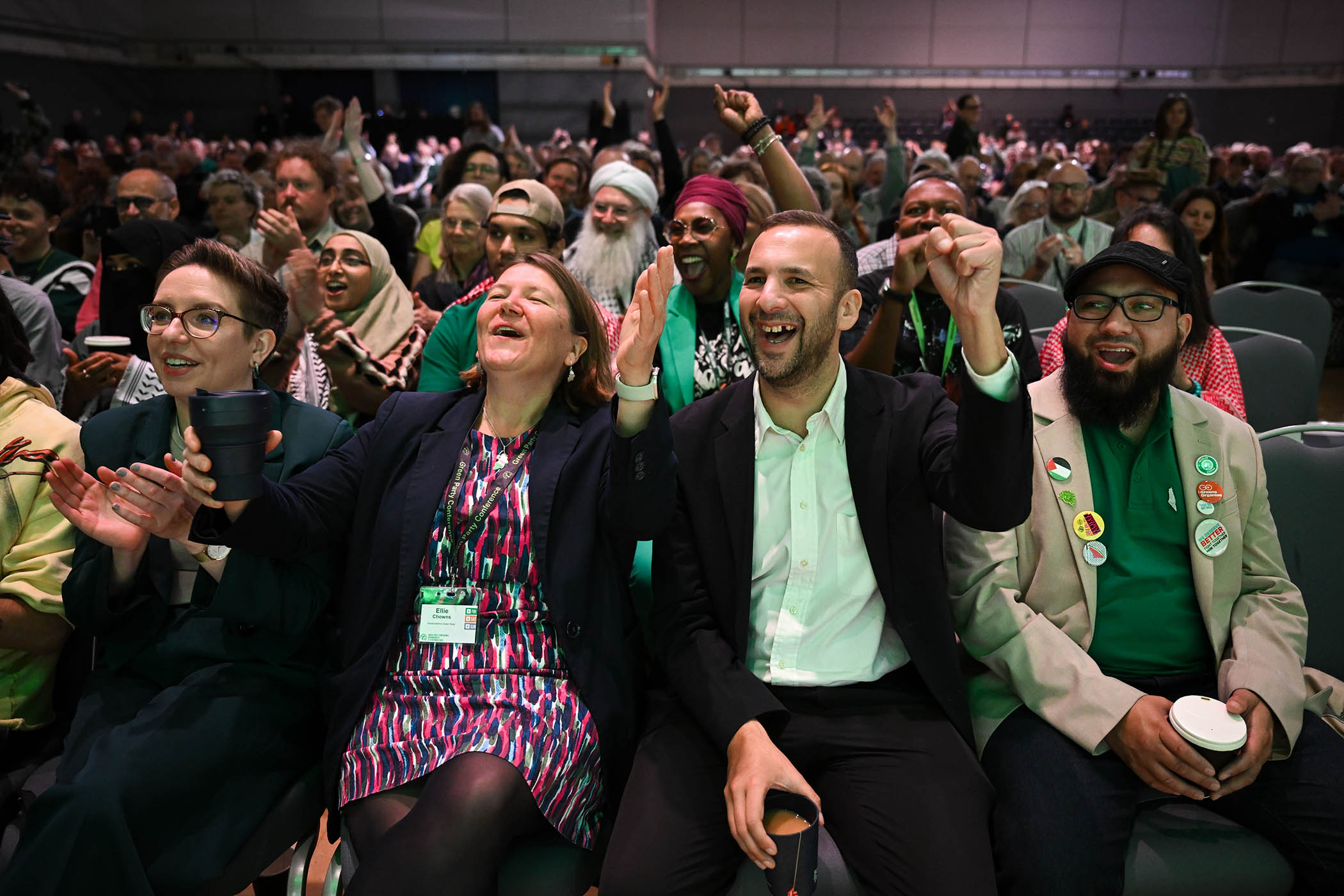



The Greens are on a roll. Since Zack Polanski took over as leader in September the party has gained about six points in poll averages, closing in on a struggling Labour party. Last year, Reform moved decisively ahead of the Tories as the largest rightwing party in polling and local elections. The Greens now have a chance to overtake Labour on the left.
Evidence of a rising Green tide was building even before Polanski’s arrival. The party has made substantial gains in every round of local elections since 2019, and secured a record vote share in the last general election, gaining three Commons seats and holding Brighton Pavilion, previously its only Westminster foothold.
The voters who put Labour into office were already well disposed towards the Greens, according to a post-election internet survey by the British Election Study (BES). About 47% of Labour voters gave the Greens a positive rating, and nearly half of Labour voters who reported voting tactically said their true preference was for the Greens. In the most recent BES wave, conducted after May’s local elections, nearly 40% of 2024 Labour voters said they were likely to vote Green in future, while nearly one in 10 had already switched.
The Green pull has grown stronger since Polanski. In December, an Opinium poll for The Observer found a large slice of Labour’s 2024 voters saw the Greens as a principled, purposeful party whose views they shared. Nearly one in five said they would back the party if it were competitive locally.
The motives of Green switchers are clear. Most give Keir Starmer low marks as prime minister, and when asked last summer by YouGov to explain their new choice, the top answers given by switchers were “Labour has been too rightwing” and “Greens are closer to my values”. Since then, the trickle of Labour to Green switchers has become a torrent, but the story remains the same: Green gains are coming from former Labour voters who are both economically and socially progressive and feel Starmer’s party is not. This is a revolt on the left.
The growing core Green electorate also has a clear demographic and geographical profile: younger, diverse, progressive students and graduates who cluster together in big cities and university towns, typically areas where Labour has been dominant for decades. Under Starmer, Labour chose to marginalise these areas and this electorate to focus on more efficiently distributed social conservatives. This bargain helped deliver a Commons landslide but also sowed the seeds of discontent now being reaped by the Greens.
The party has an opportunity to turn Labour’s 2024 strategy on its head. But the very features that led Labour to marginalise Green-curious voters two years ago provide Polanski’s party with an opening today. The concentration of Green-friendly demographic groups in a small number of seats make them a low priority for a big party seeking a broad coalition for government, but attractive for a small party aiming to make a breakthrough.
The heavy concentration of young, progressive graduates in a handful of areas makes it possible for the Greens to achieve the outsized swings needed to win from a standing start by mobilising just in these groups. And these areas’ distinctive demography also makes them barren ground for Reform and the Conservatives. Many disaffected young progressives will therefore be able to treat a Green vote as a low-risk opportunity to voice disappointment in the Labour government and try to push it leftwards. Labour’s preferred national messaging – that they are the only party who can stop Reform – will not be persuasive in areas Reform have no prospect of winning.
The Greens will have their first chance to put this strategy to the test in May’s local and devolved elections. Wales’s new more proportional electoral system gives the Greens a strong chance of returning their first Senedd members, their best prospects likely around Cardiff. A strong regional vote could also help the Scottish Greens match or exceed their 2021 record result in Holyrood.
But if there is to be a Green revolution this year, its ground zero will be London. Here, all the ingredients for an earthquake are in place – some of the largest concentrations of Green-friendly voters are in inner-city boroughs run by Labour for decades. Some of the largest Green votes in the 2022 London elections and 2024 general election were recorded in Hackney, Newham and Islington, and provide an obvious Green focus this May. Every council seat in the capital is up for election, giving the Greens a chance to do in some boroughs what Reform did in county councils last May: sweep into office and end generations of Labour rule overnight.
Newsletters
Choose the newsletters you want to receive
View more
For information about how The Observer protects your data, read our Privacy Policy
A Green revolution in inner London would be a massive shock for the Labour government, many of whose senior members, including the prime minister and deputy prime minister, hold seats in the capital. But Labour is also likely to lose many “red wall” wards and councils to Reform in May. Simultaneous defeat on the left and right, in urban heartlands as well as small-town battlegrounds, may make the status quo intolerable and force a discussion about Labour’s future direction, which the leadership has seemed eager to avoid. Starmer may soon be given a stark reminder of what Nye Bevan warned could happen to those who stay in the middle of the road. They get run down.
Robert Ford is professor of political science at the University of Manchester and author of The British General Election of 2024
Photograph by Finnbarr Webster/Getty Images