

The British, famously, like to talk about the weather – but the topic functions as a neutral conversation-starter precisely because we don’t have to think about it. The climate of these islands is a fortunate one, rarely so cold that we need to send children out to play in snowsuits, Scandinavian-style, or so hot that it’s dangerous. Just varied enough to grumble about.
This week, the WhatsApps on my street hummed with conversation about the weather and none of it was neutral. Schools were closing early. The running club had cancelled its midweek speed session. Council workers had strimmed a wildflower border, planted as a biodiversity measure but now a potential fire hazard. The weather is turning wild English grassland as tinder-dry as the hills around LA, meaning vegetation near housing must be cut back to create fire breaks.
The hot weather is forecast to break at the weekend. Its lessons should stay with us. It is ingrained in British culture that heat is a welcome release in a cool, rainy country; the moment to take off layers and cram on to a train to the seaside. But such notions are rapidly being outpaced by physical reality. Global average temperatures are about 1.4C above pre-industrial levels, before we started pumping vast amounts of greenhouse gases into the atmosphere.
It’s still possible – though unlikely – that humanity can keep the temperature rise to below 2C by cutting emissions. Around the middle of this century, if the world warms by 2.5C, a summer heatwave in England could exceed 45C (with lower – but still extraordinary – temperatures in Scotland, Wales and Northern Ireland).
Last year was the UK’s hottest on record, and the wildfires that burned across moorland in the Highlands last July were the biggest Scotland has ever seen. Summers like this will become the norm. Some of the changes required will be counter-intuitive, shuttering windows from the heat, as in the Mediterranean, rather than opening them for air (it’s best to let the breeze in when the air temperature outside is lower than it is inside, usually early morning or late at night).
Other changes go against the grain of Britain’s history – fewer than 5% of homes here have air conditioning, but many more will need to install some form of active cooling. That might not mean traditional power-hungry A/C, which is difficult for many people to run when power prices are high and finances are tight. Air-to-air heat pumps can provide cooling as well as heating, at lower cost than A/C. The Climate Change Committee, which advises the government, says creating one cooler room at home would help avoid a spike in heat-related mortality nationwide.
There’s a point about inequality here, too. People on lower incomes are more likely to be exposed to higher temperatures at work, either because they work outdoors or in hot places such as kitchens. There’s no legal maximum temperature for employees, though most white collar workers get to sit in air-conditioned offices.
And that inequality extends to the places we live. Just 26% of people in the most deprived areas live within a five-minute walk from green space and the natural cooling it provides, according to Natural England, compared with 38% of people in wealthier neighbourhoods.
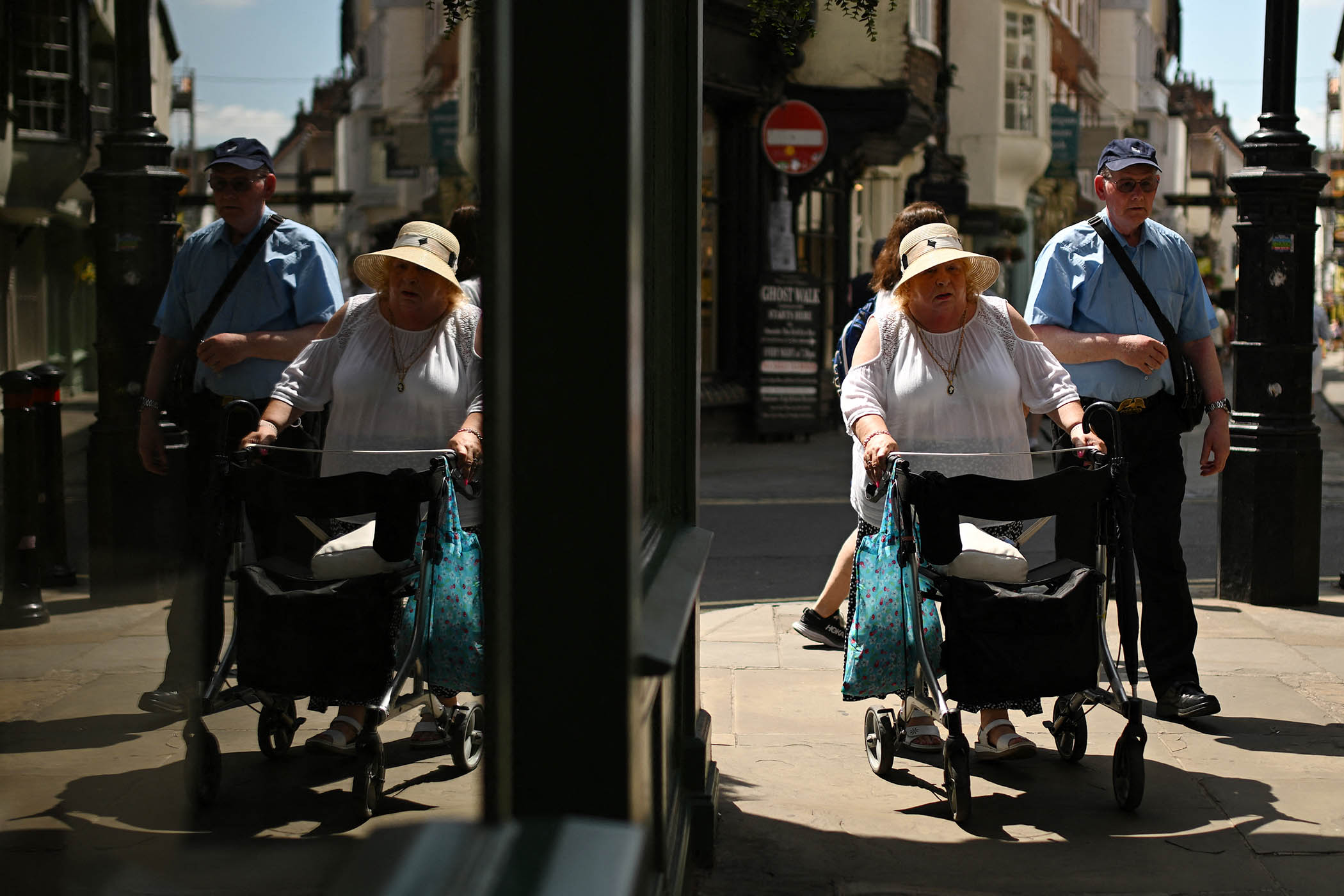
The heat is already claiming lives. The biggest spike in heat-related deaths occurred in 2022, when there were nearly 3,000 deaths associated with the summer heatwaves in England, skewed overwhelmingly towards the elderly. This was the first time a “red warning” for extreme heat was issued by the Met Office. It’s hard to know, as yet, how deadly this year will be – the latest official tally of deaths is from the start of this month and there’s always a delay between a death and registration.
It’s tempting to think we can import lessons from other countries that have learned to deal with rising heat, but the truth is that the speed and scale of the change has rattled us all. In France, air conditioning has become a ritual political flashpoint, with the far right (pro) and greens (emphasising broader adaptation measures) clashing over it during every heatwave.
Newsletters
Choose the newsletters you want to receive
View more
For information about how The Observer protects your data, read our Privacy Policy
An expert on urban design in India told me it was no longer possible to speak of heatwaves in her country. A heatwave implies that high temperatures are episodic, but extreme heat on the subcontinent now lasts for months, straining the country’s ability to adapt.
There are signs of adaptation. On my street, the runners were out at 5am and the dog walkers at 6am. The Met Office issued its second-ever red warning for heat, which was widely reported. During the heatwave last year, around 1,500 people died in England, fewer than expected and a possible sign that behavioural change and early warnings are saving lives.
Longer-term adaptation will require deeper changes, from the shape of our cities and the design of our businesses to the way we live our lives. More greenery on city streets, covered walkways and water stations can protect and hydrate us. A pub kitchen with better ventilation and induction hobs which switch on only when a pan is set on them will be cooler than the traditional set-up, where gas hobs are kept running through a shift.
Gig economy workers will need shaded public spaces where they can rest during temperature extremes. The government will need to set a maximum temperature regulation for workplaces. At home, people with the means to do so will begin investing in cooling measures – but subsidies should be made available to help the most vulnerable, such as elderly people on low incomes.
We should rewrite the social contract to ensure access to cooling is a right for all, from street greenery to lower temperatures in the home. That is, in part, a job for central government – from framing the right laws to issuing warnings – but it will run through every administrative layer, much of it at local level, such as the workers strimming on my street.
It will require joining the dots between the data (who is dying, and where?) and the actions needed, from regulations to health alerts to planting trees. Chief heat officers, in charge of driving the necessary changes across a city or a region, could help save lives and protect livelihoods. Heat should be a source of pleasure, not a curse.
Thank you for reading. Tell us what you think by writing to letters@observer.co.uk
Photograph by Oli Scarff/AFP/Getty Images