
Photograph by Tom Pilston
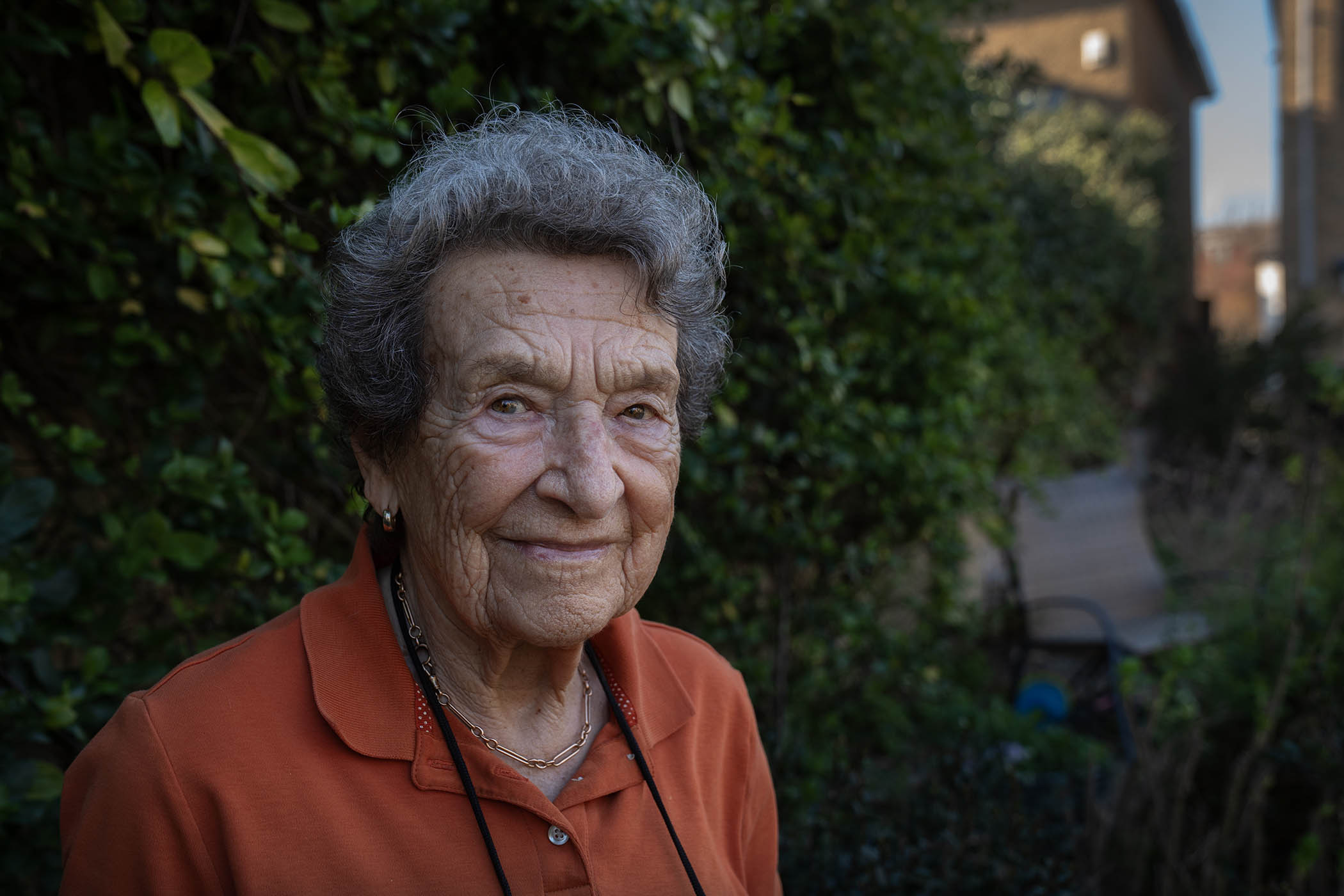
Hedi Argent was just four years old when she first understood the meaning of the word antisemitism. I ask her what happened and her answer is clear, simple, horrifying. Now, 92 years later, our walk has a particular poignancy, for it was when she was out with her father in Vienna in 1933 on just such a glorious spring day that she was first confronted with the brutal truth.
“My father was a defence lawyer. He worked with people who couldn’t afford to pay much, but he looked after them, and he loved his work. It was a lovely day and we were chatting. A man came running up to us. He stopped in front of us, and my father greeted him, because he was a client of his. But the man shouted at my father; he said: ‘I’m not going to pay a dirty Jew!’ And then he spat on my father, and he ran off.
“I cried. My father, well, he comforted me, and he said: ‘It’s all right – Jews are not dirty, but there are people who don’t like Jews, and that’s called antisemitism.’ I had never heard the word before, but I understood that it meant that people didn’t like me because I was a Jew.”
We meet in New Ground, a co-housing community of women in north London (“It’s a little like a kibbutz,” she smiles). A balcony overlooks an expansive central garden in full bloom on thisbeautiful day. Argent and I are taking it easy because she is 96 now, though her energy, her intelligence, her clarity are all undimmed by time.
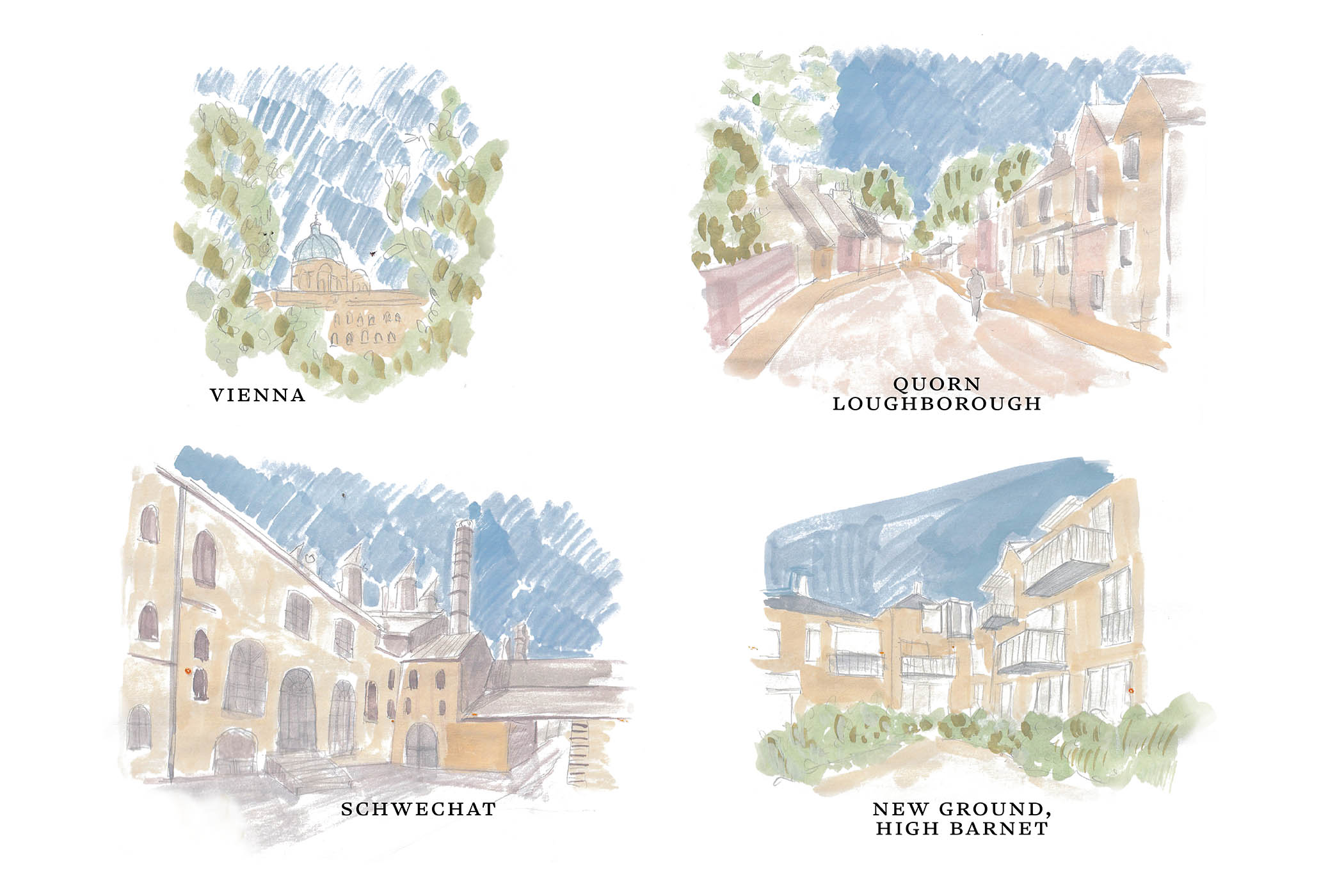
Illustration by Ellie Wintour
We have met thanks to the Holocaust Educational Trust. It has recently reported by the Union of Jewish Students that one in five British students would be reluctant to live with a Jewish housemate.
Meanwhile, a branch of Gail’s bakery in Archway, north London, has been repeatedly vandalised, supposedly because Bain Capital, the bakery’s parent company, has investments in Israeli defence companies. It seems worth remarking, however, that Bain is also the parent of Pizza Express; but Gail’s was founded by a British-Israeli, which seems to mark the difference.
An article in the Guardian – since cautiously amended online – linked Gail’s neatly to Bain and its investments, its author originally writing that “its very presence 20 metres away from a small independent Palestinian cafe feels quietly symbolic, an act of heavy-handed high-street aggression.”
It is easy enough to go on. On 2 October 2025, the day that Melvin Cravitz and Adrian Daulby died in an attack on the Heaton Park synagogue in Manchester, the Community Security Trust, which monitors antisemitism in the UK, reported that 40 antisemitic incidents were recorded on the day of the attack and 40 the day after – the highest daily totals of 2025.
A government report last December stated that: “in the last year (to March 2025) there were 106 religious hate crimes against Jews per 10,000 population, the highest rate for any group by some distance. We know that not all incidents are reported. There has been a day-to-day acceptance of poisonous words that has seen Jewish people hiding their identities in fear of abuse.”
Argent is perfectly aware of such facts and the anxieties felt by British Jews, who have faced prejudice dating back to the middle ages. When I ask her what she makes of them, it is as if a shadow crosses her bright face. “I really don't know what I think,” she says plainly. “I can’t work out what I think.”
I ask her these questions as if I expect her to have the answers, but of course she does not. “‘Never again’ – that’s what everybody said once the Holocaust was discovered. But I know that that is not what’s happening.”
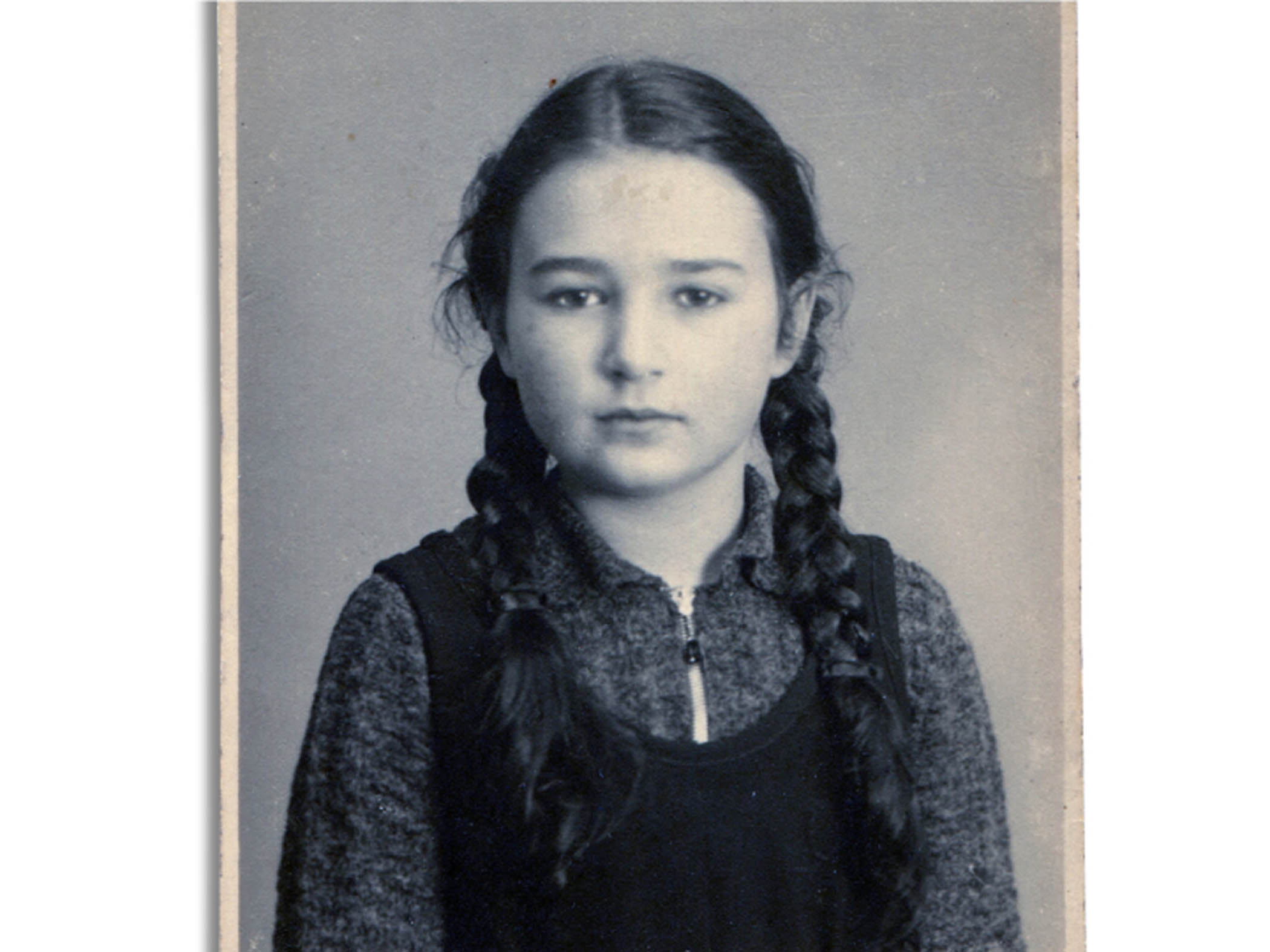
Things got worse for her family, of course, after that initial encounter with the former client in Vienna. Born in 1929, Argent was eight at the time of the Anschluss, the annexation of Austria by Nazi Germany. She had already been persecuted in her school – where she was the only Jewish pupil – not only by fellow students, but by the teachers too. “I wasn’t included in anything. If there were any games or any teams, I was never picked for anything. I was left out of outings – the letter the school sent somehow never got home.”
But she became aware of this behaviour – of her classmates, of her teachers – before, finally, another girl, Gertie, asked her if she wanted to play. “We played every day. She came to my home. She was my first friend. And it was hard for her because everybody started calling her names. They called her ‘Jew lover’. Awful. And it would have been so easy for her just to do what all the other children did, but her mother said: ‘You mustn’t do that. You must do what you know is right.’”
Again and again, in telling me her story, Argent returns to the light that shone against the dark. Yes, she was expelled from her school on the day of the Anschluss and her father had his business stolen, handed over to a Nazi lawyer. But she is keener to tell me about the people – friends and strangers – who hid them once they were ejected from their home, before they could escape to England just a few months before the war started.
I recall the author Judith Kerr telling me how her parents made their escape from Berlin like a game for their children so they would not be frightened – a story she recounted in the classic children’s book When Hitler Stole Pink Rabbit. But Argent tells me that her parents always allowed her to understand the seriousness of what was happening around them. The day after the Anschluss, her parents started trying to work out how to leave Austria.
“After Kristallnacht” – the “night of broken glass”, in November 1938, when Jewish homes and businesses were destroyed in Austria and Germany – “when things became known more internationally, some people opened their doors – not many – but some did, and we got visas to England.” The family were not observant; in fact, she tells me, her first Hanukkah was only celebrated after Kristallnacht. Her father, defiant, made a hanukiah – a nine-branch candelabrum – from scraps. “My father was really useless that way, with making things,” she laughs. “But he found this board, and he found some nails, and he knocked them through from underneath. He found candles, and he stuck them on the nails, and he said: ‘This is what we do.’ And that was my first Hanukkah.”
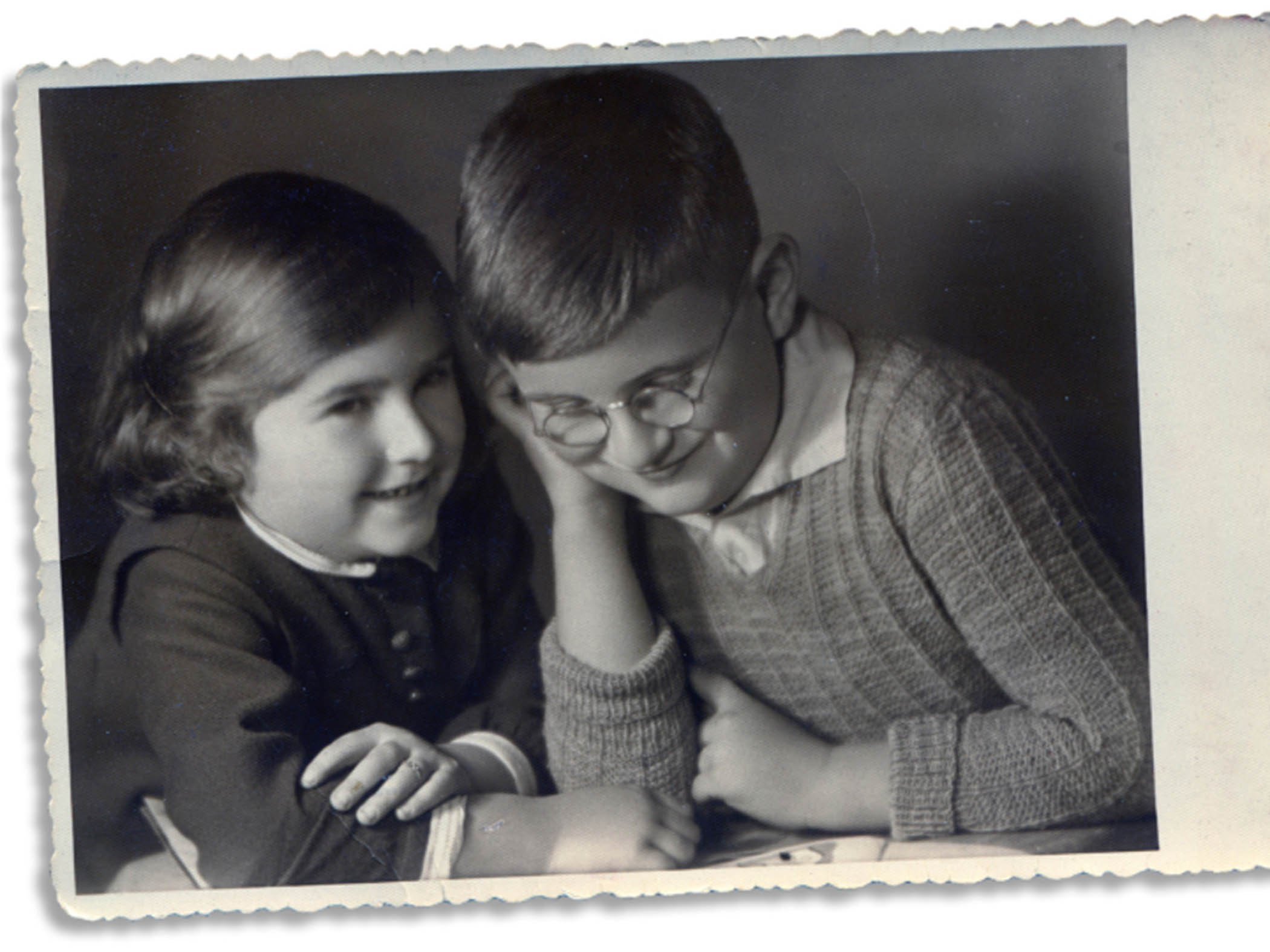
The visas for England came with conditions: these were that her parents would only be allowed to accept jobs as domestic servants. Her lawyer father trained himself to be a butler. Her mother would work as a cook. “They also had to find a British citizen who would pay a £50 guarantee for each of us: £150 – a lot of money. We didn’t know the man; he was a lawyer in England. He was not Jewish. What a wonderful thing to do.”
She looks at me with a smile. “Do you know how much £150 would be now?” A friend told her, not long ago, about the Bank of England calculator that will show you: the answer is about £8,800. A lot of money – and for a stranger to offer. “We never met him. We knew his name and address. We wrote to him, we thanked him. We never used his money.”
For a while the family went from house to house, eventually settling – again, for a while – in Loughborough. It was here that Argent discovered happiness in Britain, at the nearby village school in Quorn, Leicestershire. “I thought I’d landed in heaven. Everybody was kind and asked me home. I went to parties for the first time. I fell in love with the English language. The teachers gave me two books – Black Beauty and Little Women, and I read and reread them. All I wanted to do was to become an English girl.”
And yet. “There was a strange thing: nobody asked,” she says. “Nobody asked where I came from or what had happened. And I began to understand that I knew things that they didn’t know, that even their parents didn’t know. And that became a burden: that I knew what had happened, and nobody asked.”
When she goes into schools now– which she does a few times every month – she always says to the children and young people: “Ask the questions. Ask what happened. Ask where people have come from.”
‘When asked what I’d like students to take from my talks, I say: kindness’
‘When asked what I’d like students to take from my talks, I say: kindness’
Some years ago, Argent published a book for young people, The Day the Music Changed, about her experience of Nazi persecution and her life as a refugee. She sent it to a friend from her beloved school: they had kept in touch for six decades.
“We were in our late 80s by this time,” says Argent. “I hadn’t told her I was writing the book; I just sent it to her. She rang me the next day, and she was crying. ‘Why didn't you tell me?’ she said. And I said: ‘Because you didn’t ask.’”
Argent became a British citizen in 1946, the same year that Winston Churchill gave a speech in Zurich in which he counselled not remembrance of the Holocaust, but willed forgetfulness.: “If Europe is to be saved from infinite misery, and indeed from final doom, there must be this act of faith in the European family, this act of oblivion against all crimes and follies of the past.”
Argent’s experience of silence speaks to that desire to turn away from humanity’s most dreadful actions: but it is only in the turning towards that any kind of reparation or healing can occur.
Argent’s father was never able to practise law again; English law and Austrian law were too different. Eventually, however, he became a respected clerk in a law firm. “People used to come and ask him for points of law; and they called him Dr Schnabel – and he was pleased about that.” Then she pauses. “But my mother never recovered.” This is the only time in our conversation where I see her look truly distressed. I ask what she means by “never recovered”.
“There was a day she heard from the Red Cross – that’s how we all got the news, from the Red Cross – about what had happened to our family.” Seventeen members of her family perished in the Holocaust. “Well, from that day on, she never really lived. She sort of went through the motions. It was very sad.”
Of the increased threats to the Jewish community, she says bluntly: “Sometimes, I think that I’m glad my parents are dead. I don’t want them to go through this again. The increase in antisemitic attacks after October 7 – you think it would be the opposite, but it’s not.”
The spike in antisemitism makes her angry, she tells me, but she knows that anger is not the answer. “At the end of my talks in schools, teachers often ask me if there’s something I would like the students to take home. And I always say: kindness. Kindness, curiosity. And joy. Joy.” And you can feel the joy in this place, in the glowing greenery as the spring sun pours down on the daffodils. Here is newness, here is life.
It sounds naive, perhaps, in such a world, to call for understanding or to hope for joy. But I think of the kind of stories that Argent wants to tell; what they mean to her, what they can mean to everyone. Of the Nazi official who – when her father refused to scrawl “Juden” on the window of a Jewish shop – brought him home instead of dragging him off to Dachau; of the neighbour who took Argent to a hospital where Jews were no longer allowed to go.
“She said I was her niece. She risked her profession, her job, her life to do this.”
Argent has been invited to speak at the parliament in Vienna; these are the recollections she will share. As she said to me at the beginning of our conversation: it can be impossible to know what to think. All we can really do is listen.
More from The Observer
Newsletters
Choose the newsletters you want to receive
View more
For information about how The Observer protects your data, read our Privacy Policy