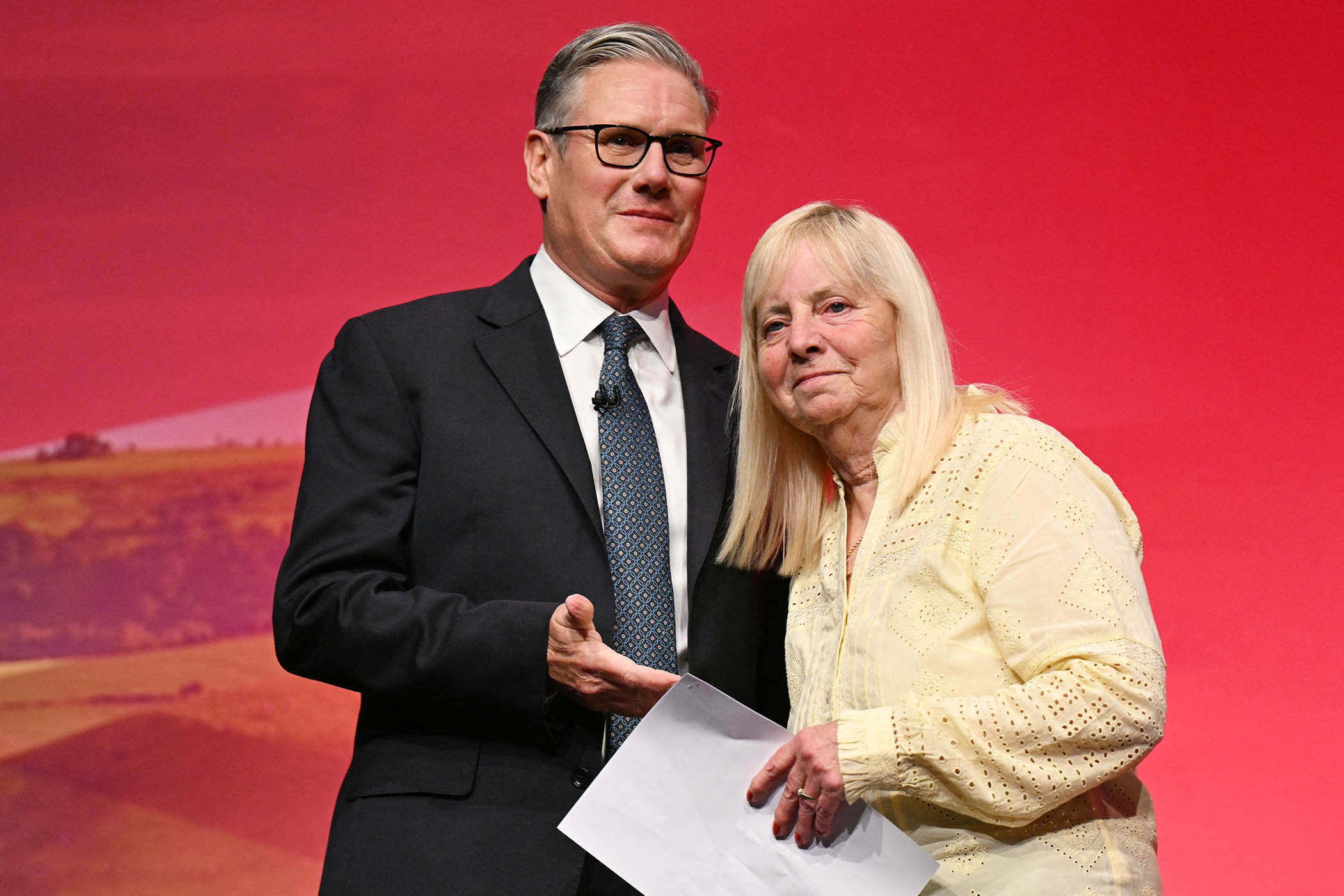

At this year’s Labour conference in Liverpool, Keir Starmer was introduced by Margaret Aspinall, whose son James was killed in the Hillsborough disaster. The prime minister paid tribute to the many families who have lost loved ones in national catastrophes and then had their personal pain compounded by public sector cover-ups or contempt.
“Whether it’s Hillsborough, Grenfell, Windrush, Horizon, the grooming gangs, infected blood and so many more, the British state consistently refused to see injustice because of who the victims are,” he said.
The public office (accountability) bill – also known as the Hillsborough law – that is going through parliament is the government’s answer to the failures that have followed successive scandals and tragedies, including the 1989 football stadium disaster in Sheffield that killed 97 people.
The proposed legislation imposes a statutory “duty of candour”, requiring state agencies and public officials to tell the truth and cooperate fully with all investigations. The bill also introduces a new right to what is called “parity of arms”, ensuring bereaved families have state-funded legal representation during an inquest at the same level as public bodies.
After the Hillsborough disaster, public officials had lawyers financed by the taxpayer, whereas the bereaved had to fund themselves. Aspinall, who has been campaigning tirelessly for more than 30 years, welcomes the changes that are being introduced. “It’s very important that there’s a level playing field,” she said.
The legislation, which was first introduced as a private member’s bill by the Greater Manchester mayor, Andy Burnham, in 2017, when he was an MP, has become a personal cause for Starmer and is totemic in the Labour party.
But concern is growing at Westminster that the proposed legislation will turn into a “lawyer’s charter” that makes a lot of money for solicitors and barristers but means it takes longer for bereaved families to find the truth. There are fears that the new law will make inquests more adversarial and increase the number of time-consuming public inquiries.
The government’s own impact assessment puts the potential annual cost of the bill at £183m – equivalent to nearly a fifth of the entire civil legal aid budget. This could well be an underestimate. The true cost is impossible to predict because it depends on the nature and scale of any future disaster.
More than 30,000 NHS patients were harmed in the infected blood scandal and at least 3,000 of them have since died. Although the legislation is not retrospective, if something similar occurred again, tens of thousands of people could be eligible for a publicly funded lawyer. Ministers have said that multiple members of the same bereaved family will be able to receive non-means-tested legal help.
Michael Wills is the Labour peer and former justice minister who in 2009 set up the Hillsborough Independent Panel, which did not involve lawyers but accessed all the relevant documents. Lord Wills believes there is a risk of the new law failing to deliver everything promised to the bereaved.
Newsletters
Choose the newsletters you want to receive
View more
For information about how The Observer protects your data, read our Privacy Policy
He said: “While everyone supports the intentions behind the bill, it could end up creating intolerable delays for the families in getting to the truth about what happened to their loved ones and why, and then securing accountability.
"The last thing anyone should want is a lawyer’s charter, and a public disaster such as Hillsborough or Grenfell could end up with 30, 40, 50 firms of lawyers or even more representing different people with different specific concerns.”
The Covid inquiry, which began in 2022, has so far cost the taxpayer more than £100m in the government’s response, on top of the £192m spent by the inquiry itself. More than half the money has gone to lawyers. By contrast, the Hillsborough Independent Panel took two and a half years and cost less than £5m.
Maria Eagle, the Labour MP for Liverpool Garston, who represents several of the Hillsborough families, said there should be a “broader range of options” available for the bereaved.
These include enabling the new independent public advocate (IPA), Cindy Butts – who was appointed in September to support victims and survivors after public disasters – to create a less legalistic process that is more like the Hillsborough Independent Panel.
“The families caught up in disasters all want the same thing. They want to know the truth. They want to know it quickly and they want accountability for those who have been at fault,” said Eagle. “They want the lessons to be learned so that it doesn’t happen again. The Hillsborough bill needs to be able to prove it can do that.”
But, to date, there is no mention in the legislation of the new IPA role, which Butts described as “shocking”. She said: “The IPA, an office created because candour failed, cannot be absent from the legislation designed to make candour succeed… What the Hillsborough bill does is place in statute the duty to tell the truth. Our role is to make sure that happens in practice in relation to major incidents, so not to mention the IPA is, I think, a fundamental failure and it needs to be addressed.”
Liz Sanderson, who worked as a senior adviser to Theresa May in No 10 at the time of the Grenfell Tower tragedy and is now a Conservative peer, insisted that the duty of candour was no “silver bullet” and had existed for more than a decade in the NHS without changing the organisation’s culture.
“There also needs to be work done, in parallel, to look at the inquiry system,” Sanderson said. “At the moment, we are spending hundreds of millions of pounds on statutory public inquiries, yet there is absolutely no mechanism to ensure that the recommendations made by those inquiries are delivered.
“This is leaving many people hugely disillusioned and, of course, it means that we run the risk of the same mistakes all over again.”
Politicians have become increasingly reliant on public inquiries as a way of trying to reassure voters who have lost faith in institutions. There are now a record 27 inquiries under way or announced. This month, Labour peer Anne Longfield, the former children’s commissioner, was appointed to chair the grooming gangs inquiry.
But a report published on Friday by the Institute for Government (IfG), concludes: “Yet despite more inquiries being called for and established, that are larger and higher profile, and taking longer and costing more, too often the government, public bodies and others are failing to deliver change.”
Between 1990 and 2024, 54 inquiries made 3,175 recommendations but many of them have never been implemented, according to an earlier report by the IfG. Over the same period, the UK and devolved administrations spent more than £1.5bn on completed public inquiries. The Bloody Sunday inquiry alone cost £272.5m and took 12 years.
On average, the completed inquiries have taken just over three years to report back but the timescale varies enormously. Statutory inquiries, which have the power to compel testimony, typically take twice as long as non-statutory ones, which are less adversarial and involve fewer lawyers.
James Jones, the former bishop of Liverpool who chaired the Hillsborough Independent Panel, said the inequality in the legal support offered to bereaved families was “an affront to natural justice” and must be corrected.
But he warned that it would be a mistake to allow the system to become even more adversarial and reliant on lawyers. “The bill for public inquiries is astronomical, and for that reason alone, I think we need to think again about judge-led inquiries and the role of lawyers in all of these cases.”
Lucy Powell, Labour’s deputy leader, is calling for a powerful new parliamentary committee to ensure ministers deliver on inquiry findings. “Making sure lessons are learned and inquiry recommendations are acted upon goes to the heart of trust in politics and rewiring the country so it works for ordinary people, not vested interests,” she said.
“Parliament should have the leading role in scrutinising the inquiry system and actions, holding those responsible for change – whether that’s government, agencies, regulators or business – to account. I have long thought we should strengthen parliament’s ability and capacity to do this well.”
A government spokesperson said: “The government must learn lessons from scandals such as Hillsborough and we have been clear about the need to increase transparency, accountability and support for victims. We are passing the Hillsborough law to do exactly this.”
Jenni Hicks, who lost her two teenage daughters, Sarah and Victoria, in the Hillsborough tragedy, is still haunted by the Saturday she drove from London to Sheffield with her family to watch their team, Liverpool, play in the FA Cup semi-final.
“I didn’t know that we would be driving back home in the early hours of Sunday morning with an empty backseat in our car, having left our daughters in body bags on the dirty gymnasium floor.”
It was more than two decades before she finally discovered what happened to her children. “The most important thing is to get to the truth quickly. I don’t want anybody else to have to wait 24 years to hear how their loved ones died.”
Photograph by Oli Scarff/AFP via Getty