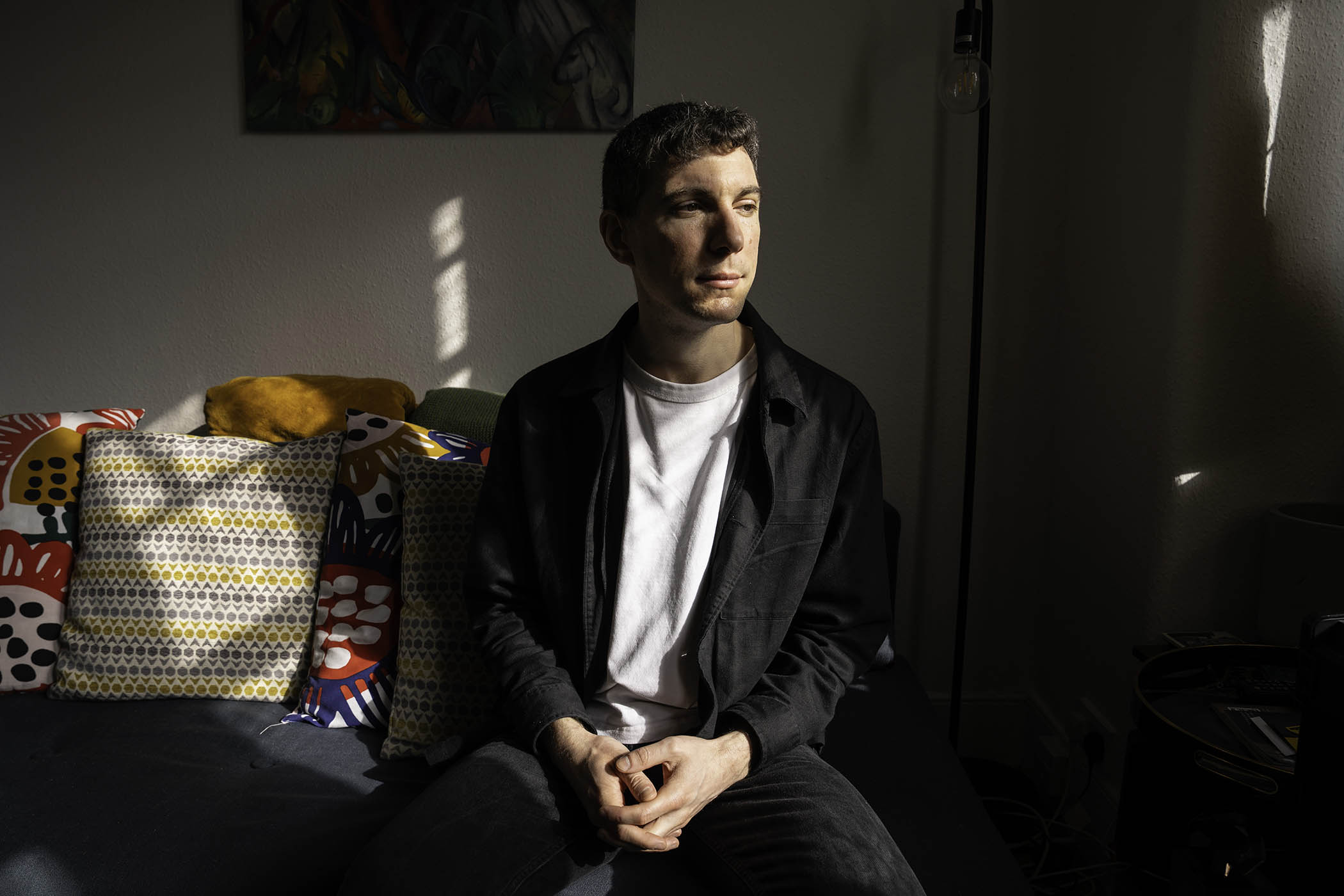

Photograph by Antonio Olmos
I was hours from death, though I don’t remember it. On Monday I’d had a temperature – I was a bit snotty, maybe lethargic – but the GP had seen me, and waved me off. It was July 1990, and I was nine months old.
The next day, while my dad looked after me, I lay peacefully on the sofa. When my mum got back from work and asked how I was, he said I’d barely stirred. Within the hour, I was back in front of the GP. Not much later, I was at Southmead hospital in Bristol. The nurses couldn’t find my veins – I was too chubby – and so they dunked me in cold water. I was having fits, refusing to eat and extremely quiet.
During the 1980s, neighbouring Gloucestershire had been dealing with a prolonged and repeated outbreak of meningococcal meningitis – the same as the current outbreak in Kent. Over the course of five years, there were 65 cases, five times higher than the national average. Seventeen people died.
On my first night in hospital I was sent for a lumbar puncture, and my parents waited as a long, thin needle was inserted in between the bones in my spine to test the fluid for meningitis.
It turned out I had a different type of bacterial meningitis: pneumococcal. It’s similar in many ways, in that it is bacterial and it also attacks the brain lining. But pneumococcal is rarer, there’s no rash, and the fatality rate is a bit higher. It was a blessing that the GP did not to give me antibiotics, which would have hidden the infection.
One in 10 people who contract pneumococcal meningitis don’t survive. Had I been brought to hospital any later, my parents were told, I would have been the one. My four-year-old brother, sensing things were serious, asked whether I would die. “He might,” my mum replied.
My dad took the day shift, my mum the nights. I was in the neonatal ICU for a week, a tiny baby covered in wires in an incubator.
*
My mum messaged me last week to say the news of the Kent meningitis outbreak had brought back vivid memories for her and my dad.
Newsletters
Choose the newsletters you want to receive
View more
For information about how The Observer protects your data, read our Privacy Policy
I’ve always tried to avoid these stories. I’ve often felt like an imposter. Even though I was the one who had it, meningitis feels like my parents’ story, not my own – and so many others have been affected far worse than I have.
But those who survive this infection are also changed by the experience. A third of all survivors of my strain of meningitis may incur permanent disability. It’s similar for people who contract meningitis B.
As a result of the infection I am three-quarters deaf. To begin with I wore two hearing aids, though it quickly became apparent that the left one was redundant. Over the course of my childhood, I had bulky, itchy hearing aids that made the world sound cold, as if everywhere existed inside a cavernous metal room. I stopped wearing them most of the time when I was 16 and old enough to choose.
And yet I now work in audio, making podcasts and radio, and I’m by no means the only deaf person doing so. A colleague told me her hearing loss had meant she listened to the radio more closely as a child, as a way to train her ears.
But really, I became interested in audio out of stubbornness. When I was in my 20s I spent a few weeks on the newsdesk of a national paper. When the reporter I was working with found out I was deaf, he joked: “Good thing you don’t work in radio.”
It lit the touchpaper. As a child I’d always wanted to be an actor, but I got stage fright at university. Years of speech therapy had by that point numbed my lisp, although not cured it, and I had an intense fear that the words I’d so carefully remembered would stumble, not flow, out of me. But radio? Radio I could do.
*
Listening, for me, is an act of focus – it’s not something I can do easily. I often smile or nod my way through conversations, as speaking means inviting a response I might not hear. When people withdraw from others in old age, I wonder how often it is simply because they cannot hear. It becomes a very lonely world. I hate dinner parties, not because I dislike eating or socialising, but because someone always ends up sitting on my left-hand side.
On our second date, the new girl I was seeing subtly switched sides, to sit on my right. Now, at weddings or parties she seats herself to my left, even when it takes her away from her friends. If she notices I can’t hear in groups, she’ll translate. If I’d never had meningitis, I wonder how quickly I would have noticed these small, but vital acts of compassion. And how quickly I would have known I’d found the one.
I am one of the lucky ones. I don’t consider myself disabled, nor that meningitis has held me back. But every so often, there are reminders of how it has marked me out, even if I refuse to admit it.
The last barrier for me has always been speaking. When I worked at the BBC as a journalist and producer, I was told I was unlikely to be allowed in front of the microphone. They tried to do it kindly. This year, I hosted my first podcast.
Within hours, a comment said: “Can't listen. His enunciation is awful”. Others followed. I’m not sure my voice ever would have been particularly melodic. You only have to listen to my mum or dad sing to appreciate that I’m not from a harmonious line. But these aren’t about my voice, but my impediment. A lifelong impediment. A side effect of survival.