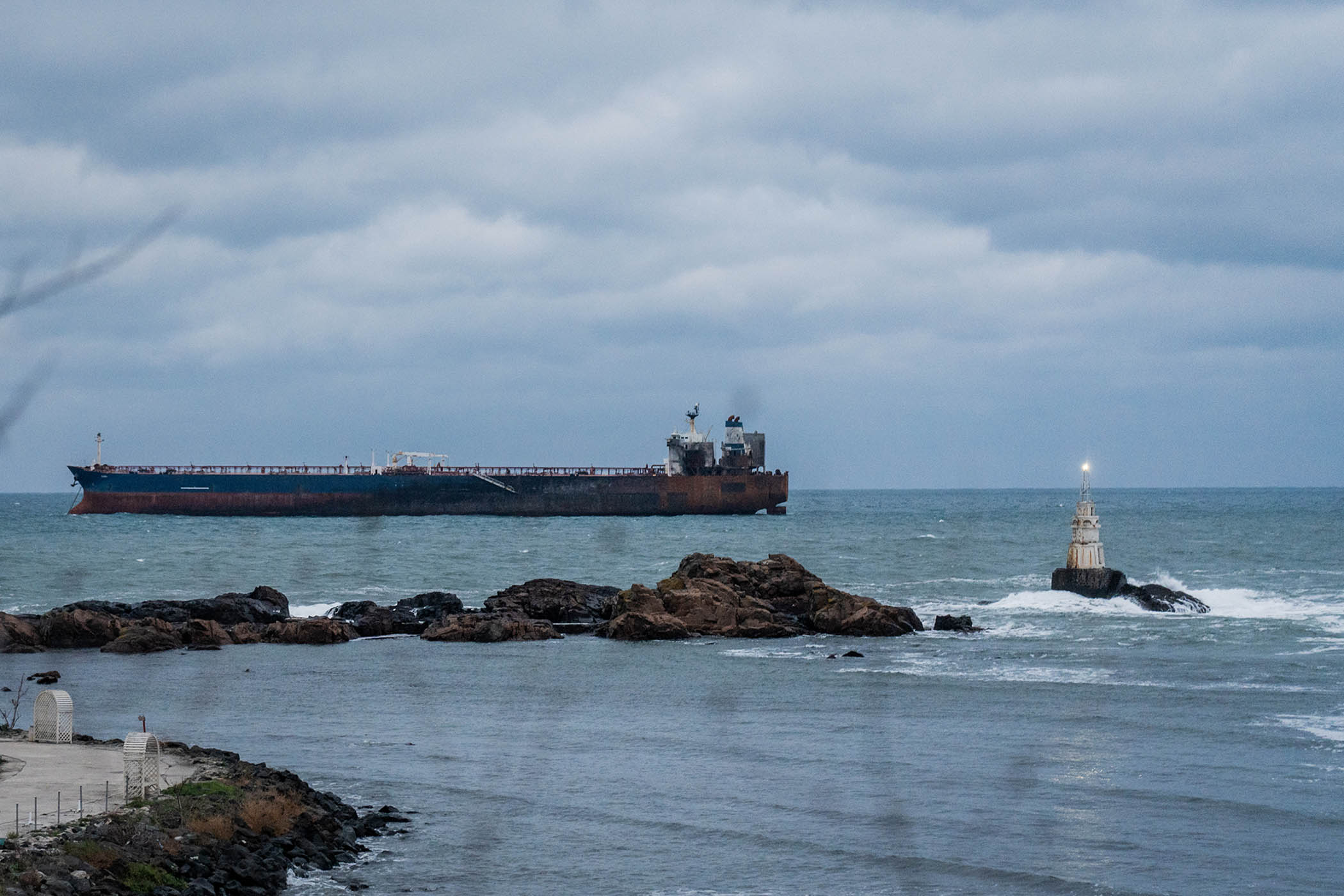


Global headlines are abuzz with stories of the “shadow fleet”, “dark fleet” or “ghost fleet” and the US’s aggressive pursuit of these tankers at sea.
For most people – all of whom live on land – the maritime world is as unremarkable as a shadow and as invisible as a ghost, so these stories of chases, boardings and seizures are hard to understand. What is all the fuss about flags? Why wouldn’t it be legal for the US to seize a sanctioned tanker? And how big a deal is this really?
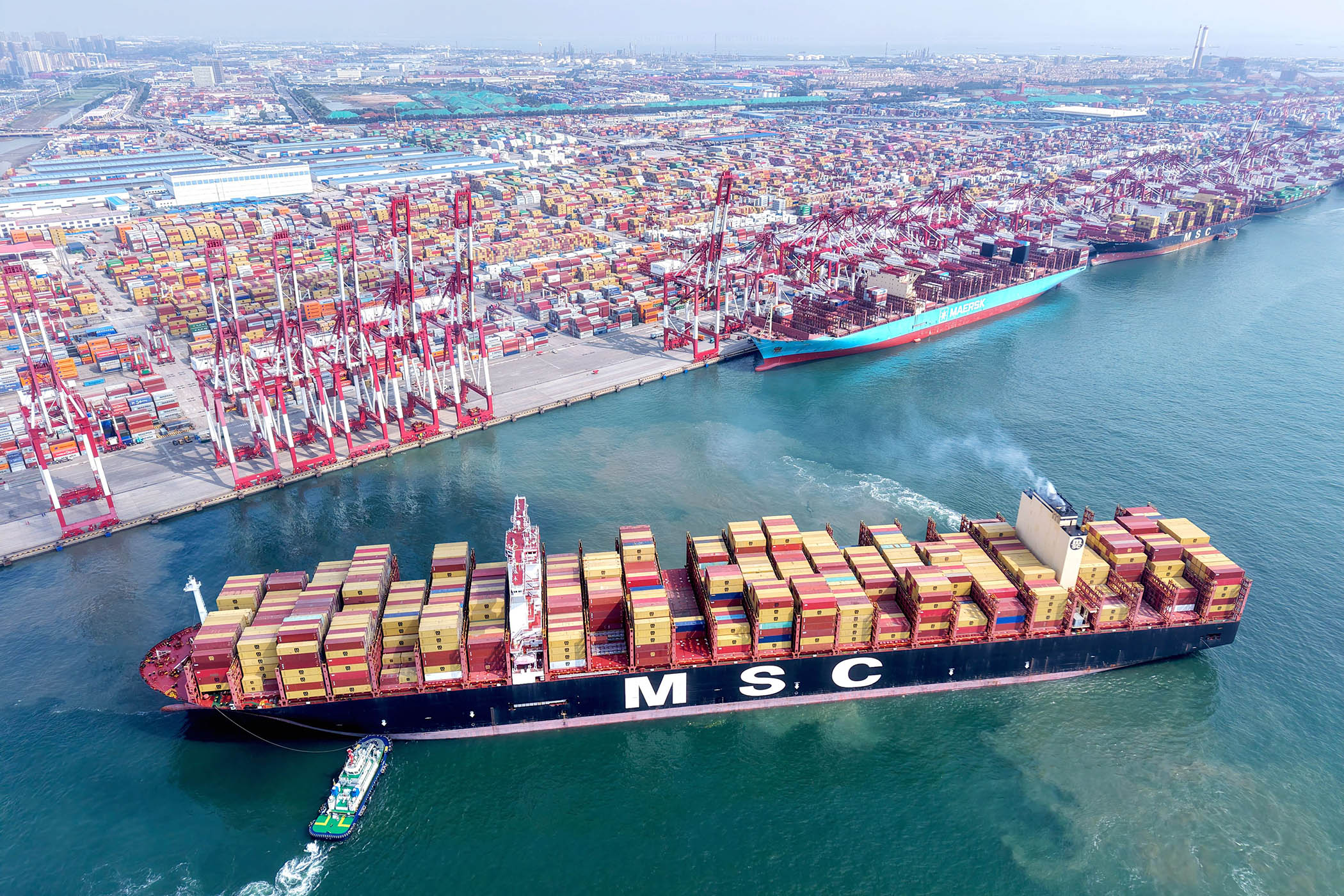
Roughly 70% of the Earth is covered in water and 90% of world trade happens by sea. But about a third of all maritime commerce is focused on energy cargoes. So when an economy is built on oil and gas, its access to the sea is vital. Curtailing that access is a well-worn approach to influence the behaviour of states whose economies are resource-dependent.
Over the past five years, sanctions have been used by western powers in an effort to limit certain states from participating in global maritime commerce. But it is much easier to impose sanctions on vessels, their owners and their cargoes than it is to enforce them.
Why? Well, for this, you need to understand a bit about maritime law. For the past several hundred years, coastal states have been limited in how much sovereign control they can exercise over the waters near their shoreline. For nearly three centuries, the “cannon shot rule” limited that distance to three nautical miles – the hypothetical maximum distance a cannon could reach from land.
But weapons have become more sophisticated – the distance at sea that can be reached from land has continued to grow, and during the past century the three-mile limit extended out to a 12-nautical mile territorial sea. But beyond that is what are colloquially referred to as international waters and the legal regime changes entirely, and the focus shifts to the flag state of the vessel.
Every state in the world – including landlocked states – can authorise vessels to fly their flag. Once that vessel is recognised by the flag registry, it effectively becomes a floating piece of that country.
The national laws of the flag state apply onboard the vessel and the state has certain responsibilities to oversee the operation of the vessel. That includes imposing and enforcing certain standards relating to safety, insurance, maintenance and labour.
Every vessel in international waters over a certain size – which, as a practical matter, means every vessel that is carrying cargo – is required to be registered in the lawful flag registry of a state. It cannot have more than one flag, it cannot fly a different flag than where it is registered, and it must display its flag and other points of identification.
Under article 110 of the UN Convention on the Law of the Sea, any maritime law enforcement agency from any country can visit and board a vessel in international waters to confirm its registration.
Newsletters
Choose the newsletters you want to receive
View more
For information about how The Observer protects your data, read our Privacy Policy
Since the full-scale Russian invasion of Ukraine in 2022, the proliferation of sanctions against Russian owners, vessels and cargoes – along with the sanctions on Iran, North Korea, the Houthis, Venezuela and others – has led to a variety of schemes to launder the identity of vessels affiliated with sanctions.
Those schemes included changing flags away from Russia and other key states, obscuring ownership details, changing identities numerous times, and seeking to register in states that did not have a history of oversight. They started using increasingly obscure registries and eventually started fraudulently purporting registration in countries that were not actually accepting them.
These vessels, therefore, stopped having safety inspections, stopped conducting maintenance, purchasing insurance and implementing labour standards. They also stopped broadcasting their identity and location on their Automatic Identification System (AIS) – the monitoring system that was implemented this century to aid the safety of navigation.
Turning off AIS or “going dark” is technically illegal unless it is done for the safety and security of the vessel, but it is also frequently employed as a tactic to avoid detection while doing something even more illicit. This is why the hundreds of vessels that are working to keep the oil and gas and thus the economies of Russia, Iran, Venezuela and elsewhere moving are now colloquially known as the shadow, dark or ghost fleet. The recent seizure of one such vessel, however, raises interesting new concerns.
When the Bella 1, a vessel with a dubious history and under sanctions by the US, left the Caribbean in December, it was purporting to be flagged in the Caribbean state of Guyana. Guyana, however, has a closed registry, so foreign entities cannot use its flag, making it highly likely the alleged identity was fraudulent. In other words, the vessel was likely stateless or “without nationality”.
Halfway across the Atlantic, however, the vessel changed identity, claiming to be flagged in Russia, owned by a Russian company and called the Marinera. It also picked up a Russian naval escort before it was intercepted by the US with support from the UK just south of Iceland on 7 January.
While there is little doubt that international law afforded the right to board the Marinera to confirm its registration, the specific facts of the case are not yet clear enough to confirm the legality of its seizure.
What is most significant about this case, however, is the Russian element. After thousands of vessels spent years trying to hide any Russian affiliation, it seems we may now see those vessels most wanted by the US and EU returning to overtly flying the Russian flag. This is not because the risk has subsided or the sanctions have lifted. It indicates instead a willingness by the Russian Federation to use its assets and power to try to protect these sanctioned vessels. This could be setting up a state-on-state confrontation.
With the evident willingness of the US to flex its military might, the well-known Russian affinity for aggression, the Iranian propensity for maritime attacks, and amid all that, the massive Chinese role in purchasing Russian and Iranian sanctioned oil, a volatile combination of factors could be brewing at sea.
In the immediate aftermath of the seizure of the Marinera, Russia, Iran and China are engaged in a multi-national naval exercise in South Africa with other Brics partners.
As the shadows and ghosts come out of the darkness and show themselves to be Russian or Iranian to claim protections from those states, we may see geopolitical tensions and economic conflict turn into physical hostilities between navies at sea.
We have to hope that such a potential flashpoint does not come to fruition or the world may struggle to find enough water to cool the resulting tensions.
Ian Ralby is president of Auxilium Worldwide, a charitable non-profit that, among other things, works on ocean governance. An operational maritime lawyer, he is a globally recognised expert on maritime security and international affairs
Photograph by Hristo Rusev/Getty Images