
At last Monday’s meeting of the parliamentary Labour party, the room fell silent as Calvin Bailey, the MP for Leyton and Wanstead, described flying combat missions into Iraq. He said his involvement in the 2003 war was “something that I have questioned every day since” and he thanked the prime minister for “doing right by our service personnel” in refusing to join the US and Israeli airstrikes on Iran.
Keir Starmer said it was important that, when people put their lives on the line, there is a prime minister who considers whether military action is “lawful” and “viable”.
Starmer is under attack from the right for turning down Donald Trump’s request to use British airbases to launch pre-emptive bombing raids, and from the left for granting the US permission to launch “defensive” airstrikes on Iranian missile sites from UK facilities.
Tony Blair told an event hosted by Jewish News on Friday that Britain should have backed the US from the beginning.
Trump is furious with Starmer for not immediately agreeing to his demands, declaring that he is “not Winston Churchill”.
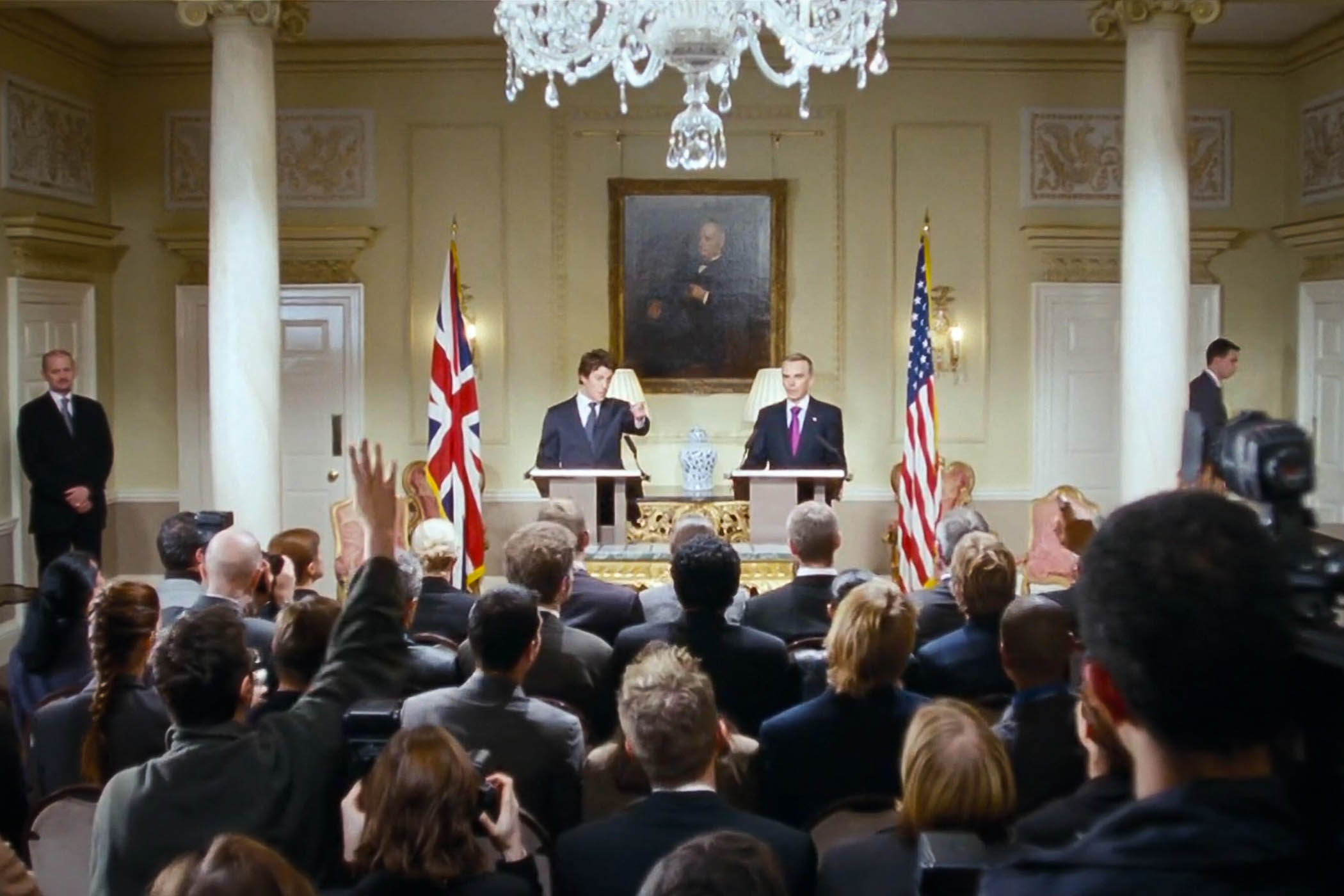
But what MPs are describing as the Labour leader’s “Love Actually moment” – a reference to the 2003 romcom in which Hugh Grant plays a British prime minister who stands up to a bullying US president – has strengthened his position in his party and is broadly in line with public opinion.
An Opinium poll for The Observer found that 42% of people support British bases being used for defensive airstrikes, while 21% are opposed. Only 6% agree with the Tory leader, Kemi Badenoch, that the UK should join the US-Israeli military action. Although the prime minister remains deeply unpopular, there has been a 7-point improvement in his net approval rating. One Labour source said: “Keir is taking heat on all sides but it’s a big deal that a Labour prime minister came out [last] week and said: we are going to learn the lessons of Iraq and say no to the Americans.”
With US bombers landing at RAF Fairford in Gloucestershire on Friday and Saturday, the approach is not risk-free. But when Starmer told the Commons: “This government does not believe in regime change from the skies,” it was a deliberate rejection of Trump’s stated war aims. The prime minister, contrary to some reports, had never been willing to allow UK bases to be used for the first wave of airstrikes. Along with his attorney general, Richard Hermer, he believed it would be unlawful to mount bombing raids with no clear evidence of an imminent threat from Iran. This was not a position he was browbeaten into by Ed Miliband, Yvette Cooper and Rachel Reeves.
‘Everyone falls out with Trump eventually, but you can patch it up’
‘Everyone falls out with Trump eventually, but you can patch it up’
Kim Darroch, ex-ambassador
There was a lively debate among cabinet ministers at the national security council meeting on Friday 27 February, but it was about the circumstances in which the UK should support “defensive” bombing raids if the Iranians retaliated.
“Keir raised the question of whether we could say to the Americans: ‘We can’t be with you at the start but if and when the Iranians launch a counterattack then you can use the bases,’” one source said. Starmer was clear on the fundamental point of principle about upholding international law.
Newsletters
Choose the newsletters you want to receive
View more
For information about how The Observer protects your data, read our Privacy Policy
A Starmer ally said: “It’s not just an attachment to a set of ancient statutes; it’s about defending the rules-based order because, within that, everything else can flourish.”
The prime minister’s position is at odds with Trump’s belief that might is right. The standoff has created a serious rift, but as Peter Ricketts, a former national security adviser, said: “The ‘special relationship’ can’t mean blind loyalty to whatever the president wants you to do at the time. It’s got to be a relationship between grownup countries, each making their own decision on their national interest.”
Simon Fraser, the former head of the Foreign Office, insisted the connection between Britain and the US goes beyond prime minister and president. “There’s an instinctive and deeply structured relationship between the military, intelligence agencies and diplomats that carries on,” he said. “There’s a huge amount of ballast in that relationship, so the ship will right itself. But, nevertheless, it’s challenging.”
The most important consequence of the Iran crisis for Starmer may be economic rather than diplomatic. Motorists are already facing higher fuel prices. With the cost of living set to determine the outcome of the next election, the government is drawing up contingency plans to give extra support with energy bills if the conflict lasts more than a few weeks. Downing Street does not want to further inflame tensions with the White House for fear of attracting extra tariffs.
Kim Darroch, the former UK ambassador to Washington, thinks Trump’s comments were designed to “wound” rather than kill the prime minister. “It was always going to happen. Everyone falls out with Trump eventually, but you can patch it up. The key thing is not to get involved in a transatlantic slanging match.”
Lord Darroch also pointed out that the king is due to visit the US next month and “the king is a very good diplomat”.
Some in Whitehall worry about the monarch being dragged into a row, but others hope the state visit will help “stabilise” relations between the UK and the US. “How far will Trump go if he knows the king is coming? He has an admiration for the royal family, so will he allow things to go really sour?” a retired diplomat said.
“The trouble is, when you’ve played that card, he’s still got two and a half years as president. You’re dealing with a completely volatile and uncertain commodity.”
Yesterday, the UK placed one of its two aircraft carriers on advanced readiness to sail from Portsmouth, raising speculation that it could be deployed to the Mediterranean in the coming days. The Ministry of Defence also announced that the US has started using British bases “for specific defensive operations to prevent Iran firing missiles into the region”.
“The United Kingdom, our once Great Ally, maybe the Greatest of them all, is finally giving serious thought to sending two aircraft carriers to the Middle East," Trump wrote on Truth Social on Saturday. "That's OK, Prime Minister Starmer, we don't need them any longer - But we will remember.
"We don't need people that join Wars after we've already won!"