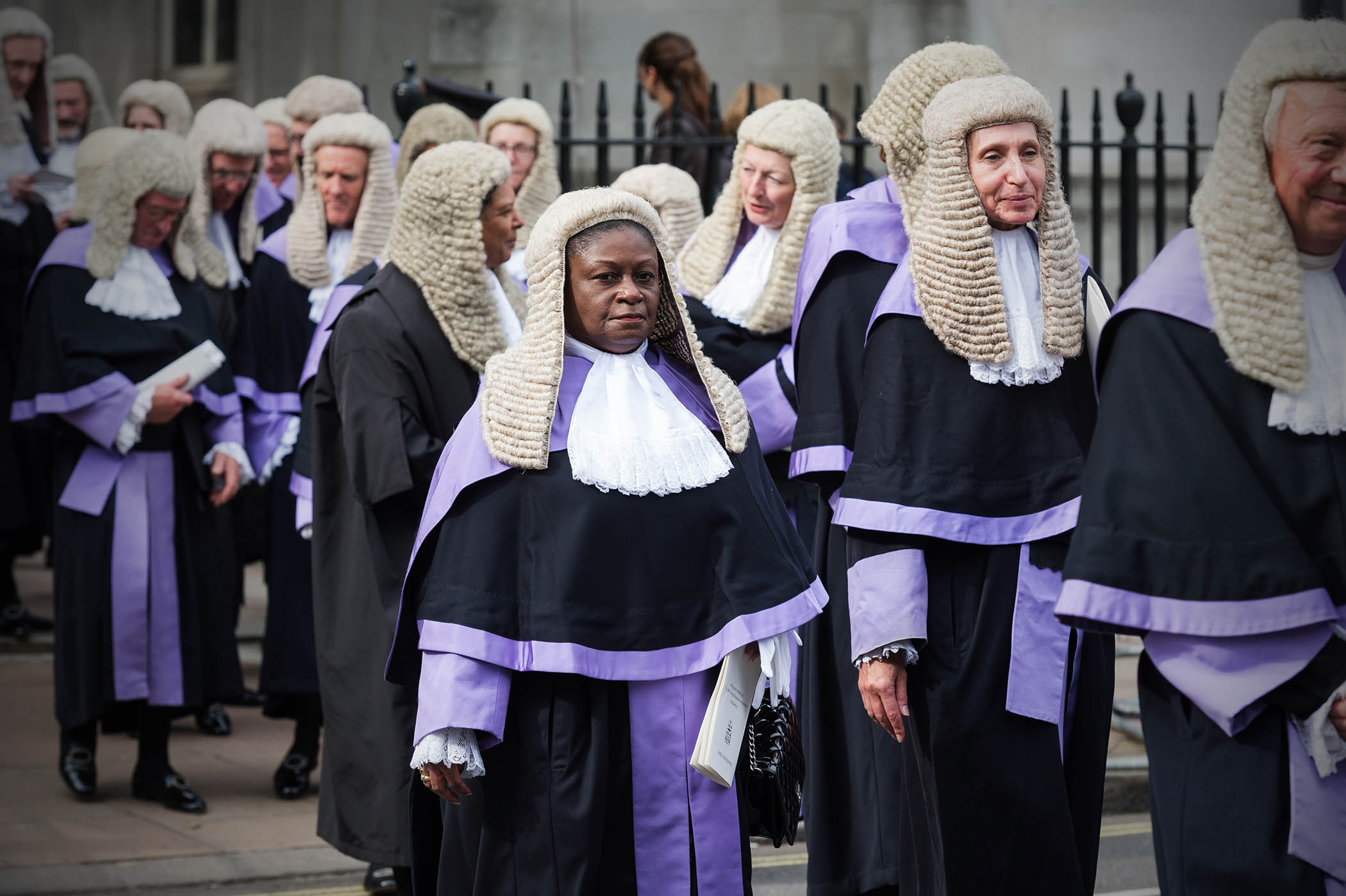


Rosamund Pike’s performance as Jessica Parks, a judge struggling to balance work and family life in Suzie Miller’s play Inter Alia, not only won her the best actress award at the Oliviers on Sunday, it was also a rare insight into the humanity of judges. “Fuck the patriarchy,” Pike shouts into a microphone at the start of a play that explores the interplay between Parks’ professional and personal identities. But judges in the real world are required to be devoid of political opinion and personality. They are representatives of the state, administering justice on behalf of the people, rather than individuals acting on instinct. The anonymity bestowed by the wig and gown is designed in part to give them a degree of protection from the wrath of the criminals the law requires them to send to jail.
The country relies on the steady stability of the judiciary to maintain the rule of law and uphold the constitutional conventions underpinning democracy. Whenever something goes wrong, the first instinct of the public and politicians is to call for a “judge-led inquiry”. But now there are wobbles at the very top of the judiciary just as the government is facing a Labour rebellion over its plans to increase the importance of judges in the criminal justice system by reducing the number of jury trials.
The position of chair of the Judicial Appointments Commission has been vacant for months. This is not a petty personnel matter. The head of the body that is responsible for choosing judges has a crucial role in maintaining the independence of the judiciary and ensuring appointments are made on the basis of merit, without political interference. “We need a really big hitter,” one retired judge says, “with the ability if necessary to face down the government, the professions and outside interference.”
But the recruitment process, first launched in August, has had to be re-run because the job was initially advertised by the Ministry of Justice on an obscure human resources page of the gov.uk website. There was “no appreciation of the role’s constitutional importance”, according to a legal grandee, and “not surprisingly”, nobody suitable applied. So, in January, the process was relaunched, headhunters were hired and the pay increased from £577 to £750 a day for the three-day-a-week job in an attempt to attract a “stronger field of candidates”. Interviews finally took place on Monday and a panel, chaired by Eliza Manningham-Buller, the former head of MI5, and also including Gus O’Donnell, the former cabinet secretary, and Sue Carr, the lady chief justice, will make a recommendation to the lord chancellor.
Their preferred candidate will face a scrutiny hearing before the House of Commons justice committee in June – a full six months after the previous holder of the post, Helen Pitcher, stood down. With a vacuum at the top, the commission is said to be in a state of deep disarray. “It’s a mess,” says one insider. “The board meetings have become acrimonious, there’s shouting and instances of staff leaving in tears because they’ve been treated so aggressively.”
The government needs more district judges and magistrates to deliver its court reforms, but a succession of the most senior judicial figures are leaving. Andrew McFarlane, president of the family division, retired this week. Geoffrey Vos, master of the rolls (the second most senior judge in England and Wales), and Victoria Sharp, president of the king’s bench division (the largest division in the high court) are both standing down in October and Robert Reed, the president of the supreme court, has announced his intention to retire in January.
All are stepping down several years before the mandatory retirement age of 75. “It’s unprecedented,” says a legal grandee. “There has never been such a huge number of changes at once before, and so we are in completely unknown territory. We are losing an awful lot of corporate memory and experience in one go. It’s certainly disconcerting.” Another says: “Imagine if all the heads of the armed forces changed at the same time. Of course it’s a risk.”
One retired judge says there is “nothing sinister” about the number of early retirements but that it is a reflection of the rising pressure on the senior judiciary: “It’s exhaustion. The jobs at the top are now so demanding in every respect that it is hard for people to keep going.” Unlike cabinet ministers, judges have very little administrative support. Even those in the most senior jobs have to write their own speeches and organise their own diaries. Crown court judges sometimes find themselves mopping floors to deal with a leaking roof.
There are also growing fears about security. Judges now regularly receive death threats and abuse on X. One was even attacked in court. Almost four in ten judges say they are concerned about their personal security at work. The row over the prorogation of parliament during the Brexit wars – when judges were denounced as “enemies of the people” – dragged the judiciary onto the political frontline. Since then, right-wingers have railed against what they call “activist judges” ruling on human rights cases, and even the prime minister said one judge had made the “wrong decision” by letting a Gazan family, allowed to enter the UK under a scheme for Ukrainian refugees, settle in this country.
Last month the lady chief justice warned that social media abuse “has taken a nasty turn” for judges, adding that she had “grave security concerns if there are going to be judge-alone trials”. Ministers seem confident of getting their reforms through the House of Commons, although they may need to make some concessions to the Labour rebels, but if the changes are to succeed in putting the criminal justice system back on an even keel, they also need to ensure stability is restored at the top of the judiciary.
Photograph by Wiktor Szymanowicz/Future Publishing via Getty Images
Newsletters
Choose the newsletters you want to receive
View more
For information about how The Observer protects your data, read our Privacy Policy