

Ministers will announce official targets to mitigate the impact of heatwaves and extreme weather after broadly accepting recommendations by the government’s official climate advisers, The Observer understands.
The UK is in the middle of its third heatwave of the year. Last week the temperature reached 35.5C at Wisley in Surrey and the UK Health Security Agency issued amber health alerts in most places south of the Pennines, with the heat expected to continue this week.
Roads have closed due to melting tarmac, while overheated railway tracks disrupted trains throughout southern England and Wales. NHS England has warned that its ambulance services are facing “sustained” pressure.
In May, the Climate Change Committee (CCC) published a report detailing how unprepared the UK was for weather extremes. It warned that infrastructure across the country must be upgraded to cope with a 2C rise, which will mean the UK regularly experiences days over 40C.
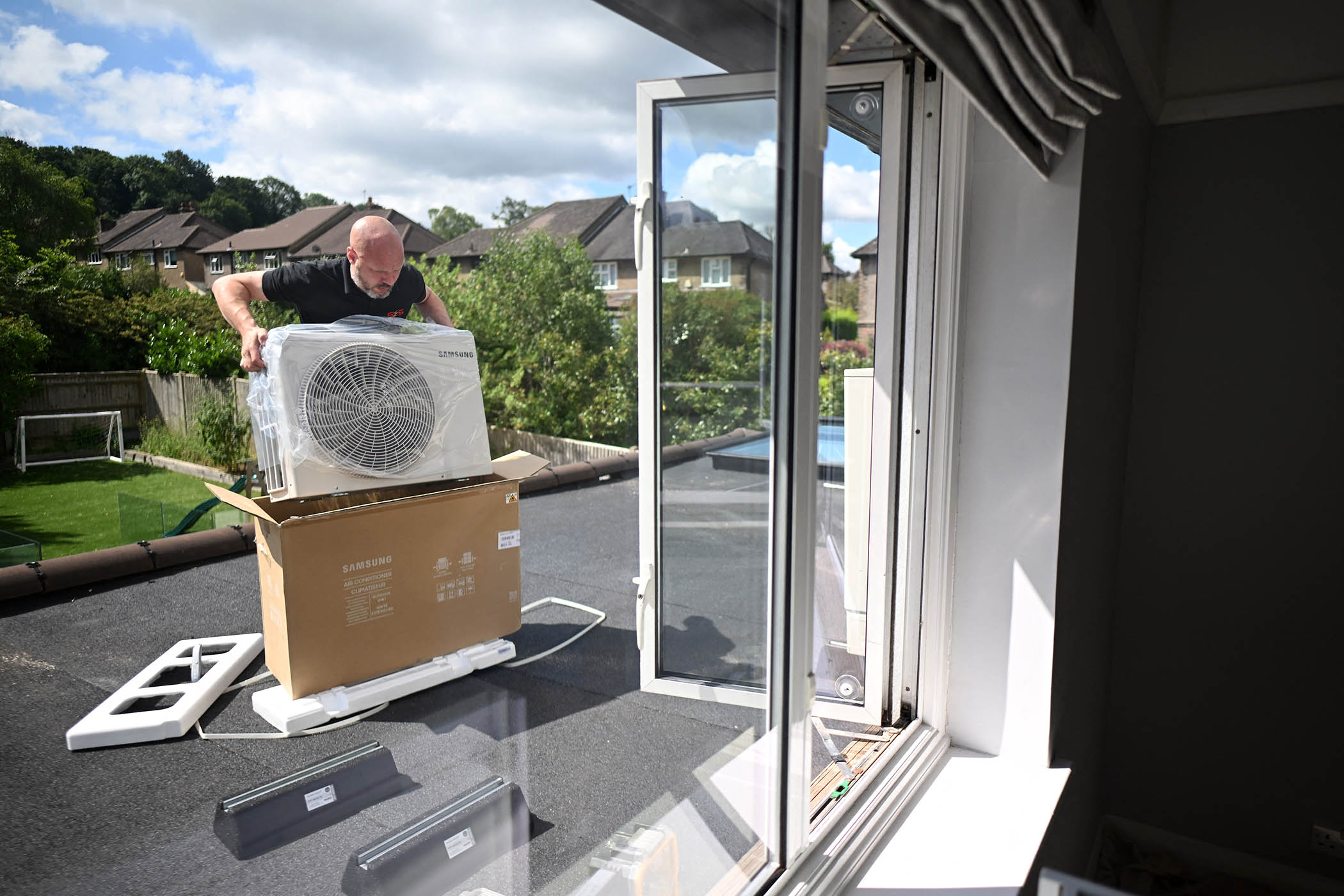
The committee set a standard that infrastructure in 2050 should be “no worse than today” and made recommendations that included air conditioning units to be fitted in hospitals and care homes within 10 years and schools in 25 years, as well as a maximum temperature for workers.
Whitehall sources told The Observer the commitment that infrastucture should be “no worse” had been accepted in almost every department of government. The CCC report said that adapting the UK would cost about £11bn a year, split between public and private spending.
But those on the frontlines of the UK’s current infrastructural collapse warn that commitments risk being too little, too late. Even at current heat levels, which are below the 40C temperatures predicted by the CCC, healthcare workers have said that the lack of cooling systems in NHS buildings is causing serious harm. Consultants and resident doctors say that they have treated patients whose conditions have become worse due to extreme heat, with some requiring intravenous drips to deal with dehydration and others being treated in sweltering corridors.
Charity Gladstone, president of the Malawian-UK Nurses Association, said nurses were exhausted by working “in poorly ventilated wards packed with corridor care, wearing uniforms that trap heat, and struggling to stay hydrated because water facilities aren’t adequate”. She said it was vital to install air conditioning.
The NHS’s biggest demand usually comes in winter with a surge in flu-like illnesses. But “summer pressures” are now emerging, with June seeing a record number of A&E attendances.
Tim Gardner, deputy director of policy at the Health Foundation, blamed longer waits for ambulances and in A&Es in June on the summer’s second heatwave. Temperatures in June peaked at 37.7C at Lingwood in Norfolk, and the heatwave “added to the pressures on services, with the extreme heat leading to surges in demand and operational pressures from overheating wards and equipment failures,” Gardner said.
Newsletters
Choose the newsletters you want to receive
View more
For information about how The Observer protects your data, read our Privacy Policy
The CCC said that 92% of homes would overheat by 2050 and warned of serious water supply shortfalls. Hotter seas around the UK will also lead to much higher rainfall, causing greater flood risks, and the CCC said peak river flows would be 45% higher.
Only 4.3% of households use air conditioning, according to a study published last month by the Energy Demand Research Centre, which examined data from 16,000 homes from the English Housing Survey. Dr Rory Jones from the University of Reading, the lead author, said the UK was heading towards a “cooling divide”, where renters and people in the poorest households were least able to stay cool during the heat.
The Department for Environment, Food and Rural Affairs said the government was committed to being resilient to a 2C rise by 2050 and intended to publish its next Climate Change Risk Assessment in January.
Photograph by Justin Tallis/AFP/Getty Images