I was sitting in a barber shop, half asleep, feeling the clippers buzzing at the back of my neck. There was an old TV mounted in the corner of the room, the type that no one pays much attention to. That was until I looked up. On that screen, there was a woman outside, scissors in hand. She raised them up and started cutting her own hair.
At first, I thought it was just something random. Maybe some new trend. Maybe a TV show. But it didn’t seem that way. She wasn’t really smiling. She wasn’t posing either. She was calm – clearly serious. Her hair fell down to the floor around her, however I was fixated on her. I had no idea who she was. I had no idea what she was doing. I had no idea where this was even coming from. Yet, it seemed important. It seemed like it was supposed to mean something.
Just a few seconds later, the reporter began talking. This was when I became aware of what I was actually watching. The woman on the screen was violating the rules of how women should be depicted in public places. Her decision to cut her hair like this was a political statement. This got me thinking about what life is really like in Iran for women and why something as basic as cutting her hair became a statement of truth.
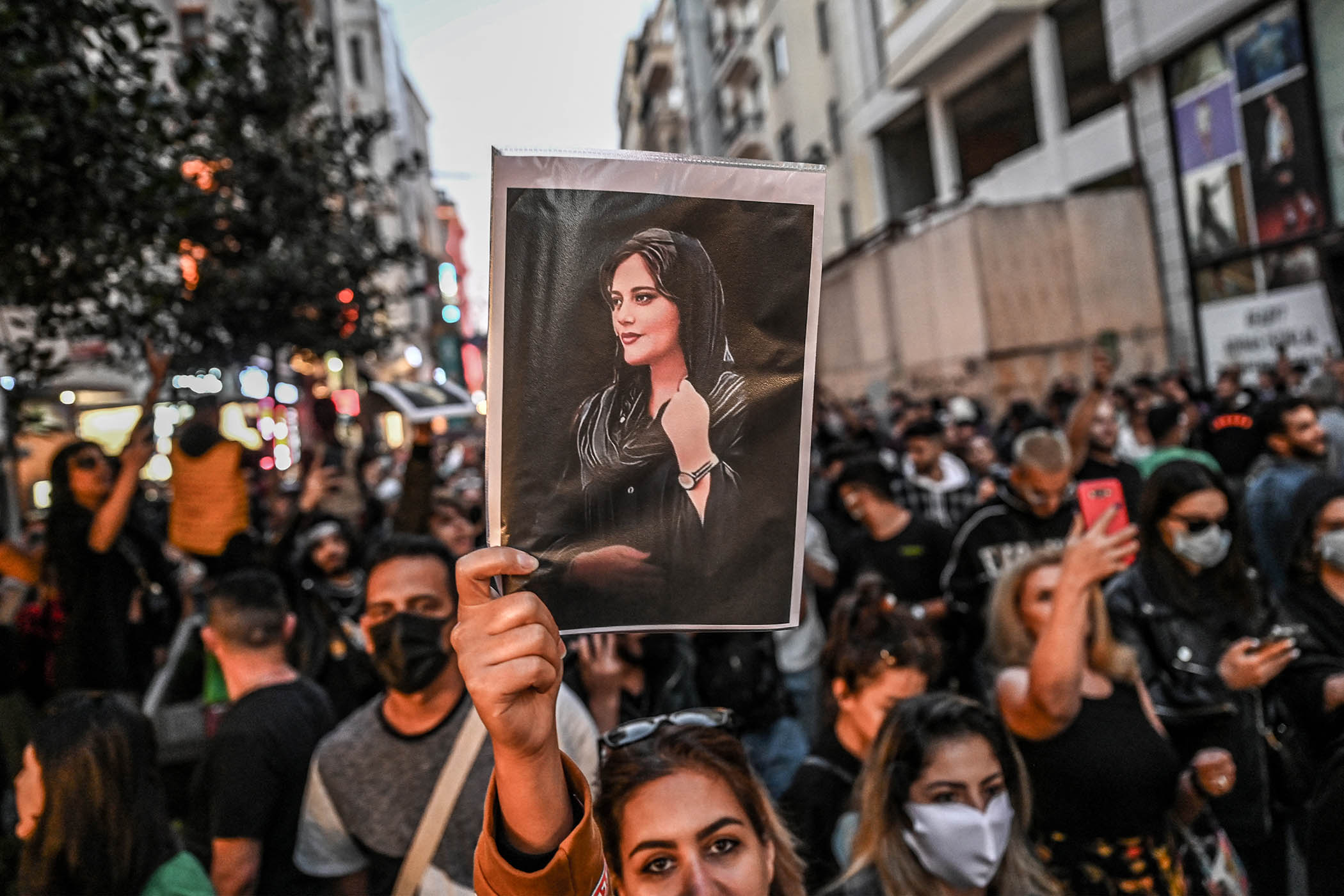
The majority of people associate this whole circumstance with one name: Mahsa Zhina Amini. Mahsa Amini was a young Kurdish-Iranian woman who was 22 years old. In September 2022, she was visiting Tehran with her family. A group of Iran’s “morality police” stopped her, claiming that her hijab was not worn correctly. Amini was arrested and taken away in a police van. A few hours after her arrest, she collapsed and fell into a coma, and on 16 September, she died in a hospital after being in custody for only three days. Authorities in Iran claimed that Mahsa died due to health problems – however, her family strongly opposed this. According to reports by Amnesty International and investigations carried out by the UN, there were signs that she had suffered physical abuse while in custody. The role played by violence from authorities in her death was noted by the UN.
Mahsa Amini never began a protest. Mahsa Amini never organised a protest. Mahsa Amini never created a post urging people to take to the streets. All she did was exist. All she did was get stopped because of how she was dressed. Almost immediately after her death, protests began to break out all over Iran. People began to chant “women, life, freedom”. Women were removing headscarfs and some even burned them. Some were cutting their hair. Suddenly, that video I had just watched in a barber shop made sense.
In fact, Amnesty International states that during the protests which followed the death of Mahsa, hundreds of protesters lost their lives, and tens of thousands were arrested. Not only did the security forces open fire on the protesters and beat them up, but they also arrested them. This is what many people seem to miss when they are talking about the protests online. These are not symbolic acts for women who are feeling oppressed. There are consequences to these acts.
In Iran, women are required by law to keep their head covered and follow very strict dress code regulations when in public places. These regulations have been in place since shortly after the revolution in 1979. But despite the dangers that women face by breaching these regulations, a majority of them are gradually starting to defy the laws. According to a survey done by Iran Open Data, 86% of surveyed women admitted that they had gone out in public without a hijab at least once in the last year. However, 63% of these women reported that they felt insecure while doing so, highlighting the risk. Between March 2024 and March 2025, reports suggest that over 30,000 women faced consequences or criminal cases for violating rules of hijab.
So, when a woman stands in public and cuts her hair while the cameras are rolling, she definitely isn’t promoting a harmless trend. She is telling the world that she decides what happens to her own body in a very public way. The problem here is that women in Iran are not stupid or ignorant about reading or their desire to be educated. In fact, the level of female literacy in Iran is very high: 97% of women are literate, and women make up 60% of university students. However, in the real world, this stops after education. Women also make up around only 16% of the total labour force. A huge gap exists between the education level of women and the actual degree of freedom they are allowed to have in society.
Back inside the barber shop, however, none of that was plastered on the wall. None of that was even written on the computer screen. I could only see a woman and a pair of scissors. But knowing what I have learned now makes all the difference.
I later found out the woman in the video was Nazanin Zaghari-Ratcliffe, a British-Iranian national who, after spending almost six years in prison in Iran, cut her hair in solidarity with the Iranian protesters in September 2022. Her exact words were: “For my mother, for my daughter, for the fear of solitary confinement, for the women of my country, for freedom.”
Watching her cut her hair was not the same when I realised what women in Iran face – what they face under strict laws, surveillance, arrests and violence after the protests over the death of Mahsa Amini. Each strand of hair that fell was not just hair. It was truth.
It showed us the reality that women in Iran live with each day: that even the smallest choices can become dangerous, and that simply being out in public as a woman becomes a form of political action.
As I stepped out of the barber shop, I began to see women around me in a different light, as people carrying bags, people walking with friends, people looking at their phones, people carrying out their everyday lives. But the fact is, for women in Iran, everyday life is lived around rules and threats that most people do not have to consider.
“The story of women in Iran is not simply a matter of oppression. It is also a story of education and aspiration. It is also a story of women who have studied and worked and organised and spoken out and resisted, sometimes at tremendous personal cost.”
Mahsa Amini didn’t choose to be a symbol. Yet, her death revealed what women have lived with for many years. What the protest revealed was the truth about the level of their frustration and fear. And what the woman on the TV screen revealed was the truth about the level to which things have not changed even when the cameras are turned away.
Sometimes truth isn’t best delivered through speeches or headlines. Sometimes truth comes in a barber shop. On an old dusty television set. Through the hands of a woman you’ve never met. Holding a pair of scissors.
______________________________
The Orwell Youth Prize uses the writing of George Orwell to inspire young people aged 11-18 to write bravely and creatively about their own ideas and experiences. This year’s winning entries, selected by judges Nandana Sen, James Bloodworth, and Sophia Smith Galer from an original list of more than 1,300 entries, were announced at University College London by George Orwell’s son, Richard Blair. Their writing, published digitally in full with The Observer for the first time, ranges from intimate personal reflection to engagements with issues of censorship, propaganda and resistance.
George Orwell wrote regularly for The Observer and its former editor David Astor was among his closest friends and most important supporters. But this is also a forward-looking partnership, rooted in a shared commitment to nurturing the next generation of talented journalists. Entries for the new prize cycle will open, with a new theme, in autumn 2026, and everyone who enters before February 2027 will receive free personalised feedback on their writing.
Photograph by Ozan Köse/AFP via Getty Images
Newsletters
Choose the newsletters you want to receive
View more
For information about how The Observer protects your data, read our Privacy Policy