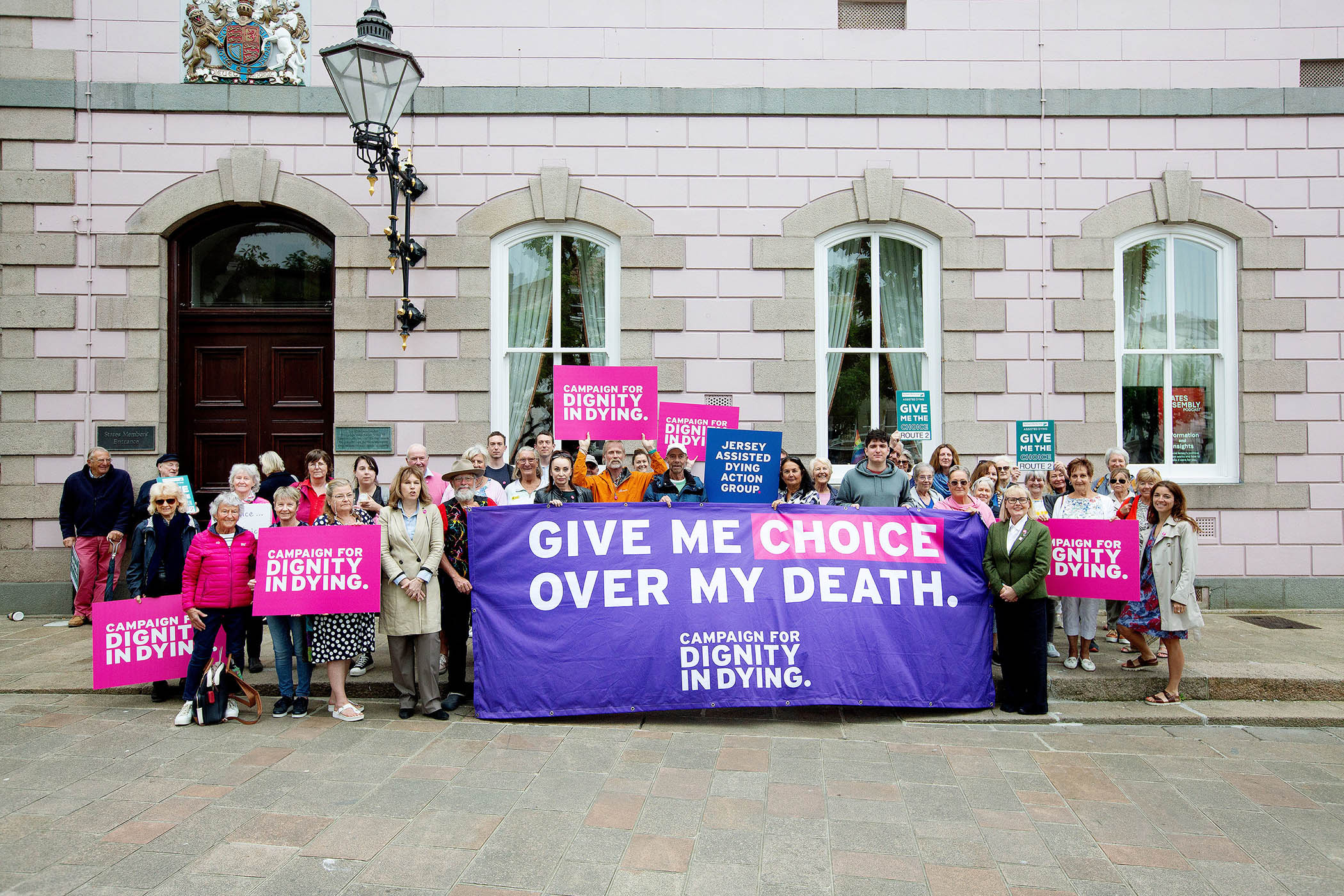



This week the tiny parliament of Jersey has made assisted dying legal, its citizens joining some 300 million people able to access this right in other democracies around the globe: Australia, New Zealand, Canada, and many European countries and American states. However, just a few miles across the channel, here in Westminster, the bill introduced by Kim Leadbeater to allow British citizens similar rights is facing serious jeopardy. This is despite the Welsh parliament’s support, also this week. It is also despite massive public support for this legislation.
Polling nerds like me eagerly await the annual publication of the British Social Attitudes survey. It’s a treasure trove that shines a light on how our views as a nation change over time – the only longitudinal study of its type. The 2025 study, published last month, tells us that 79% support changing the law to enable assisted dying. This overwhelming evidence is consistent across age, gender, region and politics. It is also consistent among those with disabilities, those who profess a religion and the medical profession.
Data modelling by the polling organisation More in Common reveals that support outweighs opposition in every constituency in Britain. This consistency has held for many years. Polling guru John Curtice observed recently that the picture of public opinion on assisted dying is “one of remarkable stability and near consensus in public attitudes”.
Some 52% of us have cared for or witnessed a family member or friend who was terminally ill and suffering at the end of their life
Some 52% of us have cared for or witnessed a family member or friend who was terminally ill and suffering at the end of their life
These views are not just widespread and consistent – they are also heartfelt. They are not theoretical – they are instead often drawn from painful personal experience.
Maddie, who was diagnosed with a terminal illness in her late teens, urges lawmakers to “listen to the people most affected by the law”. Poppy, who watched her mum forced to suffer past the point where she would have chosen to take control and end her life, wept as she described her sorrow that the choice was not available. Paola, who travelled to Dignitas to end her life, alone and much sooner than she would ideally have chosen to do so, argued for “giving people the right to end their lives on their own terms with compassion and respect”. Sophie, who has stage four breast cancer, explained: “I have a huge passion for life and want to live for as long as I can and to be there for my daughter as long as I can – but I also want to know that when the time comes I can have peace of mind.”
These experiences are not unusual. Some 52% of us have cared for or witnessed a family member or friend who was terminally ill and suffering at the end of their life. Unsurprisingly, experience of this rises with age, up to 66% in the 50-64 age group. Research, such as England’s first citizens’ jury on assisted dying, suggests that support for law change grows with people’s understanding of the issue and the arguments around it.
In a clip recorded before the 2024 general election, Sophie urged voters to share their experiences with candidates, to ask for candidates’ views on assisted dying and to vote with this in mind.
The MPs elected to the House of Commons that year have now voted twice for assisted dying, but a small group of opponents of the bill seem determined to “talk it out” in the House of Lords, adding amendment after amendment, repeating arguments so that the bill runs out of time.
As a newish member of the House of Lords I have been disappointed to watch this use of process by a small and vociferous number. It’s a far cry from the wise debate and forensic scrutiny I’d been led to expect.
The public agrees. A YouGov poll found that 58% disagreed with the Lords talking the bill out in this way, while only 17% found it acceptable. Again, public opposition rises by age, which is consistent with greater lived experience of the impact and the pain of the alternative.
Newsletters
Choose the newsletters you want to receive
View more
For information about how The Observer protects your data, read our Privacy Policy
Trust in our democracy has never been lower. Year on year the Social Attitudes survey shows a growing trust gap between politicians and the citizens they represent, reporting a “record low” of 45% saying they “almost never” trust governments to act in the national interest. The British Election Study reported that the proportion of people with low or no trust in MPs grew from 54% to 76% between 2014 and 2024.
These days, focus group participants are often furious, complaining loudly that representatives do not listen to them and are not mindful of their views when making decisions. Confidence in the unelected House of Lords is lower still, at a desultory one in five. At the end of 2025 YouGov found that just 2% had “a lot” of confidence in the House of Lords and only 17% had “some confidence”.
With this in mind, I would urge fellow peers to resist allowing our reputation to slump still further by talking out this important and hugely popular bill.
Photograph by Christian Keenan/PA Wire