

Food and farming are starting to matter in British politics. Three of the worst harvests on record in the last five years; pressures on farmers mounting due to the Iran war and changing weather patterns; by the end of the year, food prices likely to be up 50% since 2021. The public is now paying attention and feeling the pinch. Will politicians meet this moment, or waste it?
The stakes are getting higher. Last week the Climate Change Committee published A Well-Adapted UK, a 554-page report that ought to have been front-page news. With global warming now on track for a 2C rise by 2050, the report sets out a worrying trajectory for British farming. High-quality farmland in England in Wales is expected to reduce by two-thirds, with Britain’s breadbasket, the Fens, forecast a 16-fold increase in flood risk. Food prices, inevitably, will creep higher. This is our future if nothing changes.
But there’s a rift in the industry about how to respond. In the headlines, Tom Bradshaw, president of the NFU, is calling for immediate support to protect farmers facing fuel and fertiliser price spikes caused by the Iran war. On Radio 4’s Farming Today, Stephen Briggs, an organic farmer in Cambridgeshire, is thinking long term. To keep his farm productive and profitable in the future, he’s embracing cutting-edge techniques such as agroforestry and planting crops between rows of trees. So do we want government to help farmers bounce back? Or bounce forward?
Farmers facing escalating bills for fuel and fertilisers need help. Yet every pound spent on recovery is a pound not spent preparing for a changing economy and climate; and the real question for ministers is how many more shocks can the country absorb before something breaks?
This is the third fossil-fuel driven food price shock in five years. Covid, Ukraine, now Iran. It’s time to acknowledge they’re not shocks but features of a fragile system.
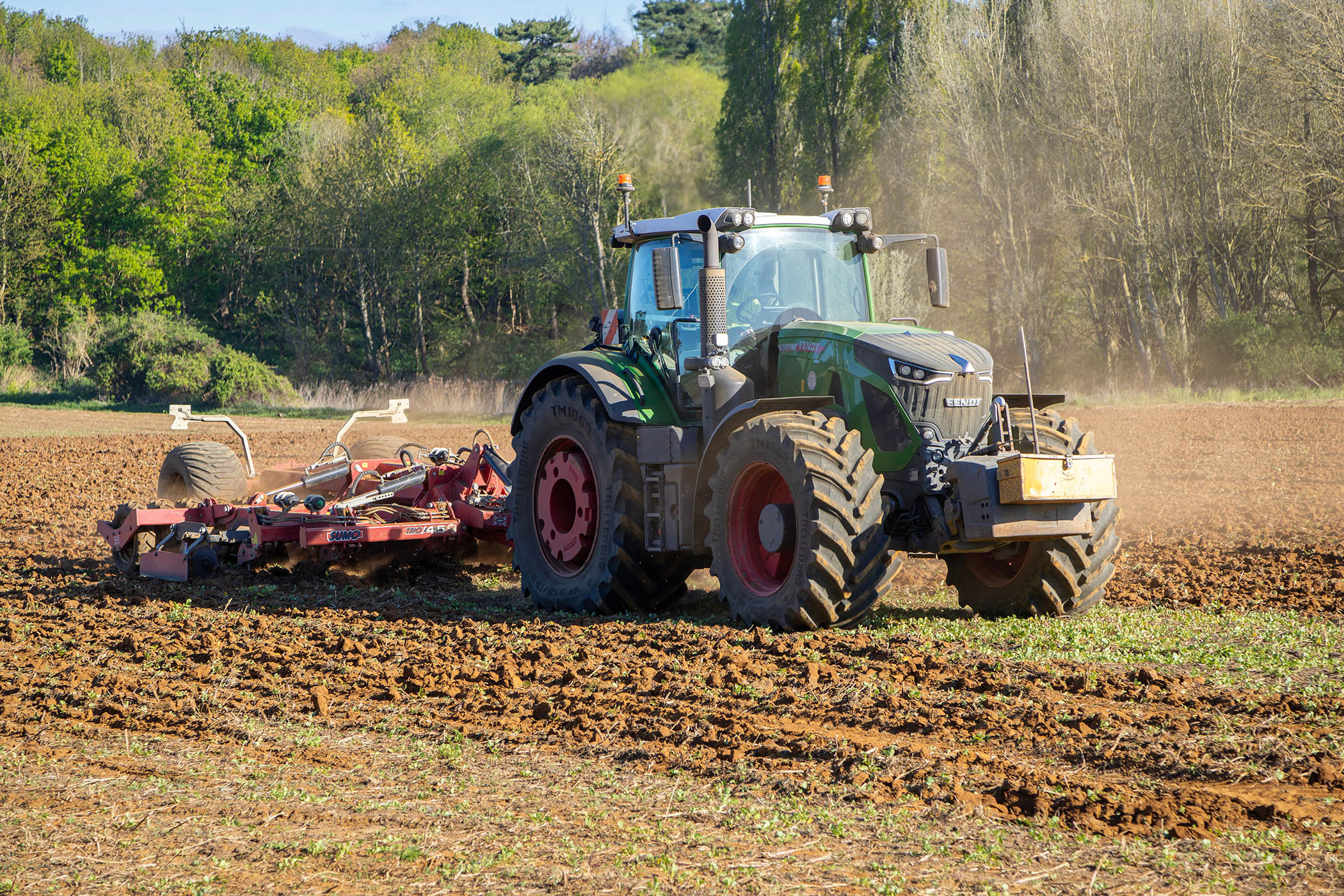
The root cause needs spelling out. Much of British farming runs on fossil fuels. It’s not only the red diesel in tractors: synthetic nitrogen fertiliser, the largest variable cost on most arable farms, is made from gas, so every spasm in the gas market is a spasm in the food system. Those emissions from fossil fuels drive the climate changes now hitting farming in the form of floods, droughts and ruined harvests.
Yet there are clear and practical alternatives. This is where Stephen’s story comes in. Agroforestry, diverse rotations, feeding livestock on pasture, healthier soils, reducing bought-in inputs: these are ways that good businesses can manage risk. Farms built on these principles are less exposed to input price volatility and more resilient to climate volatility. The same design solves both problems. They’re more profitable too. This is what bouncing forward looks like on the ground – and by decarbonising farming, investing instead in biological processes, the UK gets closer to meeting its climate and nature targets.
What’s missing now is a plan. We know how to build one when we choose to. We did not decarbonise electricity by asking generators to be more efficient with coal. We set a destination and built the architecture to get there. Agriculture is crying out for the same ambitious transition plan. So when figures such as Tony Blair argue this week for more North Sea drilling and closer ties with Donald Trump, they reveal their attachment to moribund, old economics: powerful corporations externalising their real costs, exploiting nature and people anywhere in the world for huge profits.
The emerging middle powers are showing real leadership. In Brazil, President Lula has launched a national plan for agroecology, pulling 14 ministries into a single framework, using agroforestry to restore degraded land. In Denmark, the Green Tripartite Agreement pays farmers to reduce nitrogen use. France has its national agroecology project. These countries are deciding that secure and resilient food economies are strategic national assets worth building.
Bouncing forward needs food and farming to be part of a coherent industrial strategy that focuses public and private investment in future-proofed food production. It needs independent on-farm research and advice, revitalised regional processing and markets, and supply chain reform to ensure returns are shared fairly with farmers. It needs governments to use what they spend in public procurement as a strategic lever. And it needs support targeted at the farms making the transition to a resilient, low-carbon future – not propping up what worked for a while.
Newsletters
Choose the newsletters you want to receive
View more
For information about how The Observer protects your data, read our Privacy Policy
The British public want honest analysis and a serious plan, delivered. They know farmers need help, and they want a fairer, more resilient food system fit for an uncertain future. Bouncing back to a food economy this fragile is the most expensive option of all. Britain does not need to return to the past. It needs to look forward, to be more imaginative, more far-sighted, and much more ambitious.
Sue Pritchard is chief executive of The Food, Farming & Countryside Commission
Photograph by Geography Photos/Getty Images