
Because I used to sort mail for a living, I learned early on that you can tell a lot about a person by how they set themselves down on paper. I’ve mentioned, in this paper, that when I was growing up my folks’ job was answering fan mail for the Muppets; I earned my pocket money by helping out, and the first task was to open the letters and categorise them. Did this person want to be a puppeteer? (Advice was available.) Did another want to watch The Muppet Show being filmed? (Answer: if so, sorry, nope.) Since this was back in the 1970s and early 1980s, these queries, admirations and (occasional) admonitions came on actual paper, sent in actual envelopes, stamped and sent through the post.
I was learning much more than what it meant to be a fan. I was discovering that text had haptic meaning: how the words were presented mattered as much as the words themselves. I could distinguish, soon enough, between the handwriting of an eight year old and an eighty year old; I discovered that certain countries (France, Poland) had distinctive penmanship. Occasionally, letters were typed, though rarely; but even typing has character, as the typewriter’s great advocate Tom Hanks will tell you.
Yesterday, the government published a Green Paper, Watch this Space: A new strategic direction for UK media, “to consult on options to require social media companies and video sharing platforms to make sure that news content from public service media (PSM), which includes the BBC, ITV, STV, Channel 4, S4C and 5, and other trustworthy providers, is prominent and easy to find on their platforms.” This is so that the public will be better able to distinguish between what is reliable and what is not. While there are indicators on screen of what is published by The Observer (say) and what is posted by a person in their basement, unless you’re buying the paper on Sunday — and thanks for that — it’s all pixels in the end.
Three quarters of young people (16-24) get their news via social media — but to my mind there’s no reason that the young should be singled out in this regard. The danger is equally great, if not greater, for “digital immigrants” — those who didn’t grow up with digital technology and so are far less fluent and sophisticated when it comes to working out whether what’s offered online is fake news or not. “When Grandpa turns extremist” from the Global Network on Extremism on Technology, discusses the way that older German citizens have been drawn into “The Reich Citizens Movement”, a collection of groups and individuals in Germany who reject the legitimacy of the Federal Republic of Germany.
An example of what I mean: because, on the whole, I don’t report on technology nor extremism, I’d not come across GNET before. On their “What We Do” page: “The Global Network on Extremism and Technology (GNET) is an academic research initiative backed by the Global Internet Forum to Counter Terrorism (GIFCT), an independent but industry-funded initiative for better understanding, and counteracting, terrorist use of technology.” The author of the piece is called Isabel Lang. I do a little digging; she is a German academic, the author of a 2025 book called Künstliche Intelligenz und Politischer Extremismus (Artificial Intelligence and Political Extremism) published by Springer Nature — which I know of as a more than reputable publishing enterprise, but I look up nonetheless: “We are a global and progressive business, founded on a heritage of trusted and respected brands – including Springer, founded in 1842, Macmillan, founded in 1843 and Nature, first published in 1869.”
This little rabbit hole is simply an indication of what’s required of all of us, now, when we are consuming “content”, a flat and affectless term which speaks to an inability to swiftly distinguish what we are seeing, where it comes from, what its agenda is, and whether it is, at the most basic level, true or false.
It is too simple to say: oh, when I was young, we could look at a book and say: trustworthy. A newspaper: trustworthy. A flyer mimeographed and affixed to a neighbourhood tree with a thumbtack: maybe less trustworthy. The New York Times recently ran a piece with this disturbing headline: “The World’s Leading Deepfake Expert No Longer Trusts His Own Eyes”. Hany Farid has been “the world’s leading expert in the field of digital forensics” for decades, decoding the deepfake from the authentic. The catch? These days, he can no longer tell what it is he’s looking at. Good luck to the rest of us. Stay safe out there.
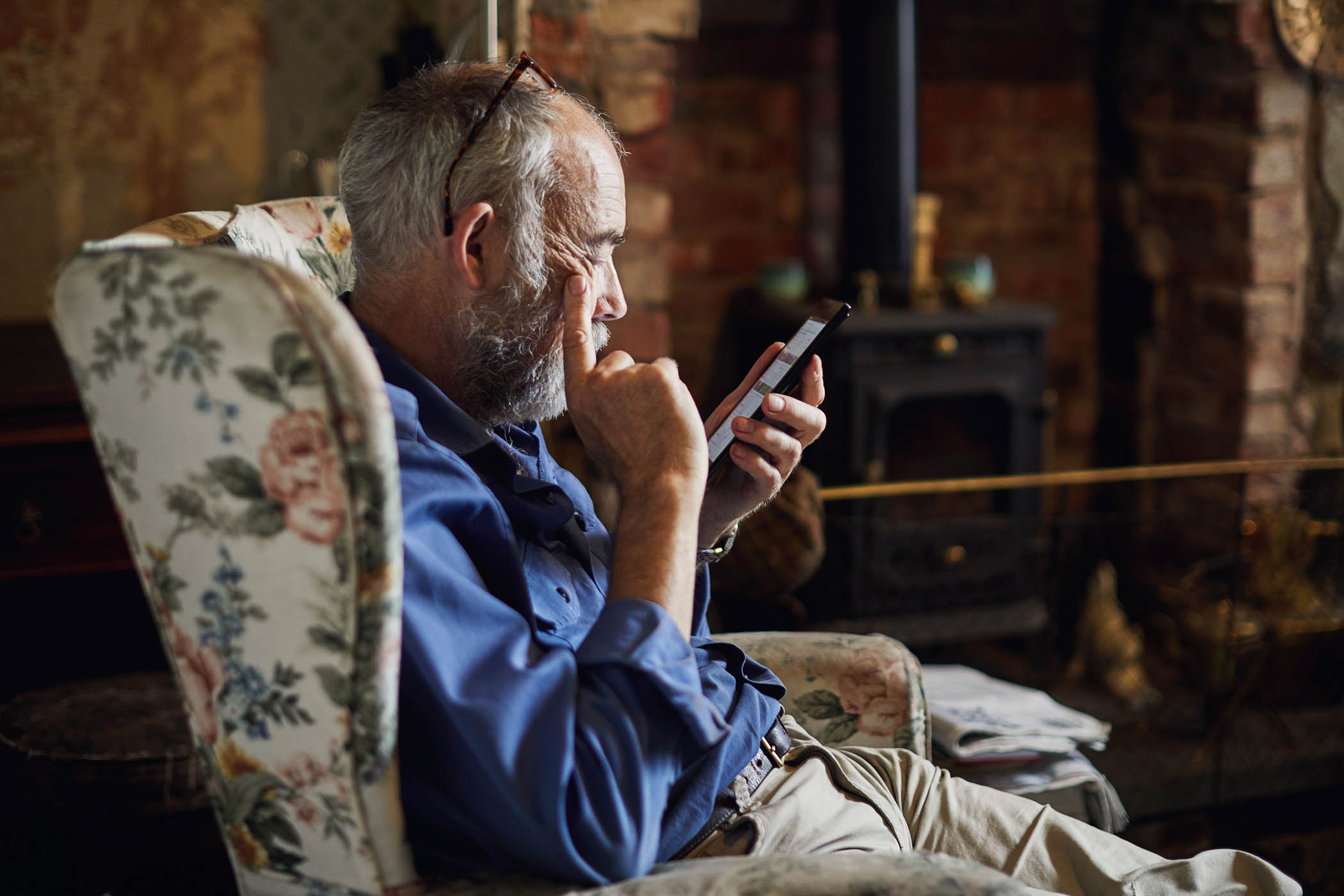
Photograph by Sally Anscombe/Getty Images
Newsletters
Choose the newsletters you want to receive
View more
For information about how The Observer protects your data, read our Privacy Policy