Scott Bessent, speartip of the giant American delegation sweeping into Davos this week, said on Monday the world should take President Trump at his word on Greenland. “We are not going to outsource our hemispheric security to anyone else,” he warned.
Not long afterwards, Trump himself – still in the Oval Office, but soon to board Air Force One for Switzerland – was asked if military options were still on the table in his project to annex the island. His response: “No comment.”
Tactically, Team Trump is sweeping all before it. By creating a completely unnecessary emergency in Greenland, it has set Nato against itself, eclipsed everything else on the agenda at Davos and given the rest of the world an unmissable spectacle. All Russia and China need to bring is the popcorn.
Strategically, the Greenland project may turn out to be a masterstroke – but only if Trump’s parallel universe turns out to be the real one and everyone else is in a land of make-believe.
Pressed on why he wants to own Greenland when he can mine it and put troops and missiles there without any of the obligations of ownership, Trump has said the US needs it for its national security, and for that of other Nato members. He has talked about raw materials; about the Golden Dome, a continental anti-missile shield the administration claims to be building; and about the psychological difference between ownership and leasing (“you defend ownership; you don’t defend leasing”).
There is nothing in what Trump says about US adversaries’ designs on Greenland
There is nothing in what Trump says about US adversaries’ designs on Greenland
Trump has also hinted that he’s turned maverick on Greenland because he was denied a Nobel peace prize, and questioned the historical basis for Denmark’s claim to the island.
This president is not usually much concerned with history, which, it’s true, does not reflect well on Denmark’s treatment of its enormous Arctic possession. But the basis of its claim is not historic. It’s legal. It rests on the principles of sovereignty and territorial integrity which drew the US into two world wars, an epic containment effort known as the Cold war, and the shock and awe required to reverse Saddam’s illegal occupation of Kuwait.
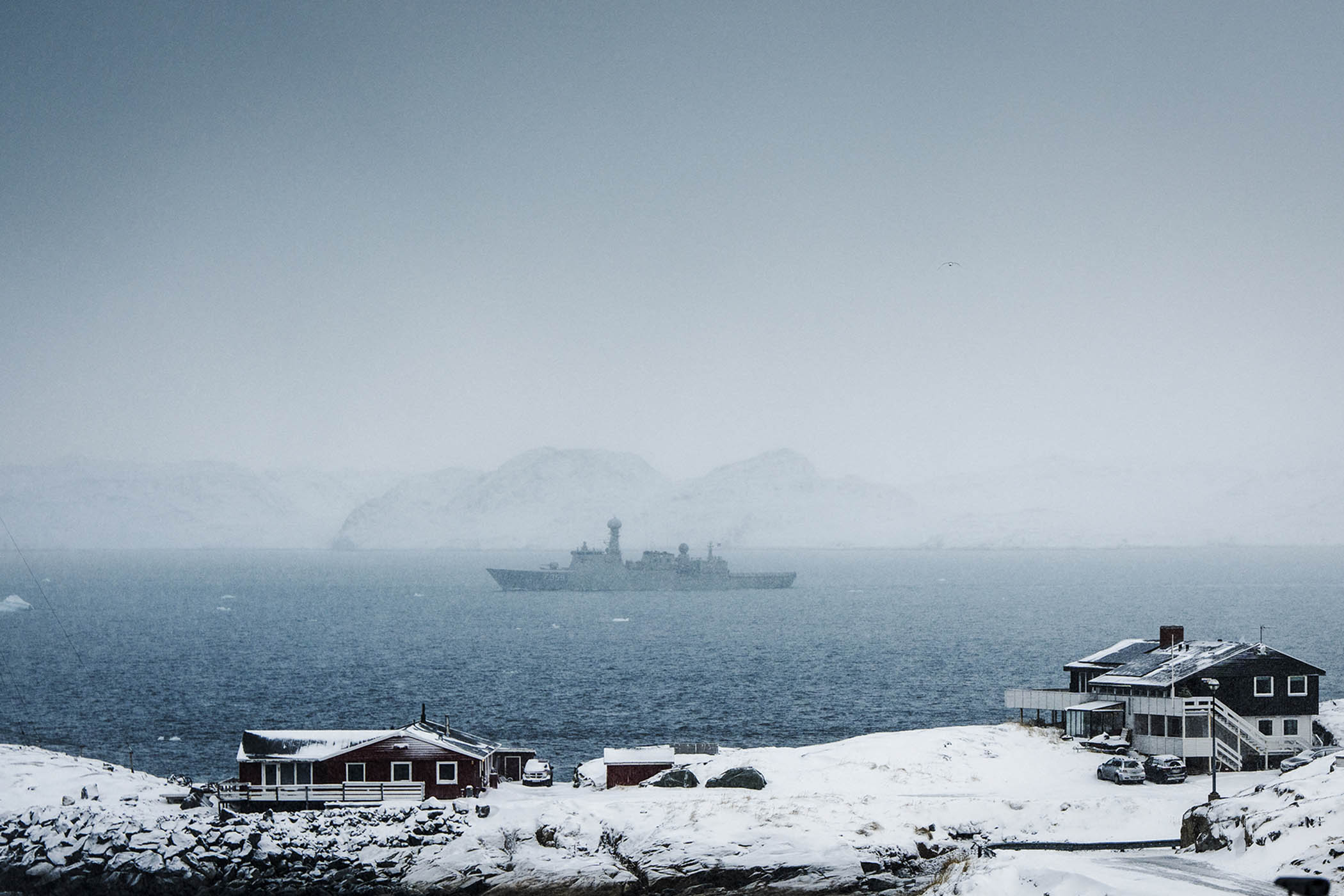
This is what Trump is ignoring. He says his reasons are compelling, but saying it does not make it so. There is nothing he might need to build in Greenland for an anti-missile shield that he cannot put there by agreement with Denmark. And there is nothing in what he says about US adversaries’ designs on Greenland. He says the seas around Greenland are teeming with Russian and Chinese naval vessels, but this isn’t true and hasn’t been for years.
This is a confected emergency. European leaders have reacted with earnest promises to take Arctic security more seriously, but this is not because Arctic security needs their urgent attention. It is to keep Trump on side in the effort to end the war in Ukraine on reasonable terms, and to try to avoid punitive tariffs. Russia makes exorbitant claims on paper about its rights in Arctic waters, but given Ukraine, Iran, Gaza, Sudan and Venezuela, the only agenda on which Arctic security features high up is an imaginary one.
It could still upend Nato. An alliance whose members are at each others’ necks is no longer an alliance. But that does not mean it will end Nato.
Newsletters
Choose the newsletters you want to receive
View more
For information about how The Observer protects your data, read our Privacy Policy
“It would require quite an adaptation to replace the US, but Nato would still be the best framework for doing so, disruptive as it might be,” says Ivo Daalder, a former US ambassador to Nato. “It would still be Nato as the largest part of North America (Canada) would still be a member. Nato wouldn’t end. It would just be very different.”
One way or another, Europe will need to take responsibility for its own security for the first time since 1941. It wouldn’t hurt to rediscover some self-confidence at the same time. Old habits die hard, and EU and British leaders will head to their Davos meetings with US counterparts as supplicants, yet they might reflect on an oddity of world affairs in 2026. While Greenland, Canada and Panama recoil from Trump’s America, Ukraine and the western Balkans line up quietly and patiently for EU membership.
That appetite for inclusion in a community defined by democracy, free markets and the rule of law is little changed since 1989. As a gentle reminder to Keir Starmer: it’s something to be proud of.
Photograph by Mads Claus Rasmussen / Ritzau Scanpix / AFP via Getty