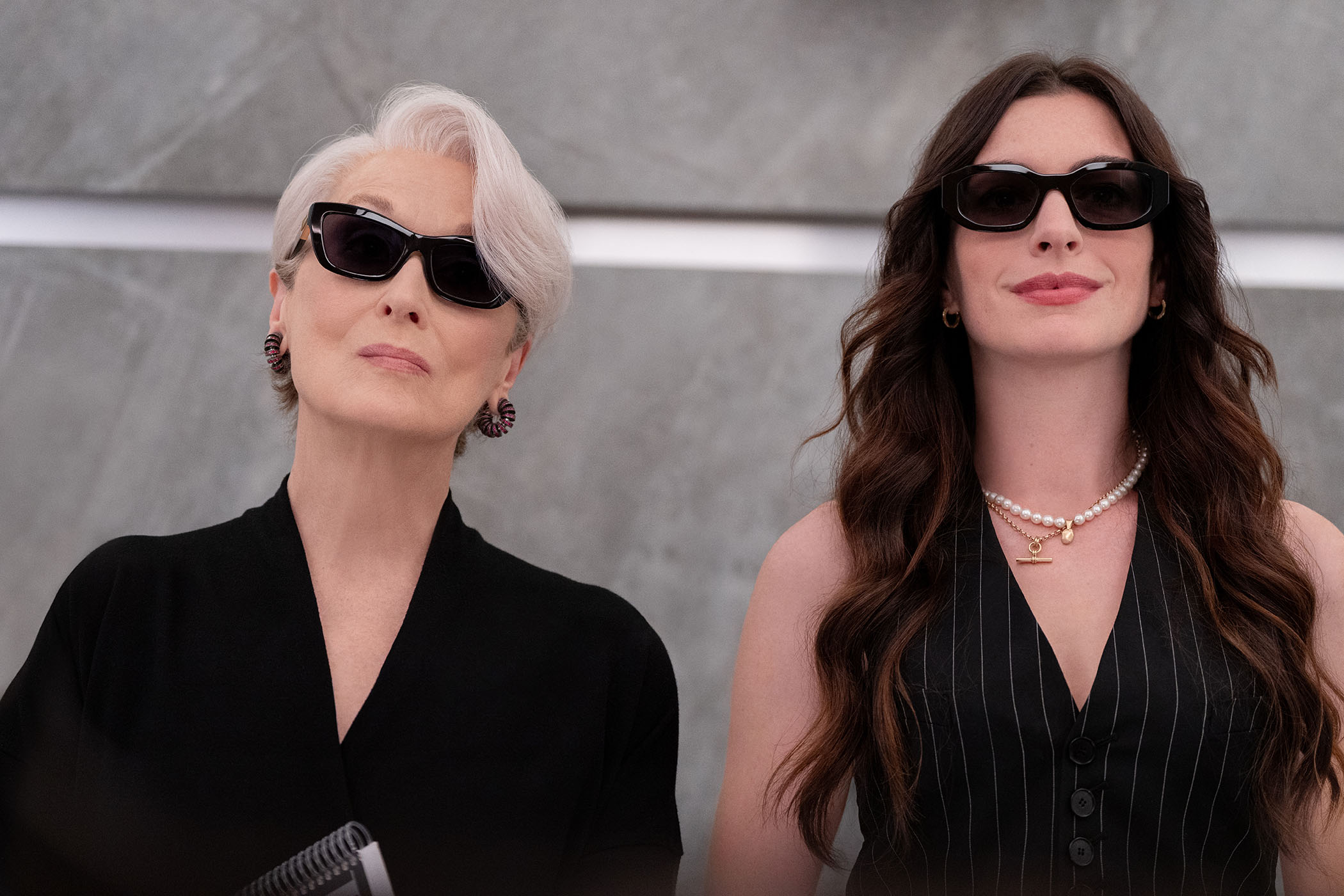


Gird your loins and don your Chanel boots! Miranda Priestly is back in The Devil Wears Prada 2, a sequel to everyone’s favourite tale of an ice-queen magazine boss and her naive assistant. In 2006, any hack who still wanted a career in American magazines dutifully dodged the question of whether Miranda, the role that established Meryl Streep as a pop culture icon, was based on the exacting Vogue boss Anna Wintour.
Twenty years later, there’s no such fear. Wintour has done what Wintour does with any fashion phenomenon: taken it over and absorbed it into her personal brand. So we had Anna ’n’ Meryl wearing Prada on the cover of Vogue; Anna-playing-Meryl-playing-Anna on stage at this year’s Oscars; and three of Anna’s recent assistants wheeled out on Vogue’s podcast to discuss all the wonderful ways in which their boss compares with Miranda. (As hardworking, as perfectionistic, but a much more generous mentor, they dutifully told us. Pravda!)
To give due credit to these three young women, each comes across as smart, self-starting and grateful to be on a career path. They should be: all are members of gen Z. Andy Sachs, heroine of the first Devil Wears Prada, was an everywoman millennial: her one sin was ingratitude for one of the best entry-level jobs in culture. (As Stanley Tucci’s Nigel told her, “Because in this place, where so many people would die to work, you only deign to work.”)
Andy had cause to be complacent: she entered the workforce in 2006. Back then, there were only 28 applications in Britain for each graduate-entry job. In recent years, that figure has risen to 140 applications. American figures are similar, although Britain’s ever-increasing proportion of graduates creates extra pressure in the UK. The result? Frozen salaries and graduates still living at home. Recent figures from University College London confirm that 68% of Brits aged 23 live with their parents, largely due to financial pressures. Meanwhile, graduate recruitment experts High Fliers Research report that the median graduate salary failed to increase even in nominal terms last year, remaining at £35,000.
In the mid-00s, I was between a US and UK university and, like Andy, I and my friends on both sides of the pond spent our first jobs working all hours and wondering why the boss never took notice. (In retrospect, the grownups at the small magazine where I spent my university holidays must have been sick of the cups of tea I forced upon them to prove my devotion – I found them lying stale and untouched all around the office.) Yet we never doubted that if we grafted from the bottom, stable employment would eventually be ours.
Then came the crash of 2008, and everything changed. A group of my peers began work at Lehman Brothers in 2007; a year later, I spotted one on the front page of a newspaper, carrying out her belongings in a cardboard box. Since then, we’ve had more economic shocks – Brexit, Covid, Ukraine – and are just beginning to see an even more profound contraction, the revolution in AI, alongside the costs of Donald Trump’s Iran war.
Several law firms, to my knowledge, have quietly minimised milk-round recruitment because AI can provide research support to senior lawyers better than any eager graduate. The trend in salary contraction goes back much further. Snobbish about fashion, Andy dreamed of getting into prestigious journalism. If she’d been lucky enough to get onto the Times and Sunday Times journalism scheme, she’d have been earning about £22,000 in her first year, or £38,000 in real terms today. Today, that scheme advertises a salary of £27,000.
Since Covid, this age group has driven the boom in craft courses, learning skills like ceramics in search of an income stream via social media
Since Covid, this age group has driven the boom in craft courses, learning skills like ceramics in search of an income stream via social media
The Devil Wears Prada 2 recognises that this is a time of employment instability – particularly in legacy media, the crisis of which drives the film’s plot. But Andy Sachs remains its heroine, and its central lament remains that of the millennial, now stuck in a contracting industry. This millennial journalist sympathises, honestly. But take a look at gen Z’s prospects, and Andy doesn’t know she’s born.
So gen Z are pursuing self-directed opportunities, prioritising ready cash over vague prospects of promotion. Since Covid, this age group has driven the boom in craft courses, learning skills like ceramics in search of an income stream via social media. Others are taking darker paths. Forget Hathaway’s millennial movie: the TV shows launching this month tell the gen Z employment story. In Margo’s Got Money Troubles, Elle Fanning plays a college dropout turning to OnlyFans, the streaming service best known for adult content; Euphoria’s season three shows Sydney Sweeney posing in a dog-collar on the same site. Manning the phones for Anna – sorry, Miranda – looks like a walk in the park; Central, of course.
Macall Polay © 2025 20th Century Studios
Newsletters
Choose the newsletters you want to receive
View more
For information about how The Observer protects your data, read our Privacy Policy