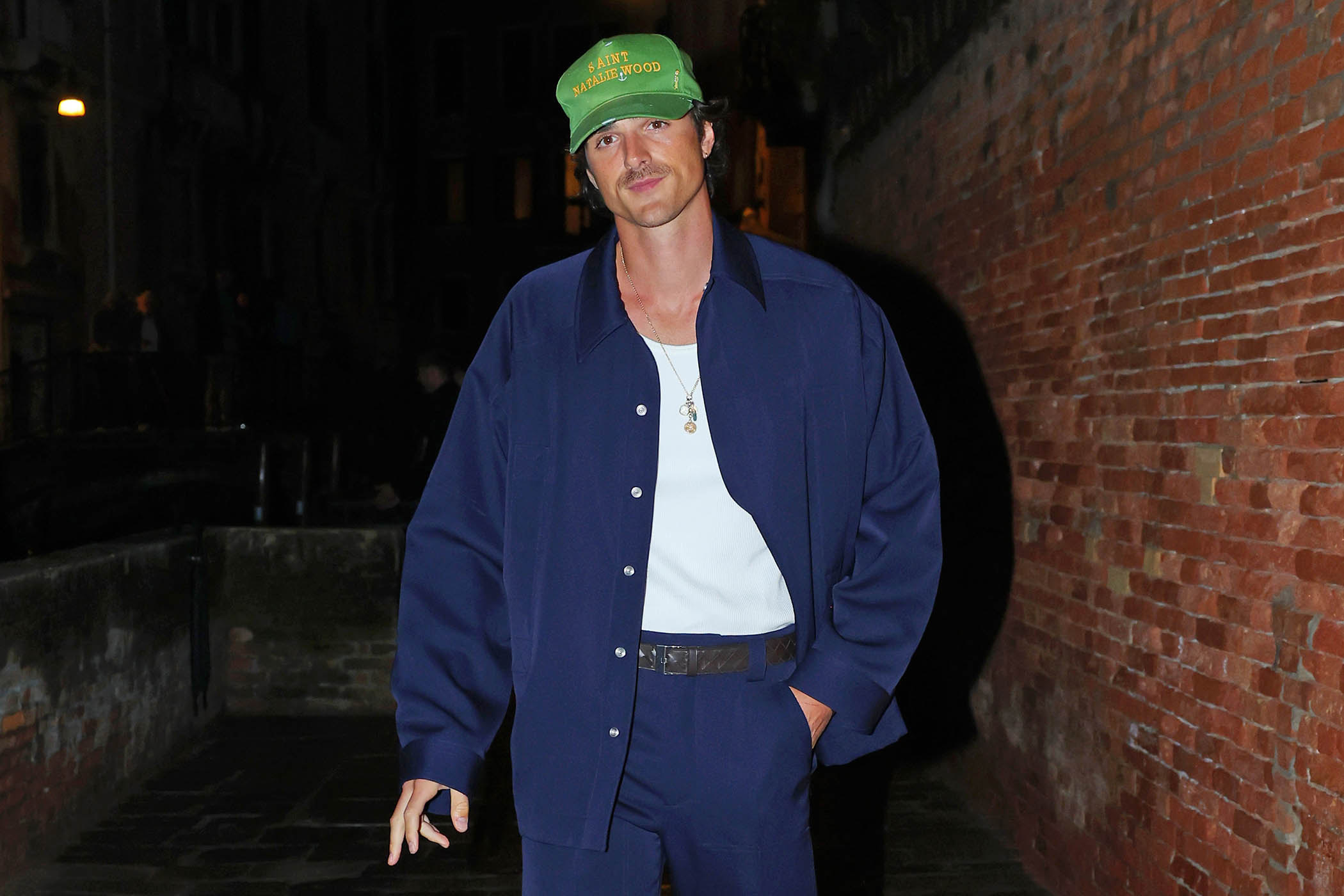



The chore jacket, a totem of egalitarianism and the humble workhorse of the proletariat, is an interesting choice for a technology business criticised for its facilitation of mass surveillance.
Palantir’s lightweight cotton chore jacket with embroidered logo, available in blue and black, will launch on 30 April. Previously, it has released sweatshirts emblazoned with slogans such as “Ontology” and “Silicon Valley Dropouts”, as well as a T-shirt featuring an illustration of Karp, the company’s chief executive, captioned with the word “Dominate”.
The sellout items for aspiring tech bros range from $65 for a baseball cap to $169 for a hoodie. They are packaged with branded stickers reminiscent of Palace Skateboards, the cult London-based brand.
Palantir is not selling merch – it is selling the look of power. Its clothing says less ‘I like this brand’ than ‘I believe in the system’
Palantir is not selling merch – it is selling the look of power. Its clothing says less ‘I like this brand’ than ‘I believe in the system’
Andrew Groves, professor of menswear systems
Palantir’s latest fashion foray was announced on X by Eliano Younes, its head of strategic engagement. Speaking to GQ magazine in an unashamed repositioning, he described the company as a lifestyle brand, saying “a lifestyle brand isn’t defined by what you sell, it’s defined by what you stand for and whether people want to affiliate with it”.
Palantir’s merchandise seems less an attempt to soften the company’s image than to consolidate its manifesto into tangible wearables for its ardent fanbase.
Andrew Groves, professor of menswear systems at the University of Westminster, said: “Palantir is not selling merch – it is selling the look of power. Its clothing says less: ‘I like this brand’ than: ‘I believe in the system.’”
Groves also said: “It signifies a shift. Systems that once operated in the background now want to be visible, even desirable. The language on the garments – ontology, velocity, dominance – is not expressive. It is operational.”
He added that “it is for insiders, believers and people who want to look close to power. Most people will not understand the language, and that is the point. It creates a closed loop; if you get it, you are meant to feel inside it.”
Newsletters
Choose the newsletters you want to receive
View more
For information about how The Observer protects your data, read our Privacy Policy
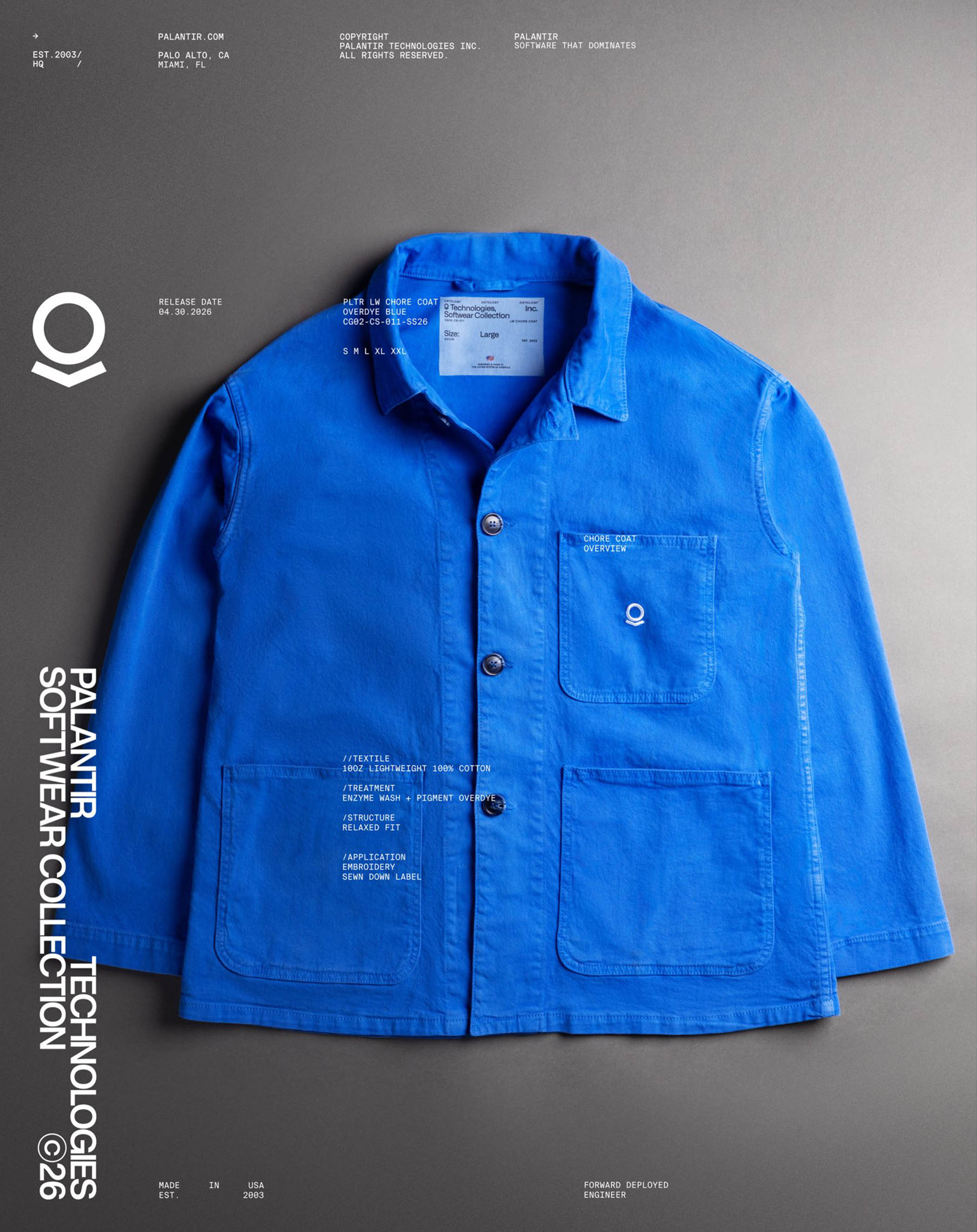
The chore jacket has, in recent years, garnered high fashion status as the practical appeal of traditional workwear has gathered pace. Prada and the Row have featured a version of the piece on their catwalks, while Harry Styles is often seen in an SS Daley model; it is a staple of the creative-director-dad frequenting playgrounds and overpriced grocery stores in Brooklyn and east London.
Palantir’s iteration stays true to the late-19th-century French origins of the three-pocket bleu de travail developed for farm and factory workers, made from thick, durable cotton moleskin, and which gave birth to the term “blue collar workers”.
Vintage styles still proliferate at local French markets. A US take on the jacket, developed at a similar time, is made from denim or canvas, with four pockets and a corduroy collar.
Notably, Palantir, which makes a point of manufacturing in the US, has taken its aesthetic direction from Europe. In June, it will release a tennis-themed drop – ideal for the Wimbledon-attending AI obsessive – followed by a collection in July to commemorate the 250th anniversary of the US declaration of independence.

Harry Styles in Mayfair
Neither is Palantir the only one branching out in this direction; fellow defence technology company Anduril has a line of Hawaiian shirts and bomber jackets that would surely appeal to anyone who looked on admiringly at Meta boss Mark Zuckerberg’s custom Latin T-shirt declaring: “Carthago delenda est” (Carthage must be destroyed).
The AI-to-fashion funnel does, however, run both ways. Allbirds, the beleaguered maker of wool eco-trainers once beloved of the tech worker bee and Leonardo DiCaprio, is selling its footwear brand to pivot into becoming an AI hardware infrastructure business and will rebrand as NewBird AI. Its share price soared 580% on announcing the news.
Photographs by Jacopo M. Raule/Getty Images, Neil Mockford/GC Images