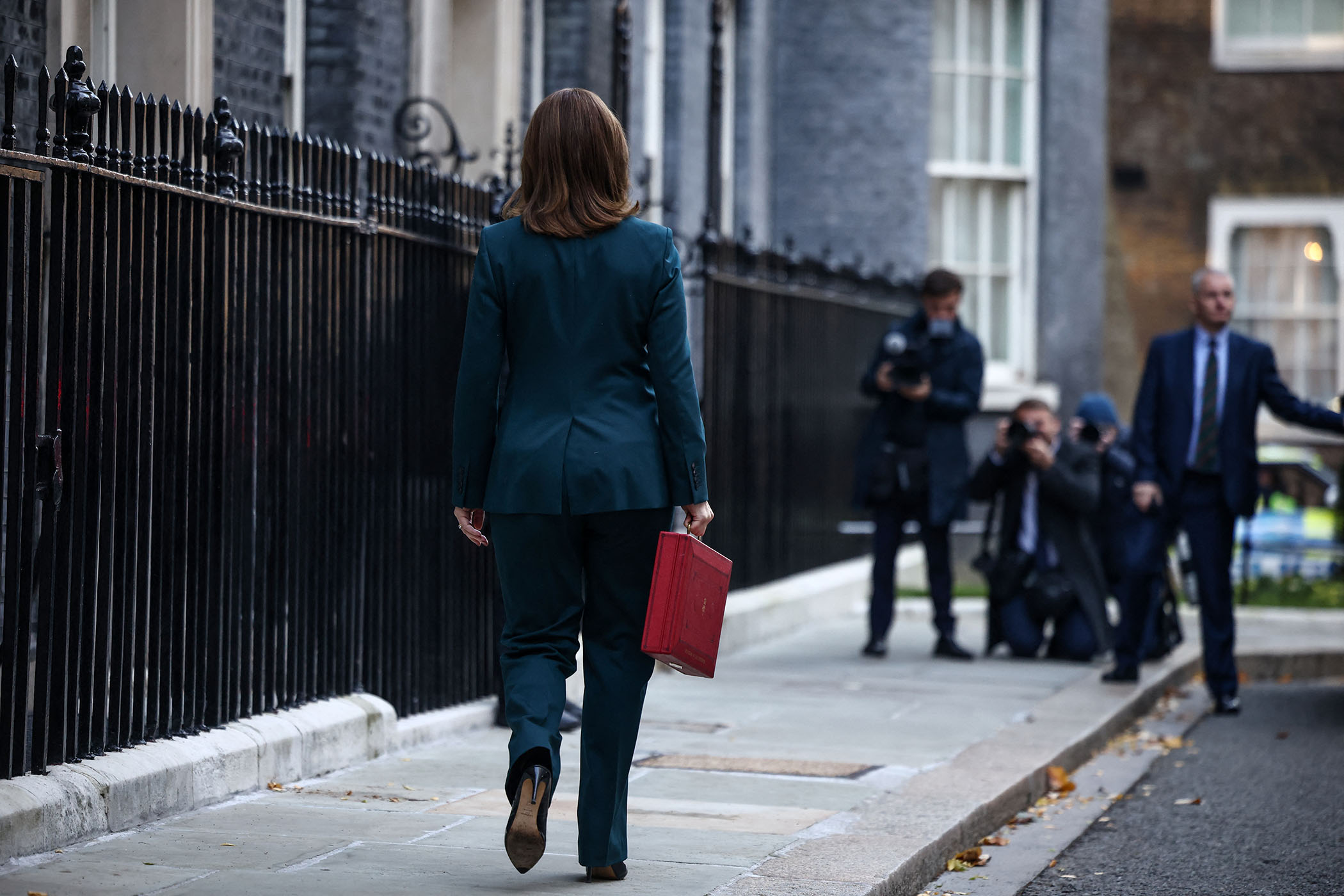
The rebuke to the chancellor was unmistakable, and intended to hurt. After the Office for Budget Responsibility (OBR) inadvertently published the November budget online an hour before Rachel Reeves delivered it, its chair, Richard Hughes, offered his resignation five days later. It was instantly accepted. Revenge, it seems, is a dish best served cold: last week Hughes served his practically frozen.
Giving evidence to the House of Lords economic affairs committee, he laid out the depth of his disillusion with, and disagreement over, the chancellor’s economic leadership. In his view, the country is now running dangerous – even existential – medium-term fiscal risks, for which Reeves cannot escape responsibility.
Her first crime, Hughes argued, was to be party to Labour misleading the nation in its 2024 election manifesto by suggesting that it would be “only raising and then spending £8bn or £9bn by the end of the life of this parliament”. In reality, he declared, “if you look at their first budget (seared into his brain) they raised £40bn in tax and spent £70bn. So it was nothing like what their actual plan … turned out to be in government”. Such a betrayal of trust, he suggested, should never be allowed to happen again – perhaps through independent audits of party manifestos.
Worse, the supposedly iron-clad fiscal rules were comic cuts. They did “very little” to build fiscal resilience while Britain was “piling on debt”. Revealing himself as a traditional Treasury fiscal hawk, he had no truck with the notion that borrowing for investment should be stripped out of the fiscal calculus as Britain now does. It might mean more reservoirs, airport runways, railway lines and investment in our young growth companies – but that was all too fiscally imprudent. Britain now operates, he emphasised, under one of the loosest fiscal frameworks it has had since adopting fiscal rules – weaker than almost all its peers – and that virtually no progress has been made in strengthening the public finances since Covid. Any unexpected economic shock – another pandemic or a trade crash – would hit the UK especially hard.
Only last July the OBR published its annual fiscal sustainability report (FSR), showing the UK with the sixth-highest debt, fifth-highest deficit and third-highest borrowing costs among 36 advanced economies – figures he repeated. An ageing population and climate change could only make the situation worse. Yet, Hughes declared, these reports were increasingly ignored: the OBR might as well have saved its breath.
As for the autumn budget, widely criticised for leaks and speculation, Hughes said the OBR had a clean pair of hands. It had kept to its timetable and leaked nothing. Its last 31 October pre-measures forecast, offsetting the additional cost of its downgraded productivity forecasts with upgraded tax revenue projections, showed no additional fiscal “black hole” beyond the one identified at the start of the process. After that its forecast remained unchanged. This the chancellor must have known when she addressed the nation at breakfast on 4 November, widely interpreted as preparing the ground for manifesto-busting income tax rises.
Yet when those rises were abandoned, a decision leaked to the Financial Times nine days later, it was reportedly attributed to improved OBR forecasts – something that could not have occurred because there was no such “good news”. In the round, insisted an obviously bruised Hughes, the OBR had “taken responsibility” and “learned from its mistakes”, including through his own resignation. The invidious inference was clear. The chancellor, he implied, should consider the same.
Of course she will not, but Hughes has left Reeves, any successor of whatever political hue and the OBR itself, in an unsustainable position. The watchdog was never meant to be judge, jury and prosecutor of government economic and fiscal policy, as Hughes’s testimony suggested. It was created to keep the necessarily secret budget-making process honest, warn of risks and ensure the economic assumptions were sound. It should be returned to that role.
No one, however, emerges unscathed. The concerning fiscal position outlined by Hughes did not emerge overnight: it was built over the past decade, and accentuated by chancellor Jeremy Hunt’s feckless cuts to employees’ national insurance contributions – waved through by Hughes himself. Nor is it helpful in economic policymaking if every initiative is judged and vetoed against a single metric: public debt. A country dependent on foreign buyers of its debt public debt may not be able to go as far as Keynes in arguing that “Anything we can do, we can afford” – but there needs to be more of that spirit than was evident in Hughes’s testimony.
The economic task is incredibly challenging. Investment must be boosted, yet taxes cannot realistically be cut given the scale of debt and deficits. Reeves should be congratulated, not castigated, for lifting public investment to the degree she has and, despite Hughes’s barbs, for organising borrowing so that it is on a credible downward trajectory. There are worse kids on the fiscal block – notably France and the US.
Newsletters
Choose the newsletters you want to receive
View more
For information about how The Observer protects your data, read our Privacy Policy
That said, neither the chancellor nor the prime minister can evade criticism. The manifesto dissimulated over tax, welfare reform was a fiasco, and allowing speculation about income tax rises – apparently validated by the breakfast address – was intensely damaging. One or both should have killed the idea at birth; or stood by it openly because the revenues are vitally needed. Instead there was a lack of political craft and sure-footed leadership.
If Labour performs as poorly in the May local elections as polls suggest, recriminations will follow, and one or both may not survive the year. But stick or twist, the government will be compelled to reshape the OBR, intensify its efforts to raise investment, and tell a clearer story of how tax can only be cut after serious economic growth that its policies will deliver. The question will be who best to pull that off?
Photography by Richard Saker for The Observer