
It is said increasingly that we live in an age of impunity. In a sense we do, but it’s not the first such age. Before 1945, before Nuremberg and the creation of the International Court of Justice, and the origins of rights for individuals and groups that I wrote about in East West Street, there really was absolute legal impunity. But this is the first age of impunity at a moment in which our value system, the rules of international law, effectively requires us to give effect to the idea, expressed as early as 1764 by an Italian jurist called Cesare Beccaria, that there should be no place anyone who breaches certain rules should be able to go without fear of punishment.
So the age of impunity today is different from previous such ages, because of the creation of new rules of international law, and institutions. Of course it is very relevant in relation to things we’re reading about in the news today. The UN general assembly has recently recognised, for the first time, that historic enslavement is to be treated as a crime against humanity. It’s a significant moment, one that is likely to open the door to all sorts of consequences.
More locally, in Northern Ireland, we all know that there has been no real accounting for the crimes on either side in relation to the Troubles, and government after government struggles with the question of how to deal with the crimes of the past. Do we just try to move on, or try to find a mechanism through the criminal law, or through truth and reconciliation, or through other means, to deal with these issues? It is not only the formal mechanisms of justice that can effect change: literature can contribute to a change in thinking, which is why I write books; if you read one non-fiction book about the Troubles, read Say Nothing, by Patrick Radden Keefe. Keefe is American; British people haven’t wanted to think about the issues, perhaps because they are too painful or difficult or local. Say Nothing deals with the disappearance of one person, emblematic of the crimes of that era. It is, in essence, a book about impunity.
We know too about impunity in relation to Iraq. We have a former prime minister who led the country to war on a manifestly unlawful account. “Crime of aggression,” said Elizabeth Wilmshurst, who in 2003 resigned from her position as the No 2 legal adviser in the Foreign Office. Has that prime minister paid a price? Certainly not in financial terms. He has joined Donald Trump’s “Board of Peace” and sells his wares around the world, and appears to travel around relatively freely, apparently without fear of a tap on the shoulder.
Lopsided justice, double standards, victors’ justice: they have been around for a while and require all of us to think about how we deal with these kinds of situations.
In relation to Ukraine: there is now a special tribunal for the crime of aggression, which in theory over time will be able to deal with allegations of criminality by Russia’s Vladimir Putin and those around him, for authorising what most people believe to be a manifestly illegal war. But if we are going to have a special tribunal for the crime of aggression in Ukraine, should we not also have a special tribunal for the crime of aggression in relation to Iran? That too crosses a line into illegality. If there is no distinction in law in relation to aspects of what has happened there, should we not at least be consistent in what we call for?
And the issue comes to the fore in other parts of the world – Sudan, Israel and Gaza. With Israel and Gaza, legal proceedings are under way before the International Court of Justice (ICC): South Africa has brought a case against Israel alleging violations of the 1948 Convention on the Prevention and Punishment of Genocide. The bringing of that case generates hope for some people, and outrage for others. There are parallel proceedings before the International Criminal Court investigating or indicting three members of Hamas, all believed to be dead; and indictments against the Israeli prime minister, Benjamin Netanyahu, and former defence minister Yoav Gallant. The ICC has indicted for war crimes and crimes against humanity, but not genocide (at least not yet).
And the United States, the country that did more than any other to create the Nuremberg tribunal, right now is sanctioning judges, prosecutors and lawyers who are involved in those ICC proceedings in relation to Netanyahu and Gallant. Such measures are widely considered to be outrageous, a copycat of efforts by Russia and China to sanction those involved in legal actions considered to be objectionable. We either have a system of international justice, which is not lopsided or prone to double standards, or we don’t. These are the kinds of real-world issues that we are dealing with, the interplay of politics and law.
I’ve already mentioned Iran: last week President Trump visited President Xi in China. Putin has followed. I’m going to quote what the Financial Times reported about Trump’s summit with Xi: “Trump also suggested that the US, China and Russia should join forces to combat the International Criminal Court, saying their interests were aligned according to the people familiar with the talks.”
So you get a sense of where the world is heading now. But interestingly, as the three big powers come together to try to shut down the 1945 moment, much of the rest of the world is taking a different direction. Negotiations opened a month ago – not supported by any of those three countries but by the vast majority of UN members – to fill the gap left by the fact that although we have a Convention on the Prevention and Punishment of the Crime of Genocide, we don’t have a convention to prevent and punish crimes against humanity.
Newsletters
Choose the newsletters you want to receive
View more
For information about how The Observer protects your data, read our Privacy Policy
A struggle is under way, at the heart of which are the revolutionary ideas adopted in 1945. I’m glad to say that Britain is strongly supporting efforts to buttress and protect the 1945 moment. There may be wobbles in relation to certain issues, but for the most part there is strong support for international rules and rule-of-law-based systems. This is consistent with the instincts of the great British jurist Jeremy Hutchinson, who faced barbs for defending the publishers of Lady Chatterley’s Lover and clients such as Christine Keeler and the Soviet spy George Blake. His credo was simple: “You have to have a deep interest in people, you have to know what is going on in life, and you have to have a passionate belief in what you are doing, which is about justice.”
The manner in which sentiments of what is right and wrong rise to the fore, and the causes of change in public consciousness are complex
The manner in which sentiments of what is right and wrong rise to the fore, and the causes of change in public consciousness are complex
I share this belief, as do many people around the world. I think that is the dominant view, which is not to shut down the International Criminal Court or the idea of universal jurisdiction or efforts against impunity and in defence of the ideals of international justice. It’s a complex moment. There are real challenges. I’m not starry-eyed but, as I have often said, I have no doubt that an international law, rules-based, multilateral system will prevail in the end. It’s the only way, on a small, shared planet. It will be as it has always been: one step forward, one step sideways, one step back, then another step forward. It’s a long game.
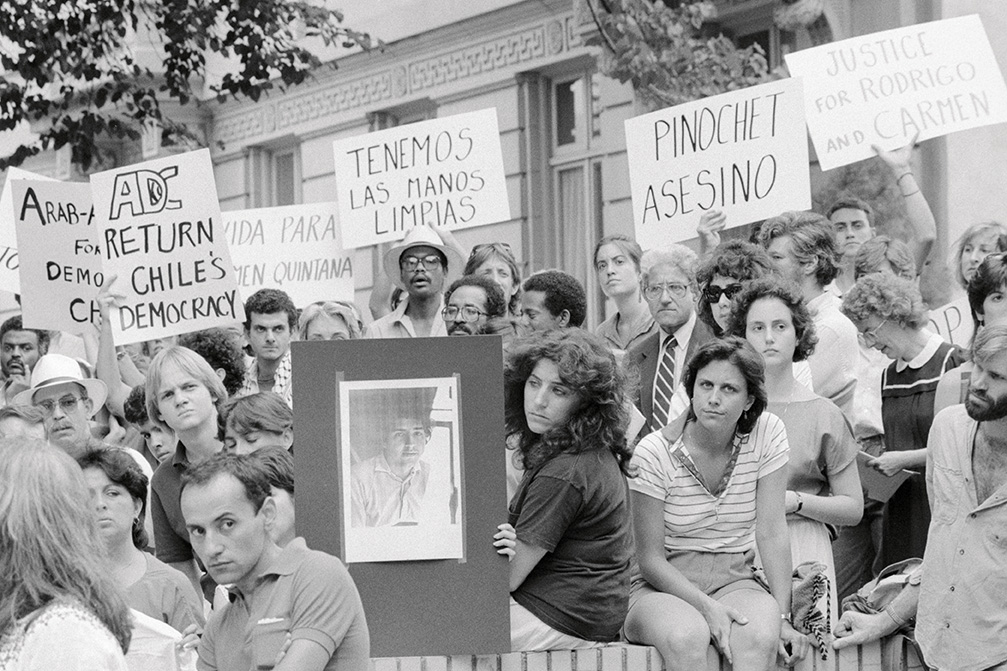
In that vein, let us not forget the vital role played by literature and culture. In my book 38 Londres Street I interrogated the relationship between the Chilean dictator Augusto Pinochet and the Nazi war criminal Walter Rauff, who ran the mobile gas van responsible for the deaths of hundreds of thousands of people across Nazi-occupied Europe. But there is a remarkable short novel published in 1997 by the great Chilean writer Roberto Bolaño, called Nocturno de Chile (By Night in Chile), that filled the gap where lawyers and judges and prosecutors were either unable to go or feared to tread. The novel posits a relationship between Pinochet and Rauff, one that presaged and bore an uncanny similarity to the story that I would write 25 years later.
That novel changed public consciousness in Chile. I would take taxi journeys in Santiago and if we were talking in the back about Walter Rauff and Augusto Pinochet, the drivers would say: “Mi permiso, may I interrupt? May I join the conversation?” And they would say they had lived through that period, and they knew about this relationship, they were aware of the writing of Bolaño and Pedro Lemebel and others.
So the manner in which sentiments of what is right and wrong rise to the fore, and the causes of change in public consciousness are complex.
There has been no single judgment I can point to that has had the same resonance as Bolaño’s novel in terms of consciousness about certain crimes of the Pinochet regime.
So, in thinking about impunity, one needs to think not only about the formalisation of the criminal justice system but also about life and culture, theatre, TV programmes, films, poems, even songs. One song I always come back to in the most difficult of times, is Anthem by the Canadian poet Leonard Cohen. It deals with the issues under discussion, and which I deal with in my cases and writings. It will have been listened to by tens of millions more people than any judgment written by a court. The “lawless crowd” have summoned up a thunder cloud, he writes. “They’re going to hear from me, ring the bells that still can ring. Forget your perfect offering. There is a crack, a crack in everything, and that’s how the light gets in.”
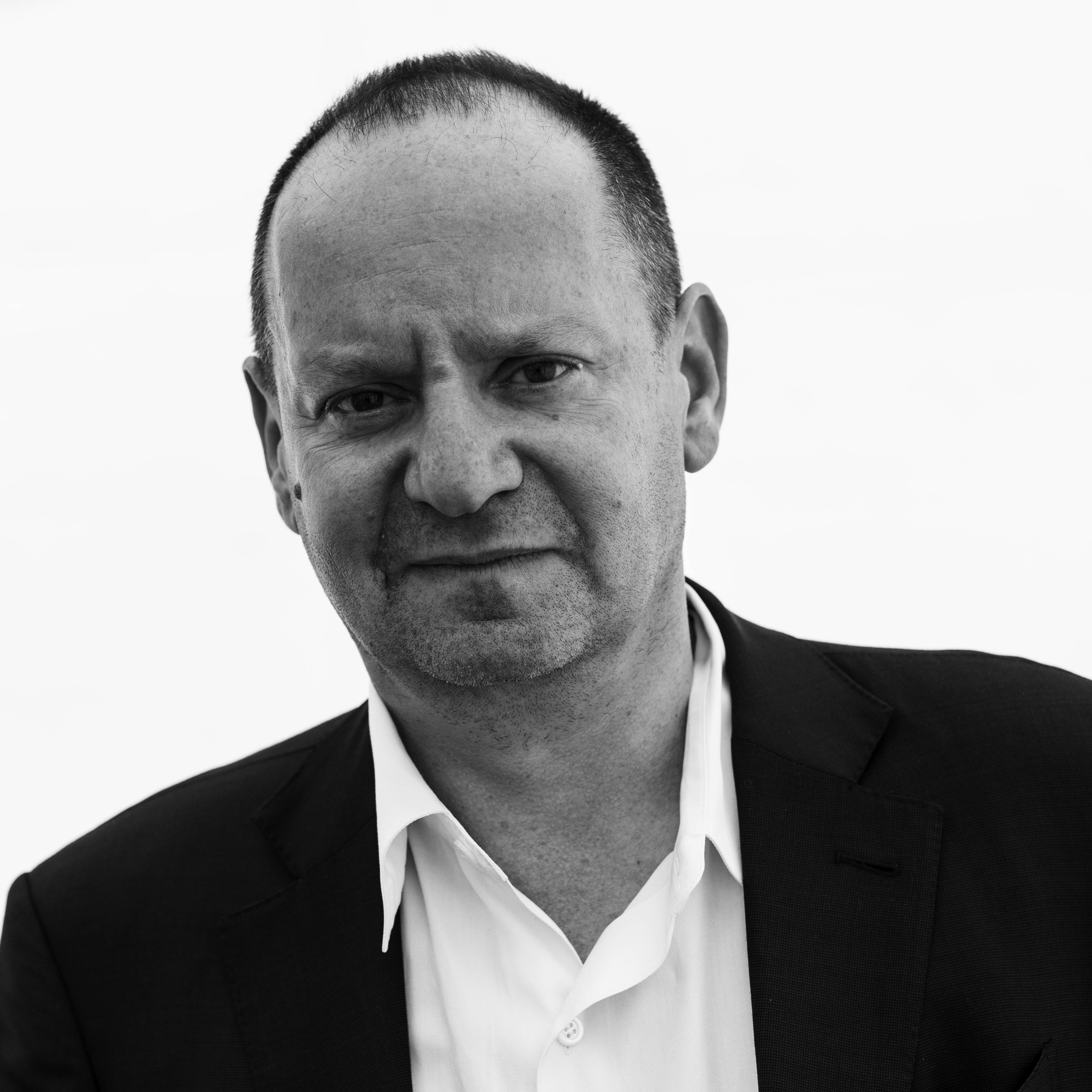
This is an edited version of the Jeremy Hutchinson Memorial Lecture delivered by Philippe Sands at Charleston Festival in honour of the renowned barrister, and in celebration of his lifelong commitment to advocacy and civil liberty. A 10th anniversary updated edition of East West Streetis published on 4 June. Charleston Festival runs until Monday 25 May.
Photograph by Bettman/Getty Images