


Posting a letter was once a luxury. Two hundred years ago, sending two sheets of paper from London to Dublin cost a day’s wage. But 1840 marked a revolution: the founding of the Penny Post. State-run and given a monopoly on letters in return for delivering them cheaply, it would not only democratise letter-writing but also transform the economy. “Letters for the rich, letters for the poor / The shop at the corner, the girl next door,” wrote WH Auden nearly 100 years later in his poem Night Mail.
But “universal” mail systems – those with an obligation to deliver to anyone, anywhere, six days a week and for a flat rate – are looking increasingly shaky. Last week the state-run Danish postal service delivered its last letter; the country’s red postboxes will soon be sold off. The US post office, meanwhile, makes billions in losses. Germany’s Deutsche Post has scrapped its next-day airmail service. And Royal Mail – which, like Deutsche Post, has switched from state-run to private but retains a universal obligation – is no exception to the rule.
Christmas is always a time of reckoning. This year, Royal Mail warned customers that there could be delays to 92 postcodes, from Brixton to Dundee. Late Christmas cards have since been confirmed at 47 of these. In October, the service was fined £21m by Ofcom for delivering only three quarters of its first-class post on time – its third fine in three years and the largest yet. In the summer, the obligation to deliver second-class letters was cut to every other day.
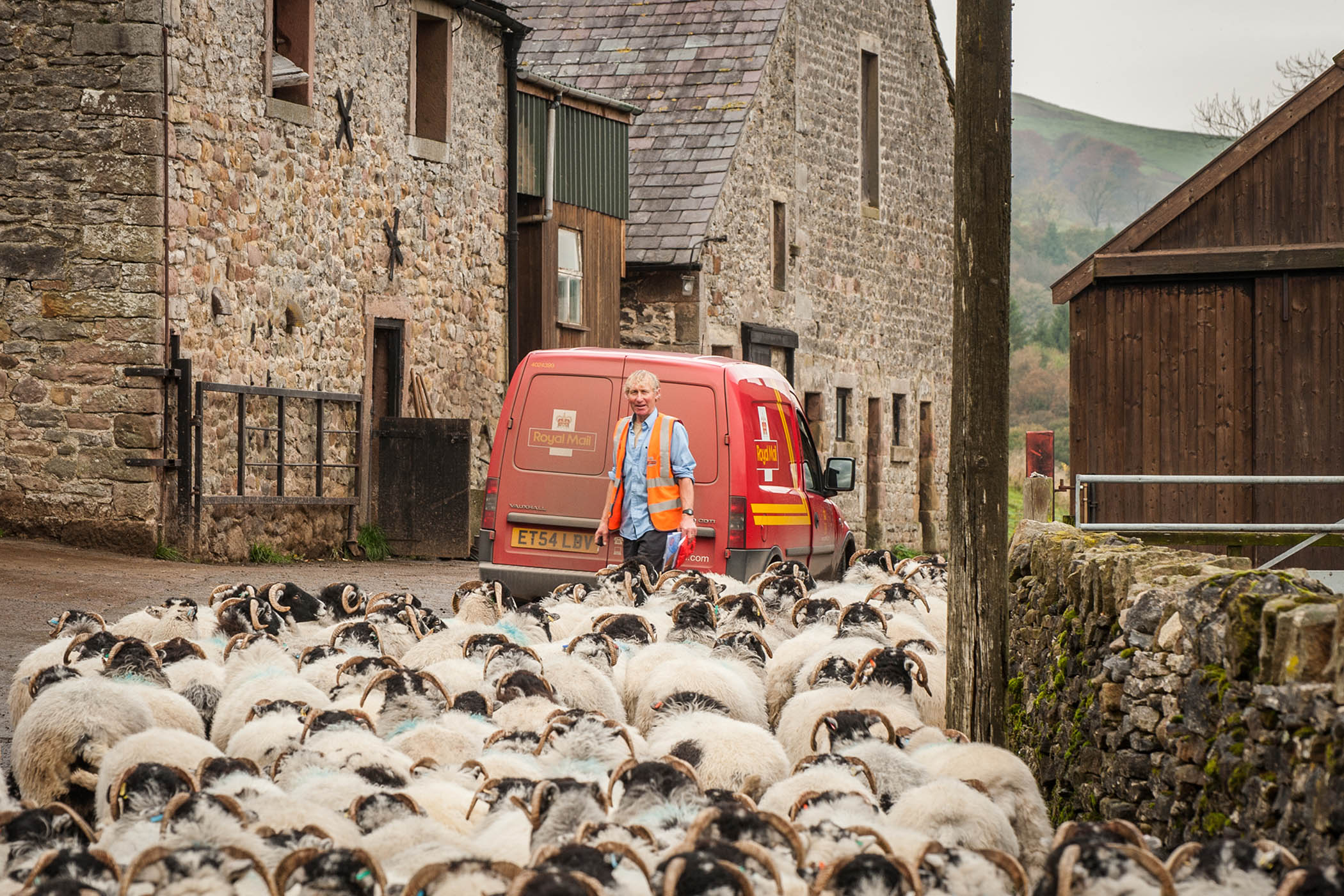
It matters if Royal Mail is in trouble, particularly for those in far-flung areas. Other delivery services can avoid certain addresses: remote rural areas of Scotland and Northern Ireland, for example, as well as the islands that dot the coast. It is rarely worth it to lug a solitary parcel to a remote rugged outcrop. If they do deliver, it’s often with a hefty surcharge.
It matters if Royal Mail is in trouble, particularly for those in far-flung areas
It matters if Royal Mail is in trouble, particularly for those in far-flung areas
The biggest headache for Royal Mail is that fewer people are sending letters. Between 2012 and 2023, volumes halved. The number of addresses, meanwhile, has grown, from 28m in 2008 to 32m today, making a postie’s journey longer and less lucrative. Both trends are likely to continue. A monopoly on letters is looking like less and less of an advantage.
Instead, post is increasingly about parcels. Britons are addicted to online shopping, and receive more packages per head than almost any large European economy. Even before the pandemic, which accelerated the habit, we were a nation of click-and-collect queues, redelivery cards and emails that began “We attempted to deliver your parcel today…” Our front doors, with their 4cm high letter boxes, were designed for another age.
But so was Royal Mail. It was not invented to provide services such as tracking, for example, in an age where people generally distrust the post and want to know where their parcel has got to. Rivals with sleeker technology, mainly FedEx, DHL, Evri, DPD and Amazon, are outcompeting it, and Royal Mail’s market share of the parcel business fell from 45% to 35% between 2015 and 2024.
These companies have other big advantages too. They are free to choose what routes to serve, how often to deliver and at what price, so they cherrypick dense, profitable areas, undercutting Royal Mail in the easiest parts of the network and leaving it to subsidise the rest.
Then there is the workforce. Royal Mail jobs are well paid, unionised and governed by agreements designed for a slower world. Unlike new entrants, it can’t easily shed staff or rapidly automate – many manual jobs need to be replaced by fewer, highly skilled ones, such as software engineers. Strikes in recent years have highlighted the tension.
Even so, Royal Mail is slowly adapting. Islands are increasingly served by drone, and it is upgrading our quaint postboxes, replacing them with ones with parcel slots, scanners and solar panels at the top, much to the dismay of “yarn bombers”, who like crocheting them hats.
Newsletters
Choose the newsletters you want to receive
View more
For information about how The Observer protects your data, read our Privacy Policy
Royal Mail’s better-paid and more secure jobs may eventually work to its advantage
Royal Mail’s better-paid and more secure jobs may eventually work to its advantage
Along with barcoded stamps that allow tracking, Royal Mail often makes use of parcel lockers at the other end, which have scanners too. Customers pay more for this service, as well as occasional Sunday parcel deliveries, all of which has helped. In September, for the first time in three years, the company returned a small profit.
Royal Mail’s better-paid and more secure jobs may eventually work to its advantage. Since the pandemic, there has been a severe shortage in delivery drivers. For exhausted gig workers, the chance to join a union may appeal.
Still, says Professor Richard Wilding, an expert in logistics and supply chain management, “it’s likely services will have to keep reducing. Bin collection is a good analogy. It used to be every bin every week; now it’s every two weeks, and in some places even less.”
There is little appetite to bring Royal Mail back into state control. Its future, if it has one, will be in parcels. Letter-writing is not a profitable business, or at least not at today’s prices. Danes who want to send a Christmas card next year will have to pay a private company, and a premium.
For Brits too the era of sending paper across the country for very little – £1.70 first-class, 87p second-class – may soon be at an end.
Photograph by John Eveson