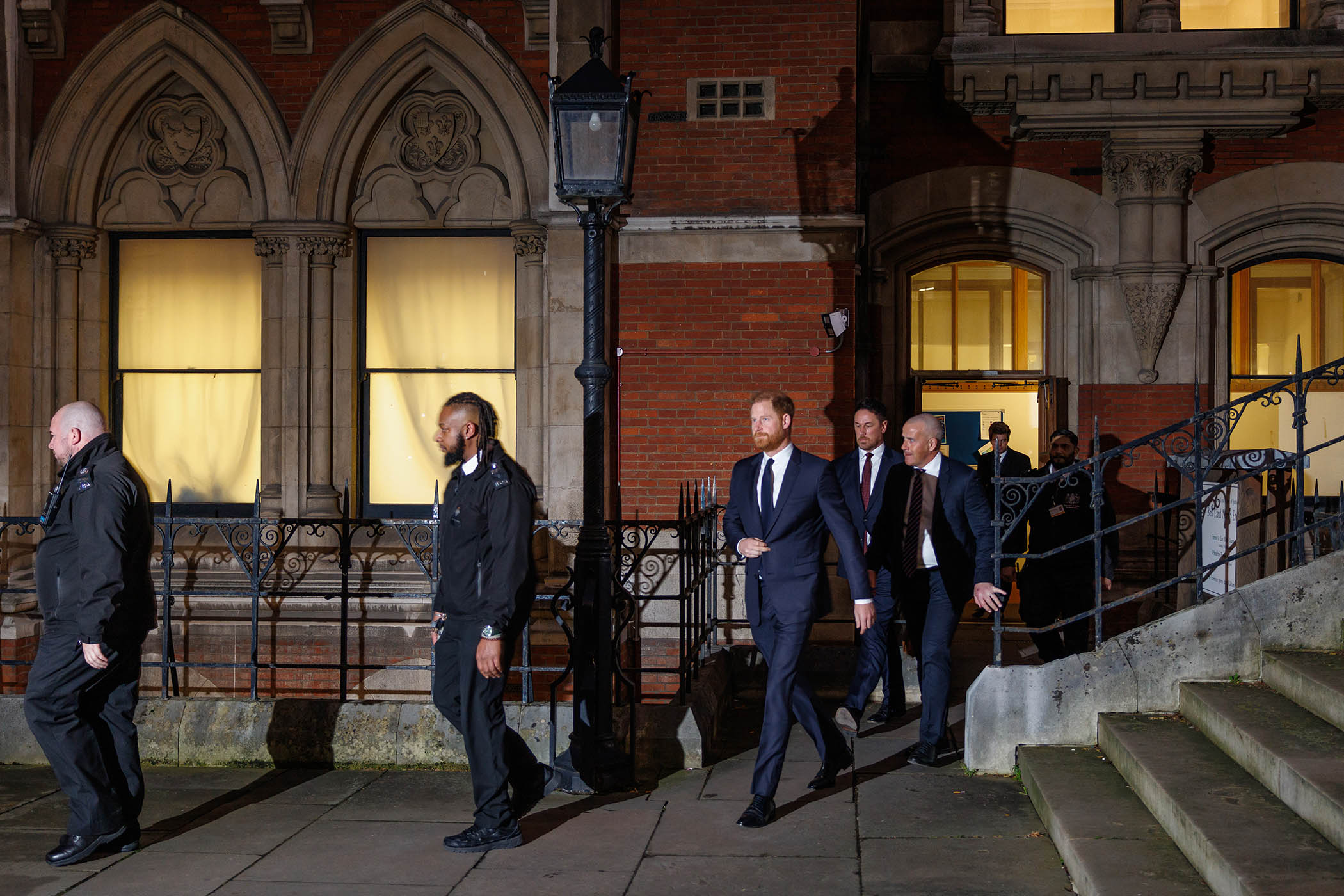

In the High Court this week, the publisher of the Daily Mail won an almost complete victory over Prince Harry, Doreen Lawrence, Elton John and four other high-profile claimants who alleged that their voicemails were hacked, their phones and houses were bugged, and private investigators were hired to invade their privacy. At the end of a judgment that ran to more than 400 pages, the scoreboard read 55-0. Between them, the claimants brought 55 articles published between 1997 and 2015 to court, which they said relied on information that was gathered unlawfully. The judge ruled in the Mail’s favour on every one.
While the claimants and press standards campaigners reeled in shock at the scale of the loss, Paul Dacre, the former editor of the Daily Mail, now editor-in-chief of its umbrella group DMG Media, first celebrated and then pounced. “Make no mistake,” he said, “this was a conspiracy, supported by Hacked Off, to destroy a paper… it was also a sinister bid to resuscitate Leveson 2 and impose statutory regulation on the press.”
You could summarise Dacre’s statement in two words: game on. Game on against the “enemies of a free press” and anyone who tries to argue that the current system of newspaper self-regulation is not working. And game on against Hacked Off – the collection of unassuming former MPs, academics and activists that sprang out of the phone-hacking scandal 15 years ago and, helped by the voice and star power of Hugh Grant, became the sharpest thorn in the side of Dacre, Rupert Murdoch and tabloid editors in general. Today it lobbies both for improved press standards and for Leveson 2 – the second part of the inquiry into the ethics and practices of the press that was promised but never delivered.
It may make sense to gamble a few extra pounds on the relatively low cost of an appeal to try to escape responsibility for millions more
It may make sense to gamble a few extra pounds on the relatively low cost of an appeal to try to escape responsibility for millions more
Dacre’s opponents can point out – rightly – that Hacked Off was not involved in any capacity in the case against the Mail and that Leveson 2 was not on the court docket. But, for all that, it would be hypocritical of them to pretend that the outcome does not have wide significance. They know that if the Prince Harry judgment had gone in their favour, they would have seized the moment to make their own arguments just as Dacre has seized it to make his. Dacre is not wrong: that is the game. The question is how the events of this week have changed it.
In one important, coincidental, way it was changing already. For the past two years, Hacked Off and its supporters have sensed their arguments gaining some traction at the Department of Culture, Media and Sport – and almost none at all in Downing Street. “No 10 have always been very difficult,” one campaigner told The Observer, “whereas Andy Burnham has got a long track record on this issue. There’s a lot more reason to be optimistic about Andy at No 10 than Starmer.”
A lot more reason, then, for the Daily Mail to throw the kitchen sink now at winning not just the battle in court but the war as well.
Over dinner at the London club, Soho House, on the night of their defeat, the wounded soldiers in and around Hacked Off, along with Steve Coogan and Prince Harry’s PR, Liam Maguire, began to marshal the arguments they believe might prevail against the Mail. Amidst the wreckage of the court case, they cling to a handful of tiny victories, such as the disclosure that the paper had spent more than £3m on private investigators. And it is possible – it may even be likely, some campaigners believe – that there will be an appeal. As things stand, millions of pounds in legal costs racked up by both sides will be borne by the claimants’ insurers. It may make sense to gamble a few extra pounds on the relatively low cost of an appeal to try to escape responsibility for millions more.
But public opinion may be inescapable, and it will bear on Burnham as prime minister, whatever his previous positions on press standards and regulation. It was not concern over press intrusion into the lives of celebrities that closed the News of the World and brought about the Leveson inquiry; it was the case of Milly Dowler, the murdered schoolgirl whose voicemails were hacked. Campaigners for higher press standards have long conceded that it might take another similarly awful case to create a demand for Leveson 2, and none has come along.
In the short term at least, the Prince Harry case will shift public opinion in the opposite direction, towards a belief that press standards are no longer a pressing concern. If that belief becomes entrenched, the game will not be on for Hacked Off and its allies. It will be over.
What are your thoughts on this? Send us a letter to letters@observer.co.uk
Newsletters
Choose the newsletters you want to receive
View more
For information about how The Observer protects your data, read our Privacy Policy
Photograph by Dan Kitwood/Getty Images