
It’s a “Love Letter to England”. Written by James Graham, the man whose play Dear England transformed the image of Gareth Southgate from a mediocre national manager into an icon of Englishness, the 90-second film, designed to rouse support for the team at the World Cup, is tub-thumping in a restrained, very Southgate way.
Narrated by Ian McKellen at his most sonorous, it concludes: “We know who we are”. Yet, if this World Cup has shown us anything, it is how complicated it can be to define “who we are”.
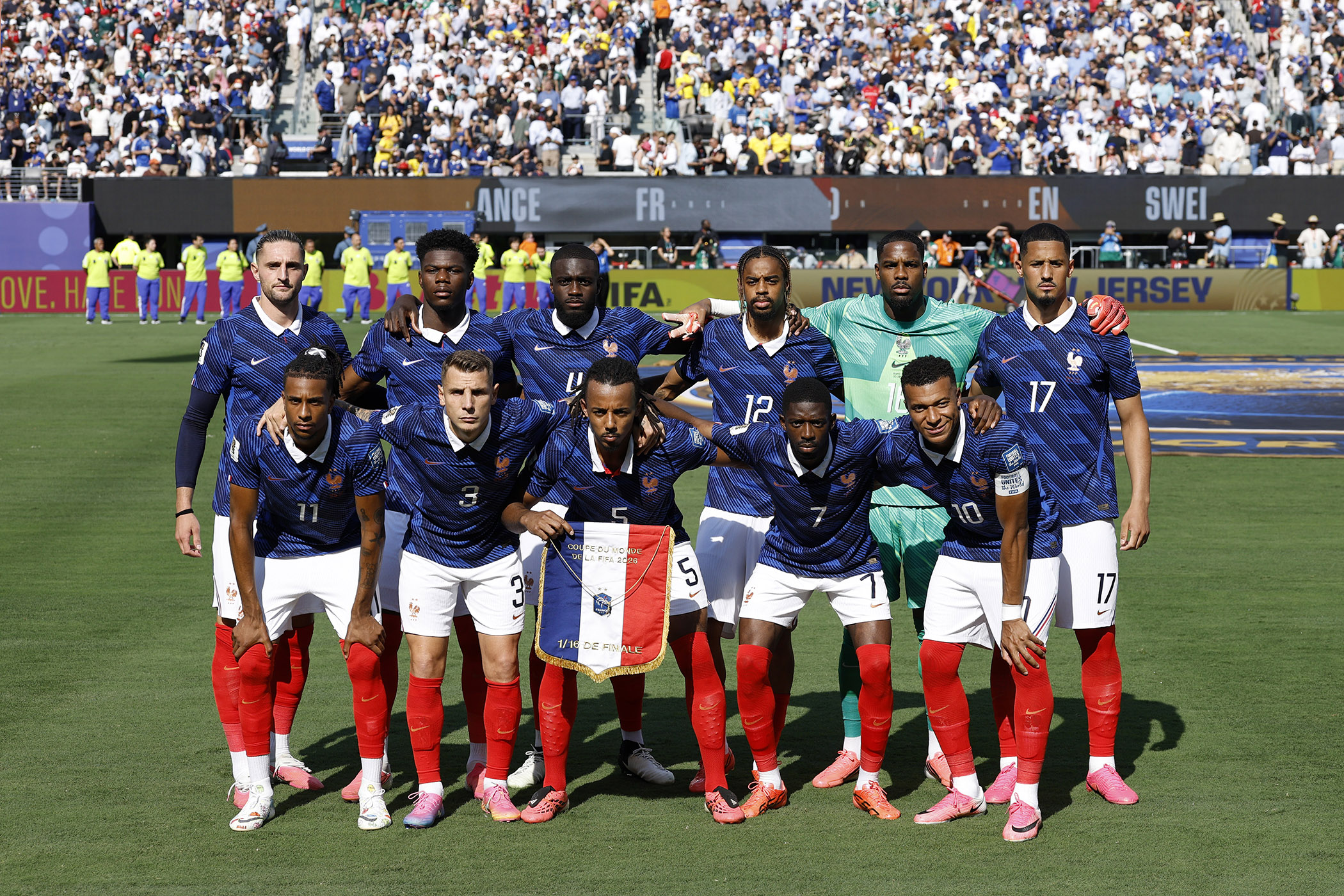
Michael Olise, one of the world’s best forwards, was born in west London and played for Reading and Crystal Palace before joining the German giants Bayern Munich, but may win the World Cup with France. Born to a British-Nigerian father and Franco-Algerian mother, he celebrates the fact that he is the product of “four countries… which all enrich me”.
When England took on DR Congo last week, facing them was Aaron Wan-Bissaka, born in Croydon and currently playing for West Ham. He represented England at under-21 level, before shifting allegiance to DR Congo last year.
Ninety-nine players at the World Cup were born in France, but just 23 play for Les Bleus. Algeria and Haiti have between them more players born in France than does the French squad. Almost a quarter of the players in the tournament were not born in the country for which they play. Morocco made World Cup history during their game with Brazil when, for a period of the match, every Moroccan player on the pitch was born outside the nation.
“The imagined community of millions seems more real as a team of 11 named people”, the historian Eric Hobsbawm suggested in a much-quoted line about the significance of football, and sport more generally, in making concrete people’s attachment to a nation. Yet, how one imagines the national community or answers the question “where do I belong?” is not a given.
It was in the interwar years that sport, and football especially, became a carrier of national identity, a means of bridging the public and private spheres and making “the individual, even the one who only cheers… a symbol of his nation himself”, as Hobsbawm put it.
In the postwar years, the newly emergent nations of Africa, Asia and the Caribbean utilised sport as an instrument of nation-building, even of nation-making. The Algerian liberation movement, the FLN, set up its own football team Équipe FLN in 1958, in the midst of the war of independence, as a potent symbol of resistance against French colonial rule. Many of the team were professional footballers of Algerian descent playing in France who gave up their careers to aid the independence struggle. Équipe FLN played more than 90 matches against national teams in Eastern Europe, Africa and Asia. At each game, the flag of a nation yet to be born was raised and an anthem played that celebrated a freedom still to be realised.
After decolonisation, immigration from former colonies to the old colonial powers again changed the conversation about football and identity. In England, it was at the end of the 1970s that black players such as Viv Anderson and Laurie Cunningham began to make a mark on the England national team, pushing back against a ferociously racist culture in both society and on the terraces.
Over time, that racism diminished. But as black players became an integral part of the national teams, the meaning of “belonging” in football shifted again as former colonies began recruiting from their diasporic communities and as footballers whose parents had migrated from such colonies came increasingly to identify with their diasporic homelands.
Newsletters
Choose the newsletters you want to receive
View more
For information about how The Observer protects your data, read our Privacy Policy
Part of the reason for this shift was pragmatic, as new opportunities to play international football opened up, especially as Fifa loosened eligibility rules, making it easier to compete for nations other than that of one’s birth. Partly, also, the continuing impact of racism led some to reject their European home countries. And, partly, it came from a recognition that “belonging” could not be understood on a single dimension.
Mostly, though, the shift reflected the changing character of the social conversation about identity. As identity came to be seen more in cultural and ethnic terms, the “imagined community” became both smaller than the nation and transcended its boundaries.
On the other side of this conversation are the racists and ethnonationalists for whom the presence of non-white players in their national teams is an affront. When Germany, Belgium and the Netherlands were dumped out of the World Cup, a torrent of online racists took to social media to denounce black players as having undermined their nation’s “identity”. France, meanwhile, may be the best team in the tournament, but for the racists that is irrelevant because the players are not really French.
Strangely, the same themes are pursued by many who deem themselves “antiracist”. They question why black players turn out for former colonial nations and condemn “Black folks who root for coloniser countries”. When France played Senegal, Ousmane Sonko, president of Senegal’s parliament, quipped that “whatever the result, Africa will have beaten Africa”.
Much of this debate reflects a yearning for simple notions of belonging. Identities, though, are always messy, elastic and contradictory, because human societies and relationships are, too. They cannot be reduced to essentialised conceptions of culture, race or nation.
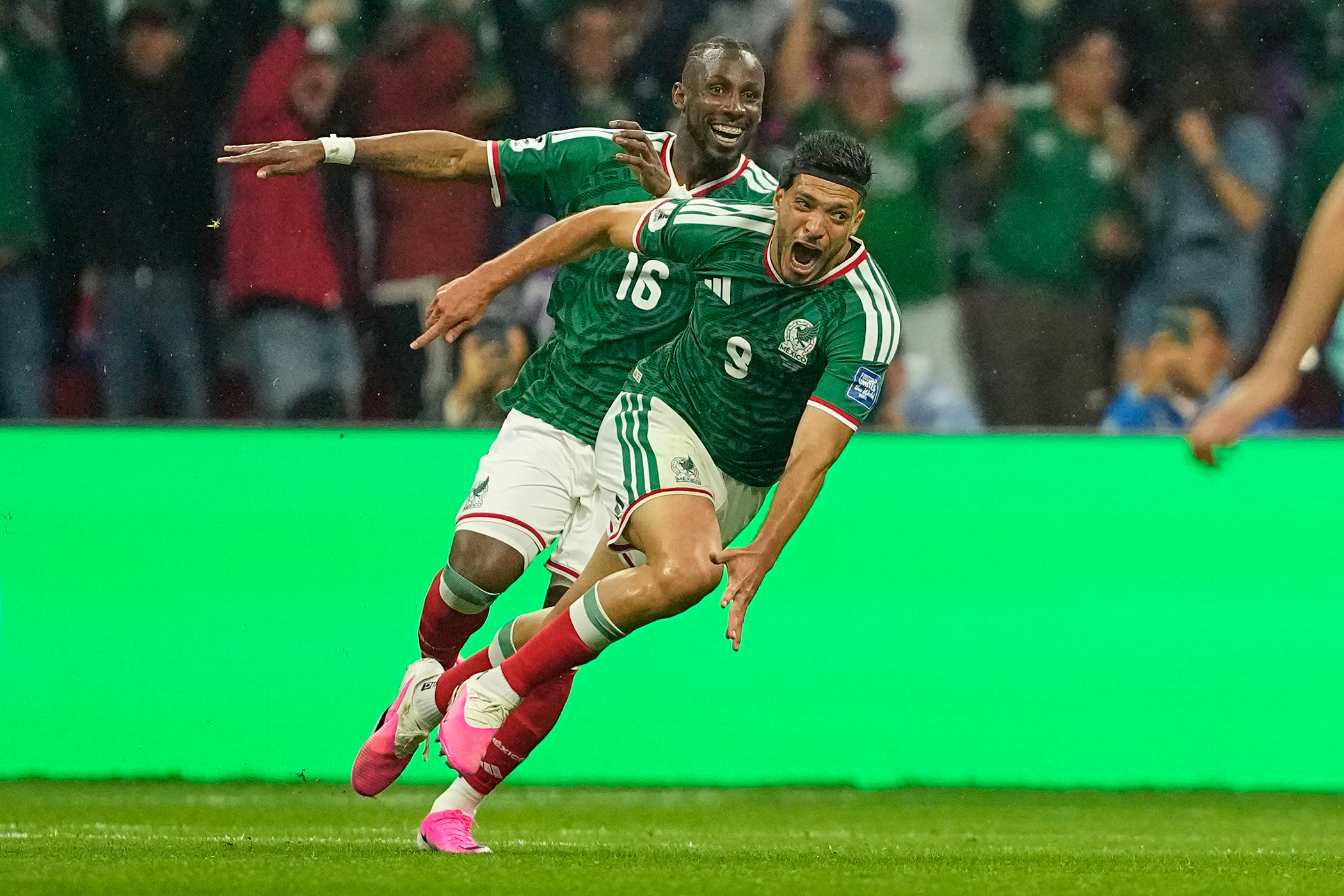
I hope that, in the early hours of Monday morning (and, yes, like millions of others I will stay up), England defeat Mexico. But I also know that, whatever the result, it will have little bearing on helping us define who we are.
Photograph by ANP/Getty Images