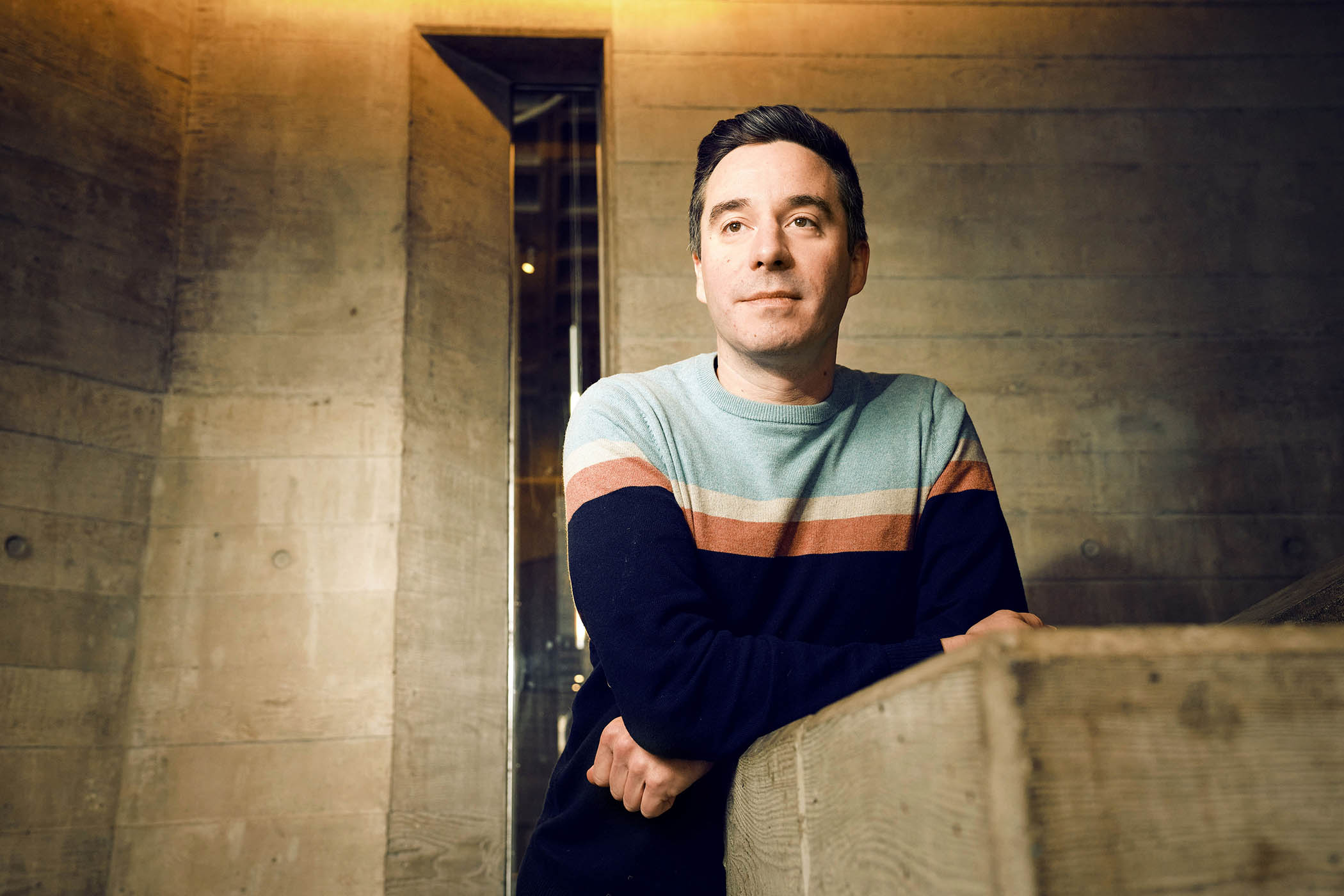


James Graham, 43, was born in 1982 in Nottinghamshire. His plays include This House (2012), about the machinations of the 1974 hung parliament, Ink (2017) about Rupert Murdoch’s arrival on Fleet Street, and Dear England (2023), based on Gareth Southgate’s letters to the nation. He has written the award-winning Sherwood drama series for the BBC, about the fallout from the miners’ strike. His play Punch (2024) tells the true story of Jacob Dunne, who was jailed at 19 for killing James Hodgkinson in an unprovoked attack in a pub with just one punch. Dunne subsequently became a model for restorative justice after Hodgkinson’s parents reached out to him to explore forgiveness. Performances of the play, which is nominated for four Olivier awards, have been followed by Q&A events with audiences and the real-life participants in this tragedy to discuss the issues it raises.
Punch is running again at the Nottingham Playhouse. You have come straight from casting the third series of Sherwood. You are also working on a film of Ink, with Danny Boyle. How easy is it to be involved in all those things at once?
It’s not always easy, but I’m absolutely not going to sit here moaning about being too busy. I feel very lucky to be part of that generation of theatre writers along with Jack Thorne and Lucy Prebble, people who came up through the theatre but also write for TV. We have a really healthy, supportive ecosystem at the moment, with our theatres working closely with our TV commissioners; I’ve really benefitted from that.
You and Jack Thorne go back a long way. Do you have a competitive edge with him?
I call him my nemesis, but it is impossible to hate Jack. He’s the most gorgeous, generous man on Earth. It was great to see him at the Emmys [he won for Adolescence] telling that story about working class families in north-west England. I was so moved by that.
Punch was very much a Nottingham story. Was that partly why you were drawn to it?
In my first 10 or 15 years as a writer, my plays were set in the world of political power and media, Fleet Street and parliament. That was brilliant, but I just had this itch I couldn’t scratch about telling stories from my own community. Sherwood came from that. To be honest, though, with this story, I think if it had been set anywhere on Earth, I would have been totally overwhelmed and moved by it. The journey Jacob Dunne went on with his victims’ parents is one of extraordinary forgiveness and redemption. As soon as I met these people and spent time with them, I just thought: “My God, this story has to get made.”
Did Jacob’s voice come naturally?
Jacob was really brilliant at building the vivid world of the council estate he grew up on, the Meadows in Nottingham. I was a bit nervous about getting that when I first started. I grew up in Nottinghamshire, a similar working class background, single mum, all that. But we were very different people, me and Jacob. I grew up in a quiet former mining village. And Jacob grew up in the middle of the city. He was involved in gangs and violence and drugs. I was figure skating at the local ice rink and doing drama. But when I started writing, the musicality of Nottingham language made me feel I could pick up that instrument and play it.
Did you always imagine the play would have the post-performance discussions?
Not at all. When you are first making a play, you are just obsessed with the story. But of course, you also think: “It would be really wonderful if an awareness about restorative justice grows out of this play.” We have got to do all these amazing events with lads from young offenders institutes coming, and all the school matinees we’ve done. I got to bus down all the kids from my old school who’d never been to the West End before.
How did they respond?
It was unequivocally one of the most amazing experiences I’ve had as a playwright. I think the assumption was, you know: difficult crowd, 15-, 16-year-old boys. It’s not a light, easy play, but it was the longest standing ovation for anything I’ve ever had and then they stayed for the Q&As. When the real Jacob came on stage they just thought he was incredible, the journey he’d been on.
There is a lot of discussion of so-called toxic masculinity at the moment; do you think it’s a problem that’s getting worse?
By constantly talking about “the problem with men”, there’s a danger you make young men think there’s an inherent problem just with being a man. Obviously there is nothing inherently wrong with being born a man. I think there are a lot of pressures on young men, with social media, with the need for validation, and the bad actors out there, malign forces trying to weaponise their vulnerability. But I’m not sure it helps to always diagnose it in those terms.
In all your plays it seems you are looking for the kind of ethical complication that is dramatised in Punch; you can see the same fascination in Ink, and the portrayal of the young Rupert Murdoch, or in Brexit: An Uncivil War, and Dominic Cummings. The power of these dramas lies in going beyond easy stereotypes.
Yes, I don’t think drama should ever be diatribe. In the universe we’re living in now, lots of people believe there is an objective good and an objective bad, and I hear all that. I’m just not sure that’s the best way to get people to be curious or interrogate something.
My feeling when I started writing was that this kind of balance or nuance was universally welcomed and celebrated. In This House, I have the man who is the Tory whip doing the noblest thing in the play, and being sort of the hero of the play. At the time it felt like that ending pleased everybody. Now basically I imagine it would please nobody. But I would still write it that way.
Photograph by Rii Schroer / eyevine