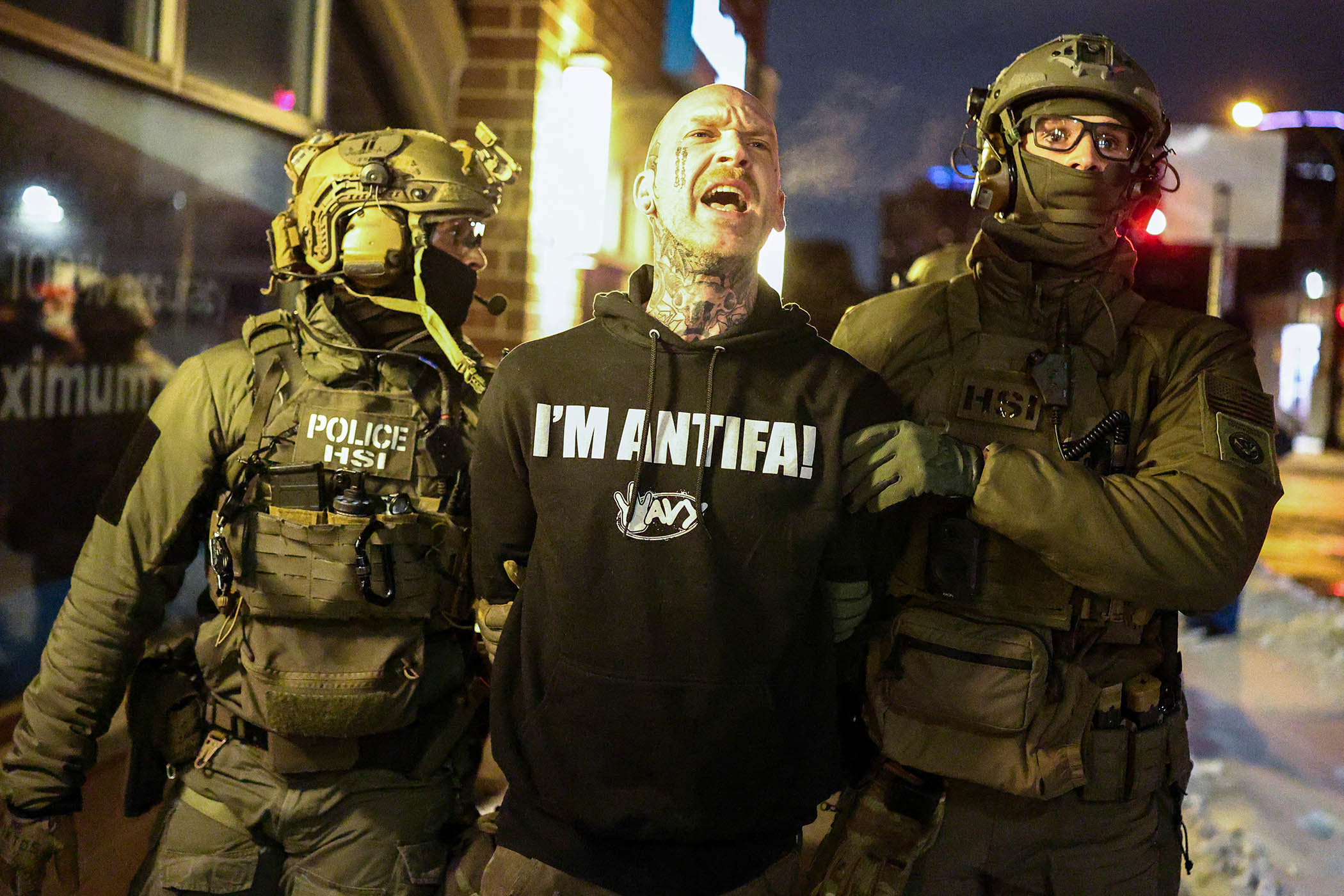


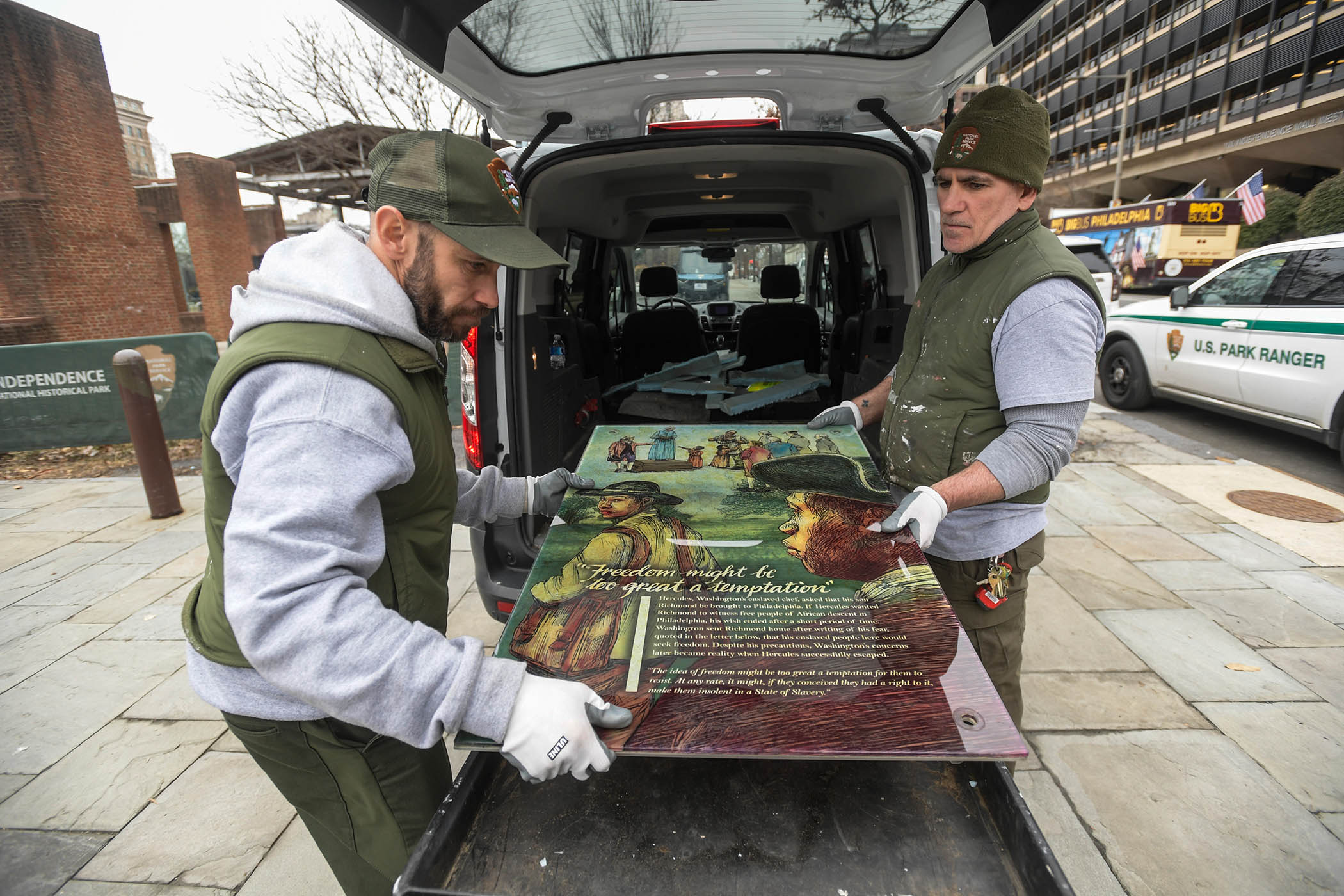
On 31 May 2020, shortly after Donald Trump tweeted that he would designate “antifa” a domestic terror organisation, I bought an antifa T-shirt online. The group does not have a website because it does not exist – the name is an abbreviation of “anti-fascist” – but the shirts were easy enough to find. I was looking for something to wear to Black Lives Matter (BLM) marches near my home in Brooklyn, part of nationwide protests over the police murder of George Floyd. Two days earlier, Trump had warned that “when the looting starts, the shooting starts”, and blamed the unrest on “radical left-wing anarchists” from “antifa cells”. I had to look up the name.
That’s when I found the T-shirt with two flags – one black, one red – inspired by a German communist group from the Weimar era called Antifaschistiche Aktion. If Trump or his proxies wanted to brand me a terrorist, I thought, they’d have to contend with the history of the people who resisted the Nazis. By being against anti-fascism, the Maga movement made it clear what it stood for.
Perhaps I was being naive. On 13 March, a jury in north Texas convicted nine people of a range of federal charges, including providing material support to terrorists, for an incident outside an ICE (Immigration and Customs Enforcement) detention facility in Prairieland, near Fort Worth. The government prosecutor alleged that the defendants were members of an antifa cell on the basis that they were dressed all in black, wearing surgical masks and in possession of leftist zines. One of them had a sticker that depicted a stick figure throwing a swastika in a bin. On these grounds, my T-shirt would have landed me in Guantánamo.
The prosecution also pointed to the fact that the defendants had communicated on the encrypted messaging app Signal, which is commonly used by journalists and government employees. We used it in Brooklyn in 2020 too, mostly to warn friends about police crackdowns on BLM protests and to organise grocery deliveries for immunocompromised neighbours.
It seems likely that the “Prairieland Nine” did in fact break the law. They testified that they were there to light fireworks in the parking lot outside the detention facility – which they did, supposedly in a gesture of solidarity with inmates, since it was the Fourth of July. But they came armed with guns. Two or three of the protesters began spraypainting government cars and slashing tires. When a prison guard came out to confront them with his gun drawn, one of the protesters opened fire, injuring him.
The violence and the vandalism are reprehensible – yet the case has attracted national attention because it sets a troubling precedent. Those convicted face from 10 years to life imprisonment.
“This is the first indictment in the country against a group of violent antifa cell members,” said Nancy E Larson, acting US attorney for northern Texas, after the ruling, though none of the Prairieland Nine claims any such affiliation. Instead, the case sends a clear signal of how the Trump administration plans to prosecute leftwing activist groups following the assassination in September of the Maga activist Charlie Kirk. If zines and black clothing suggest membership of the mythical antifa club – which the former FBI director Christopher Wray described as “an ideology, not an organisation” – then the bar for terrorism charges is low indeed.
There is also a fearful symmetry to the Trump administration’s effort to put a face on resistance to its immigration crackdown and ICE itself, which has a clear face but whose raids are largely conducted by masked men. For months, videos have circulated widely online that show confrontations between protesters and ICE agents dressed in black tactical gear, with neck gaiters and sunglasses covering their faces. Time and time again, the agents refuse to identify themselves to the people they are detaining, as required by law.
Unlike “antifa”, ICE uses government channels to broadcast symbols that send a very clear message. As Lily Isaacs reported in The Observer, Trump’s Department of Homeland Security – of which ICE is a part – has a predilection for posting white supremacist memes on X as part of its continuing recruitment drive. “Geo-tracked paid social advertising targets people who step close to traditionally masculine spaces such as military bases, gun shows, fraternities and Nascar races,” she wrote.
In late January, residents of Eagle-Vail Valley in Colorado reported finding “death cards” in the cars of people who had been taken by ICE during traffic stops conducted under false pretenses. Photographs of the cards, which bear the ace of spades and the phone number for the Aurora, Colorado ICE office, were published by the local Denver7 news channel. In Vietnam, US servicemen were known to leave cards on the bodies of Viet Cong soldiers as a form of psychological warfare. The practice inspired one of the most memorable scenes from Apocalypse Now: in a village blazing with napalm, the deranged Lt. Col. Bill Kilgore, played by the late Robert Duvall, tosses cards onto murdered women and children as a sinister ranking system. “Four of diamonds, six of clubs, eight of spades…” he says. “There isn’t one worth a jack in the whole bunch.”
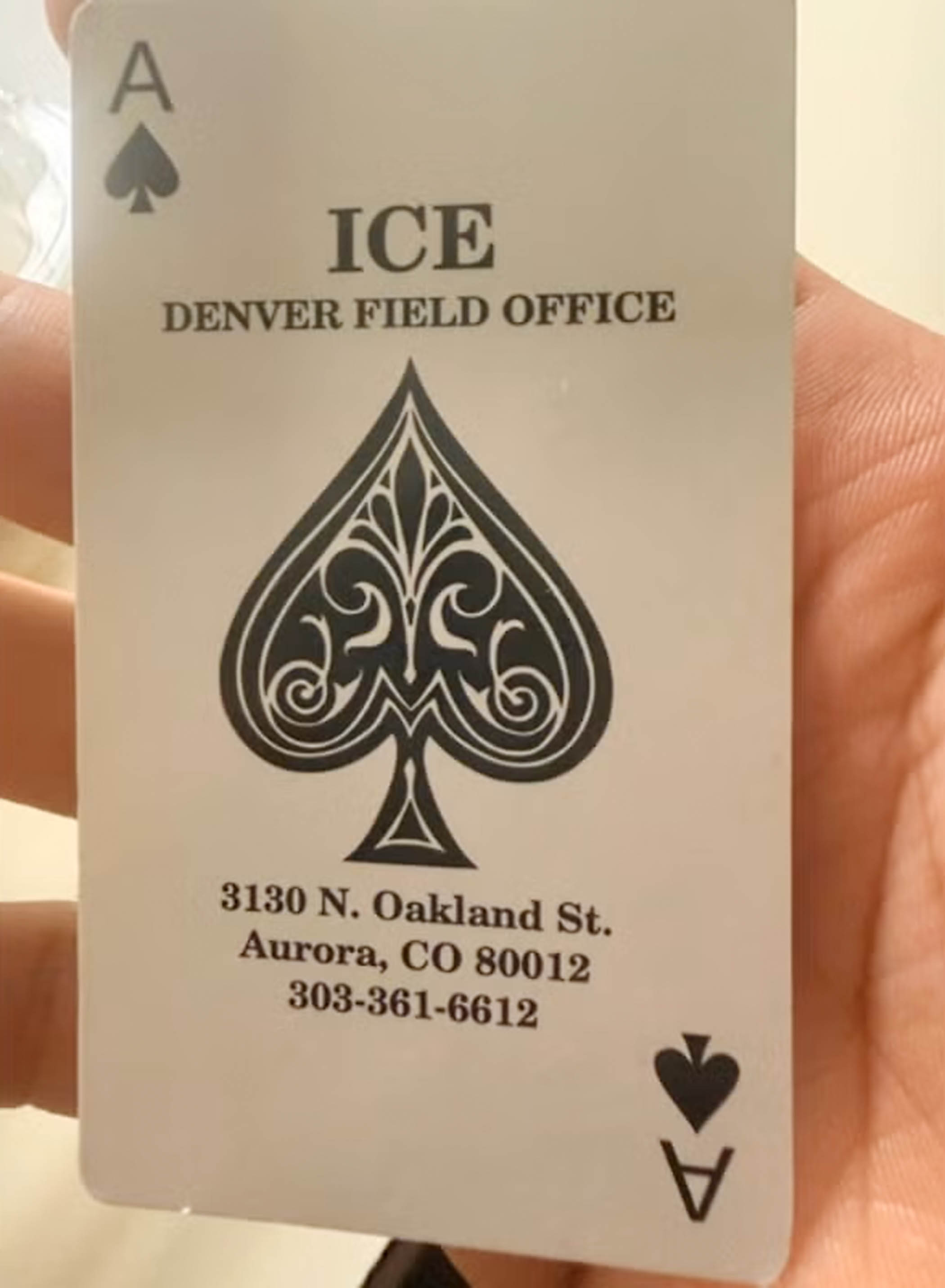
One of the "Death Cards" found in Eagle County, Colorado
As Isaacs notes, new ICE recruits are more likely to be familiar with video games than they are with films such as Apocalypse Now. Death cards gamify Trump’s brutal immigration crackdown, and those apprehended make for another kind of “body count”. Several video games from the Marvel franchise feature Bullseye from the Daredevil series or Gambit from the X-Men, both of whom use the ace of spades card as a razor-sharp explosive projectile.
The death card is a tool of terror, designed to send a message to immigrants that they should live in fear of being kidnapped or even killed by government agents. It’s an especially potent symbol for Latino communities and those who may have fled forced disappearances in their countries of origin.
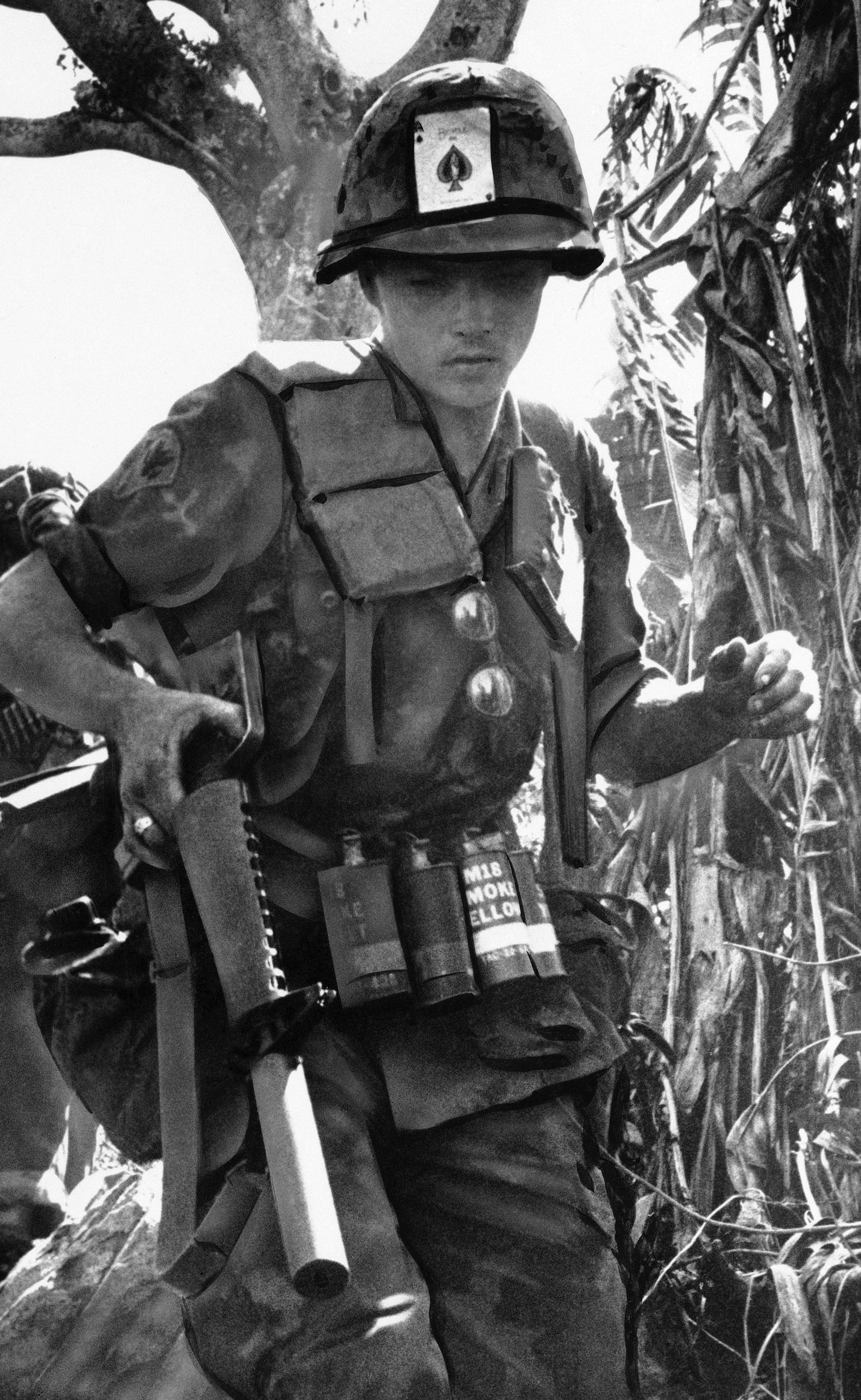
A US soldier with the ace of spades stuck in his helmet, north-west of Saigon, 1970
Colorado’s two Democratic senators and four of its eight Congressional representatives condemned the use of the cards in a letter addressed to the homeland security chief, Kristi Noem. A few weeks later, facing mounting pressure over ICE raids in Minneapolis, she was sacked. Her replacement, the Oklahoma senator and former UFC cage fighter Markwayne Mullin, was confirmed on Monday by a Senate vote mostly along party lines.
It remains to be seen whether Mullin will compel ICE agents to follow lawful procedure or allow them to continue deploying fear tactics with impunity. At his confirmation hearing, Rand Paul, a Republican, called him a “man with anger issues”. In any case, Mullin has been vocal that antifa should face the full wrath of US law enforcement. As he told Fox News: “We’re going after the violence.”
Photographs by Charly Triballeau/ AFP via Getty Images, Colorado Sun, Ryan/AP
Newsletters
Choose the newsletters you want to receive
View more
For information about how The Observer protects your data, read our Privacy Policy