
Witnessing mass street protests in Iran in 1978, the then British ambassador famously reported to London that the shah’s government was not under threat. We don’t have a great track record of predicting revolutionary change in the country. Amid the current, fast-moving developments, everyone wants to know whether we are at last seeing an end to the current regime. From my years living in Iran, and many more years following events there, I think three themes stand out.
To start with, it’s worth trying to look at the situation through the regime’s eyes – which also helps to show some of the differences from the Iranian revolution of 1979. For the tightly grouped circle of clerics, generals and politicians who hold all the power in the Islamic republic, preserving the regime comes above all else. They want to keep their wealth – and to survive. With their backs against the wall, they are showing that they are prepared to use whatever force it takes to preserve the system.
But that doesn’t mean the regime has a single, monolithic view. There has been internal tension for years about whether doubling down – prioritising a
“resistance” ideology against the west, and maintaining social restrictions such as the mandatory hijab – has really served the Islamic republic well. These debates have intensified since Iran’s military weakness was exposed in the “twelve-day war” of last June. The fact that the politics is happening behind closed doors does not make any less real, and we see echoes of it in previously taboo public criticism aired by some influential figures and in the debate around the succession to the supreme leader, Ali Khamenei.
So can the regime reform itself and bring meaningful change to the country, giving itself a longer lease on life? The technical capacity isn’t lacking: there are smart technocrats and skilful political operators. But the system, with its shifting rival factions and opaque economic empires, struggles to come together around a bold course of action. Even this “reformist” government has been unable to match its rhetoric with any serious change: real economic reform would mean tackling corruption and the vast role of the IRGC (Islamic Revolutionary Guard Corps) in the economy.
Reaching a deal with the west to lift some sanctions in return for concessions on Iran’s nuclear and missile programme might have been another lifeline, but is clearly off the table for now, and again would require a boldness that seems unlikely as long as Khamenei remains in power.
In the absence of a radical plan that would answer the anger and frustration of the protesters, the regime is left with the lowest common denominator it can agree on: the use of force to suppress dissent. Here is another contrast with 1979, when the shah declined military advice to instruct the army to use massive force against unarmed demonstrators, instead abdicating and departing into exile.
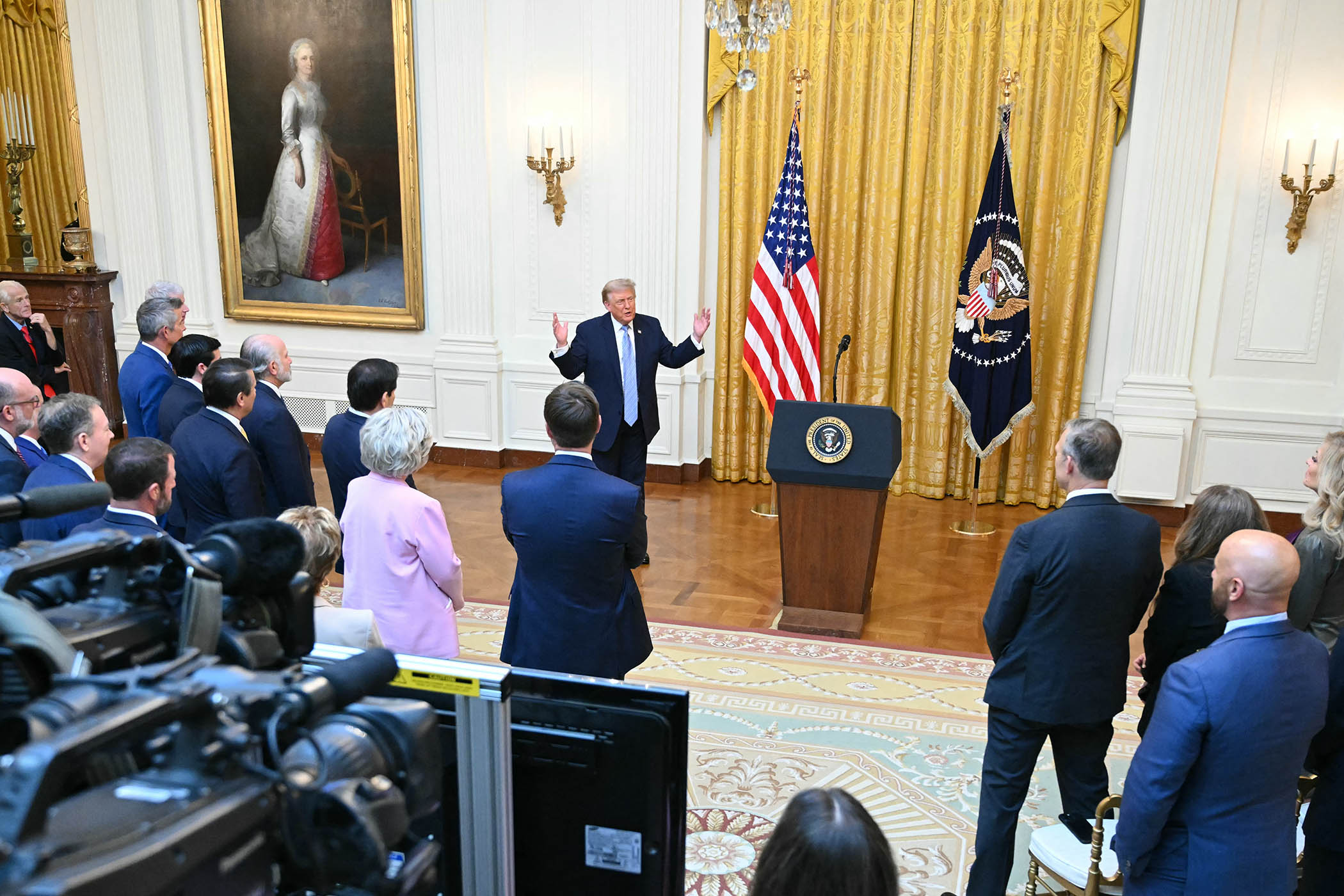
The current regime doesn’t look like it intends fleeing, despite news stories of elite families preparing their escape routes to Moscow or elsewhere. It has a huge amount of force at its disposal, in the form of the IRGC and the Basij militia. Indeed, any indications of serious defections from those forces would truly be a sign of the end for the regime. And, as suppression of the unrest is existential for the regime, it is hard to see President Trump’s threats deterring it. If the US is not bluffing, and carries out strikes (perhaps with Israel) against regime targets, it is still difficult to see how that would change the balance of power on the streets – though it would certainly inject more unpredictability into the situation.
So much for the regime. What about the perspective of the Iranian people? Sweeping generalisations about a population of 90 million have limited use, and it’s tempting for those outside the country to project their aspirations on to the views of ordinary Iranians. Certainly, the vast majority of the population have neither respect for nor faith in the regime. But nor are they out on the streets. I found many Iranians inside the country quick to express contempt for their rulers – but they tended to follow that with a comment about how a descent into revolutionary chaos would make their lives much worse.
Which points to a key fact: revolutions succeed when there is some form of leadership to take over the reins of power. A ruthless, decades-long campaign by the intelligence, security and judicial authorities has robbed the Iranian population of any groups or structures that could channel public mobilisation into a bid for power.
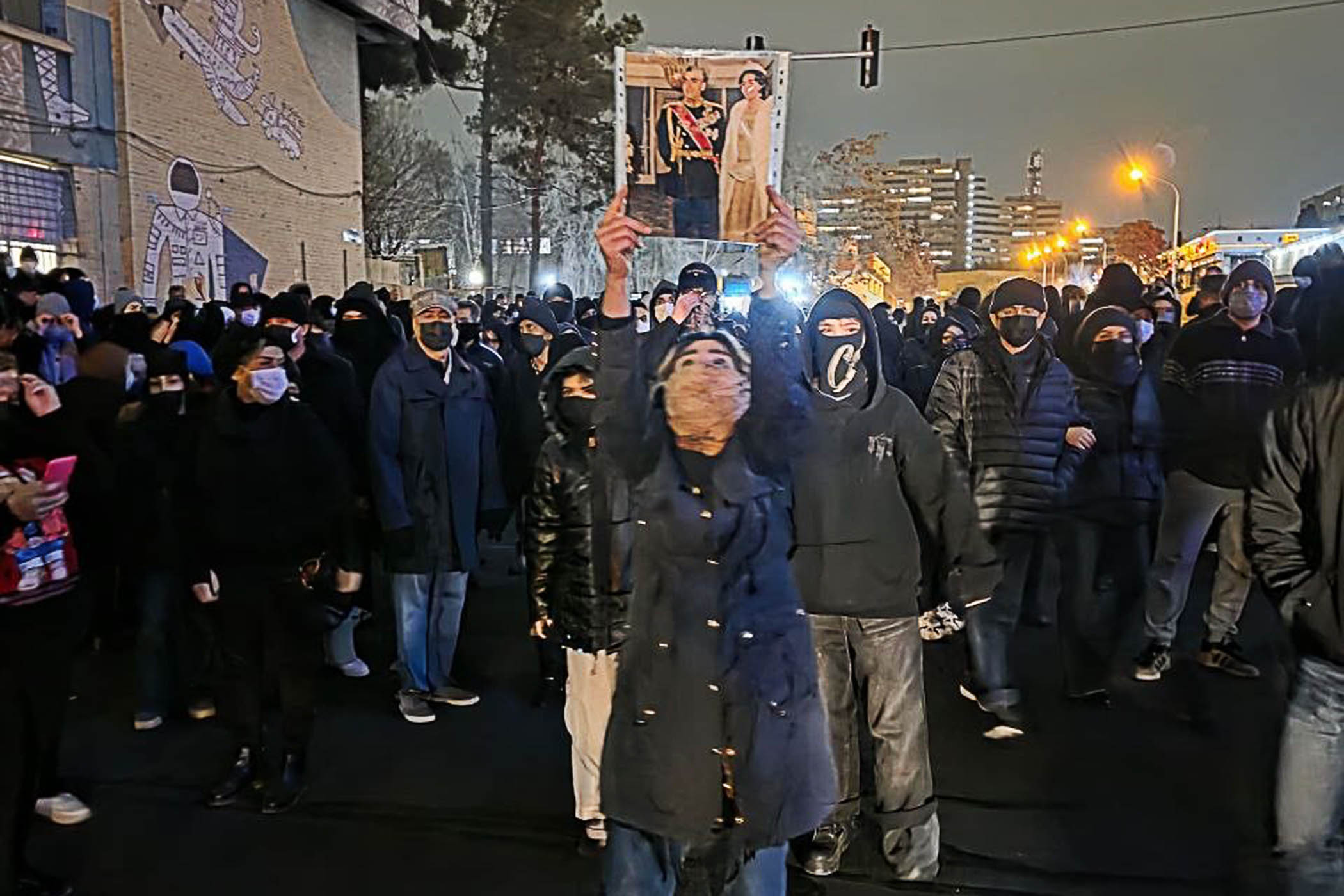
Outside the country, meanwhile, Reza Pahlavi (son of the last shah) has positioned himself as a potential transitional leader. As the protests have continued, his role has become more prominent and pro-monarchy slogans have become more common. But it’s hard to tell how much this represents general anti-regime fury and nostalgia for the time before the Islamic revolution rather than a widespread desire for the return of the monarchy. The Iranian opposition has yet to find itself a unifying leader: if it is to be Pahlavi, there is a large gap to be bridged between him and the protesters on the streets.
Newsletters
Choose the newsletters you want to receive
View more
For information about how The Observer protects your data, read our Privacy Policy
So does this mean these demonstrations won’t succeed? Not at all. They may not bring a direct overthrow, but they can force the regime to recognise that it has run out of road, and to acknowledge the need for radical change. Change from within the regime could take many forms: it could be the IRGC pushing the clerics out of a formal role and promising social and economic reform; or it could be a move towards a stronger civilian government.
Of course, even the departure of Khamenei would not have to mean the fall of the Islamic republic. But one thing is sure: when meaningful reform processes start in a turbulent country, they rarely stay in the control of those who initiate them. That is precisely why the regime fears reform: because it could bring a “Gorbachev moment” that pulls down its house of cards. But the powerful voice of the people may be bringing that scenario closer.
Rob Macaire served as the UK's ambassador to Iran from 2018 to 2021
Photograph via BabakTaghvaee1/X