

A tourist gets hopelessly lost in the Irish countryside and asks a local farmer for directions. “Well, if I was you,” the man responds, “I wouldn’t start from here.” So goes the old joke. Duncan Weldon, author of Two Hundred Years of Muddling Through, thinks it applies to all manner of British economic policy problems. It certainly applies to the management of England’s broken water industry.
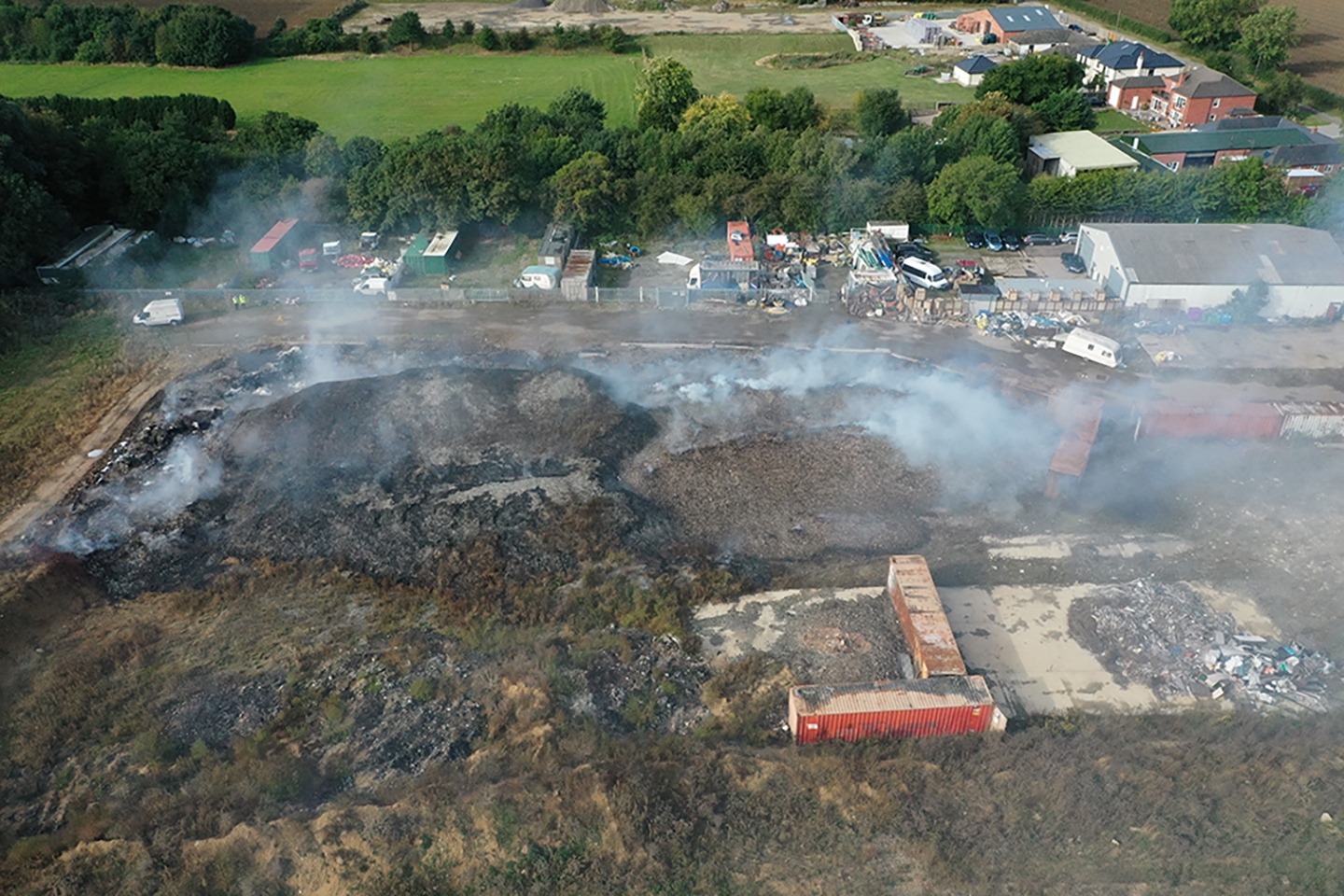
Water companies chronically underperform against environmental targets. Decades of underinvestment have resulted in creaking and leaking infrastructure, which will take time and money to fix. The public and investors alike have lost faith in the regulatory framework. And, in the highest-profile and most acute symbol of failure, Thames Water totters on the financial brink.
The choice of what to do about Thames Water will be an early test for a Burnham administration and his “Manchesterism” agenda. It will serve as a waymarker not just for the new government’s approach to the water industry, but potentially for its economic policy more generally.
The current state of play is as follows. After a messy and protracted process, a consortium of lenders has proposed a “best and final” offer for Thames Water, which would result in – among other things – £9.4bn of a near £20bn debt pile being written off in return for a relaxation of the penalty regime around environmental performance targets. Ofwat, the regulator, is yet to sign off on the proposal.
The environment secretary, Emma Reynolds, wrote to Ofwat on 16 June to raise her concerns about various aspects of the proposed deal, saying that she is “not convinced the current proposal is good enough for consumers or the environment”. She remains, according to a government source, “open to all outcomes, including use of a special administration regime”. This could be pure politics or a negotiating ploy, or both.
Meanwhile, Thames Water is burning through the emergency funding provided by its creditors, which was intended to take the company through the takeover and restructuring process. If no further credit is extended, it could run out of cash by the autumn.
The alternative to the deal is for Thames Water to enter a “special administration regime” (SAR), an insolvency process designed to allow companies to fail while ensuring that essential water services continue to be delivered. The government would take temporary control while the company is restructured (potentially with losses imposed on holders of Thames Water debt) and a new buyer is sought. It was previously used in the case of Bulb, a failed energy company, but has never before been used in the water sector.
Early on in a Burnham premiership there would be a decision to make. Continue to pursue a “market-led solution”, perhaps after playing hardball to encourage the would-be buyers to come up with better terms. Or allow Thames Water to fail and enter an SAR.
At first glance, it looks like a political no-brainer. Being seen to offer leniency on fines as part of a deal would be unpopular with the communities furious about pollution and pay packets. Allowing Thames Water to enter an SAR would signal to other firms that failure has consequences, and that the regulator has some teeth. Various Labour party politicians and affiliates have urged the government to pick a fight with Thames Water and its financial backers (dubbed “fake market capitalists”) as part of an explicit political strategy.
It could also mark the beginning of something bolder. While the SAR was originally designed to work as a time-limited “bridge”, to clean up the failing company and return it to the private market in the hands of a new buyer (perhaps after being broken up or otherwise reshaped), some see it as a potential route to full public ownership. Andy Burnham himself recently told the Guardian: “Public ownership [of water companies] is absolutely an option. I would say for Thames Water, that is what should be done.” Special administration could be the first step.
Newsletters
Choose the newsletters you want to receive
View more
For information about how The Observer protects your data, read our Privacy Policy
But it would be a mistake to view the SAR route as simple or cost-free.
While the firm is in the hands of the special administrator, the Treasury would have to inject something like £4bn of funding, and cover various other operational costs. These costs could be recouped later, if the company is sold, but it would still be a pain for a government already struggling to make the sums add up. Taking almost £20bn of debt on to the public balance sheet could interact unhelpfully with the fiscal rules – though it’s the trajectory, not the level, of debt that matters there.
If the SAR process imposed substantial costs on debt holders, that could potentially undermine the UK’s reputation as a stable place to invest – especially if it’s viewed as politically driven. That, plus the wider policy and regulatory uncertainty, would make it more expensive for other water companies to borrow, which would eventually show up as higher customer bills.
And, most important of all, the government would take on responsibility for running the bloody thing. Thames Water is a distressed asset with a broken business model, and the government would be responsible for coming up with a plan to turn it around. The leaky pipes and sewer systems cannot be fixed overnight, and the government would be on the hook for the (inevitable) pollution incidents and network failures.
In sum, going down the SAR route would be messy, risky and potentially expensive. James Purnell, lined up as Burnham’s chief of staff, is presumably well aware of this: his consultancy, Flint Global, is an adviser to the Thames Water creditors. But if Burnham is serious about putting public ownership of water and other utilities at the heart of his economic policy agenda, and is in it for the long haul, this might be a price worth paying.
The Thames Water decision will also speak to bigger questions about the new government. Will the vague promises of the campaign trail survive contact with No 10? Will Andy Burnham and his chancellor take a more economically populist stance, and take more risks, in a bid to mark a clean break with the relative caution and technocratic pragmatism of the Starmer-Reeves project? Will they prioritise quick results or fundamental reform?
We might wish we weren’t starting from here, but the choices made about water could at least tell us in what direction we are heading in next.
Thank you for reading. Tell us what you think by writing to letters@observer.co.uk
Photograph by Daniel Leal/Getty Images