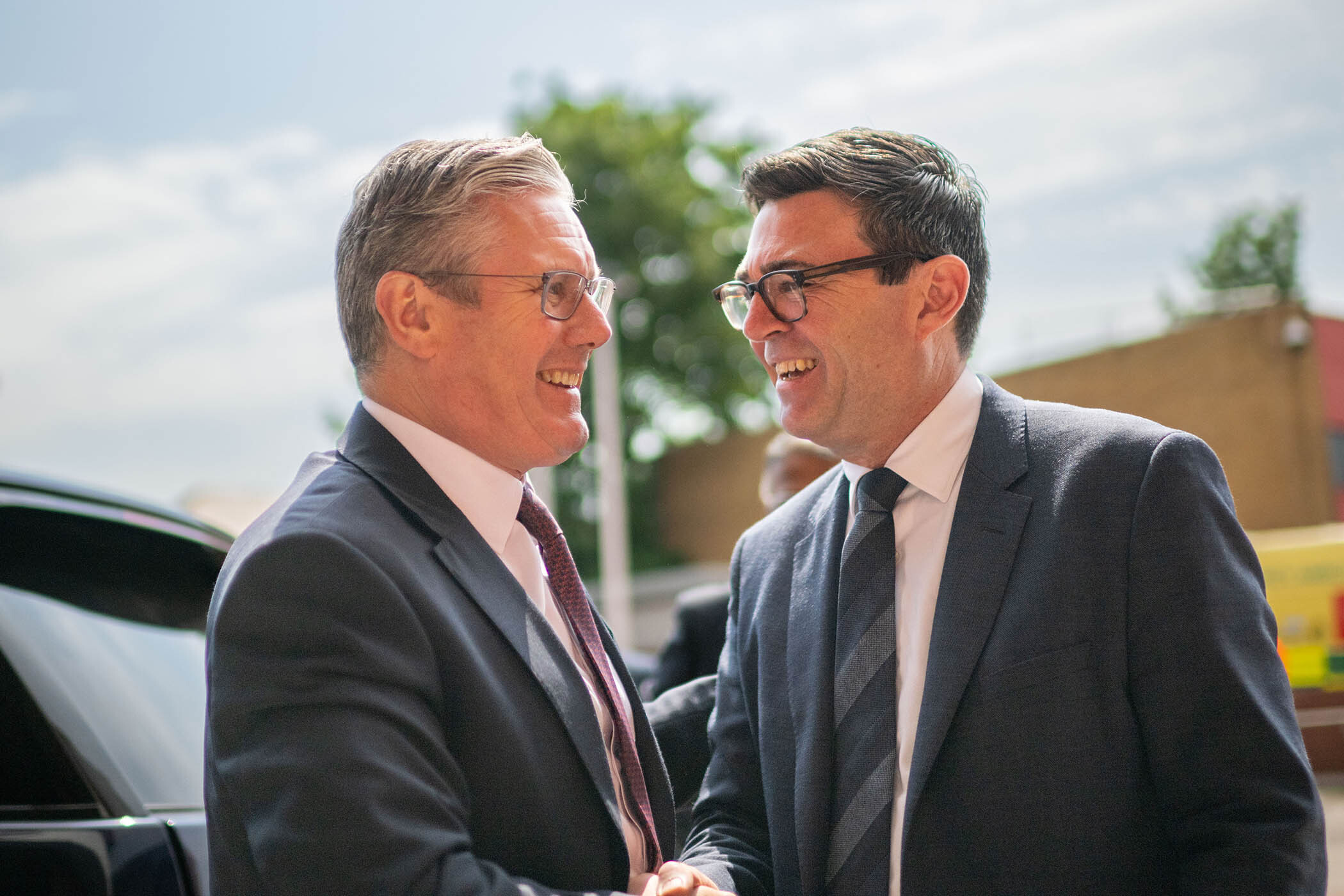

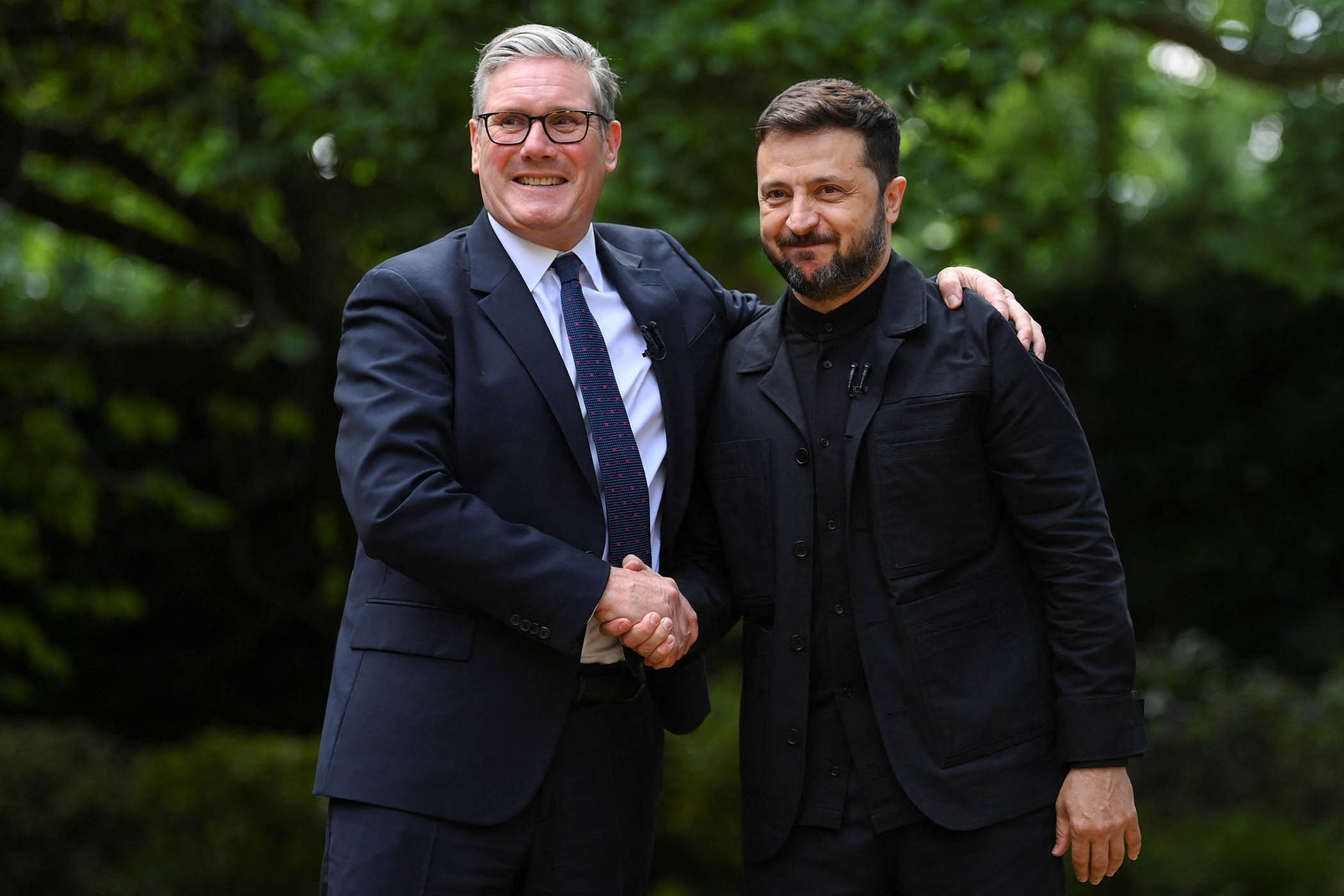
The contest to succeed Keir Starmer in Downing Street broke into the open yesterday with Andy Burnham’s decision to announce a bid for parliament.
Minutes before a 5pm deadline, the Greater Manchester mayor said he was hoping to be the Labour candidate in the upcoming Gorton and Denton byelection and issued a statement aimed at Reform UK as well as rivals within Labour. He said this was “the moment to mount the strongest possible defence of what we stand for”.
Burnham’s move means that 18 months after winning a landslide election, Starmer is in a fight for his political career.
In a heavily coded statement that nodded to his ambition to enter Downing Street, Burnham said: “There is a direct threat to everything Greater Manchester has always been about from a brand of politics which seeks to pit people against each other… I would run a hopeful and unifying campaign with broad appeal to voters, focusing on the positivity around what we have achieved, whilst at the same time being honest about the alienation people feel from politics.”
Burnham’s route back to Westminster, which he left in 2017, is not straightforward. He needs permission from Labour’s national executive committee to stand in the byelection and would need the support of at least 80 MPs to mount a bid for the leadership. However, even if he fails, the odds of a leadership battle have risen sharply in the past week. The options for the prime minister – blocking Burnham as a candidate, Burnham returning to parliament or Labour losing the seat entirely – are all fraught with risk.
“Whatever Keir does it is like a lose-lose situation,” one Labour backbencher said. “It makes the leadership look weak if they block him but losing the byelection will hasten [Starmer’s] going. There will be a leadership challenge eventually, whatever happens.”
Although Burnham is widely known to be angling for Starmer’s job, sources told The Observer he was caught off-guard by the resignation of incumbent MP Andrew Gwynne on Thursday. Despite rumours of a deal being struck between the pair, sources said they had not spoken to each other for several weeks. Burnham was even said to have his sights set on another Labour seat in the Greater Manchester area.
“It came as a complete shock. No one was expecting Gwynne to go so soon,” one supportive MP said. “The timing is terrible, but he's conscious that you have to take the opportunity when it presents itself. I don't think he really had the option not to go for it.”
As a result, he and his team kept a low profile for more than 48 hours – in public at least. Sources said the Burnham team had asked some MPs to publicly endorse him. Burnham has openly challenged Starmer’s leadership in recent months.
Another supporter said: “Andy was genuinely 50-50. It’s a big gamble... The unions [were] calling for it but he was only willing to do it if MPs want him, and he is aware he has never had much love in the PLP.”
Newsletters
Choose the newsletters you want to receive
View more
For information about how The Observer protects your data, read our Privacy Policy
It was only after receiving support from deputy leader Lucy Powell, former deputy prime minister Angela Rayner and a smattering of other Labour big hitters including John McDonnell, who was shadow chancellor under Jeremy Corbyn, that he finally decided to run.
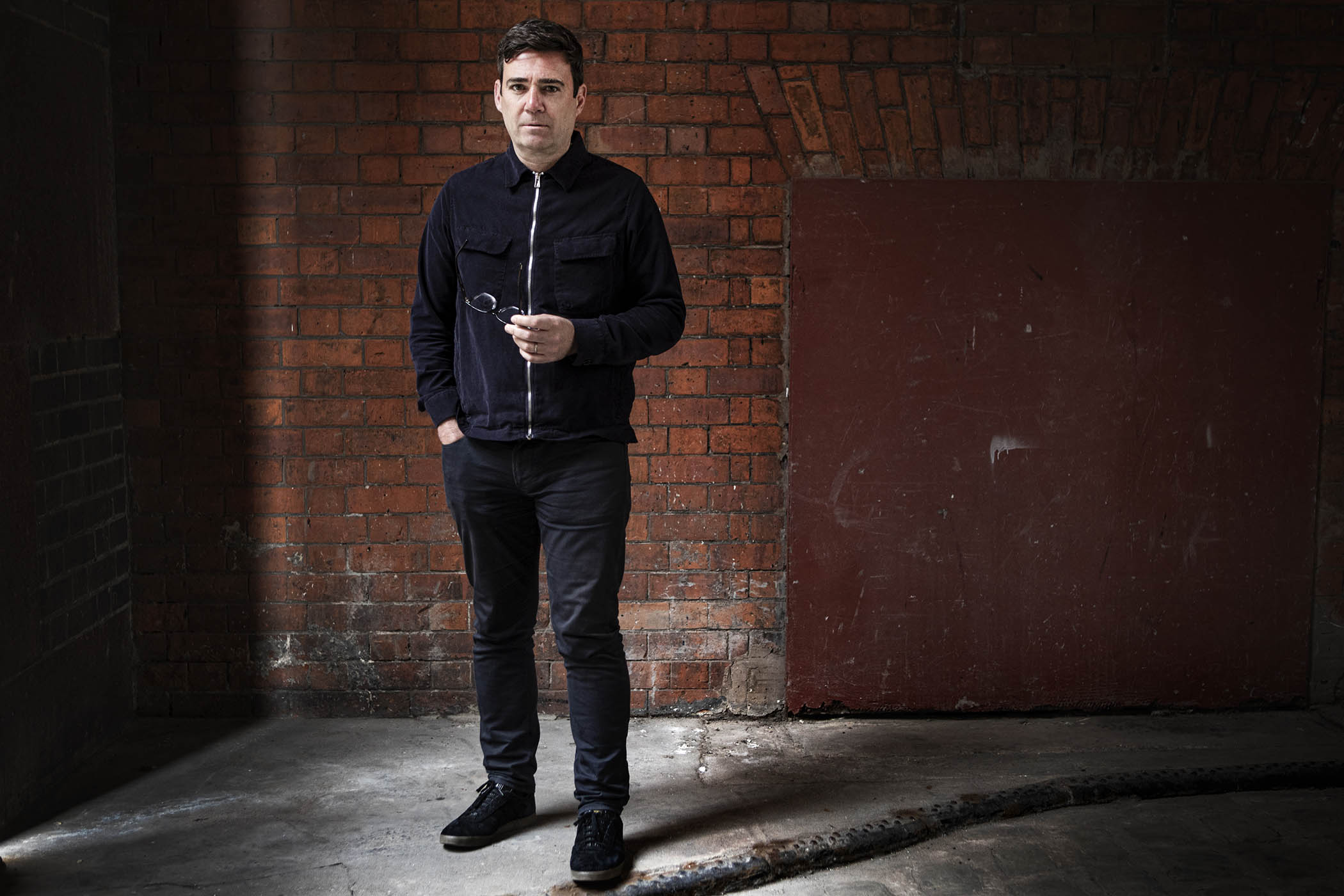
Burnham left Westminster in 2017. His route back will be far from straightforward
Burnham’s team had reached out to Rayner, herself a leadership contender, sources say, although this was denied by her allies, who insisted her endorsement came from a long-held view that local members should decide in these circumstances.
Rayner told a trade union event on Saturday afternoon that the party should ignore factionalism in light of Labour’s dire polling. “We’ve got the fight of our lives on and therefore we should be pulling together, and we should put our best players on the pitch,” she said.
Her words were echoed by Powell, seen as perhaps the most senior Burnham ally in parliament, who said Labour should have “the best possible candidate” standing. Health secretary – and fellow leadership hopeful – Wes Streeting gave Burnham a tacit nod, telling a North West Labour conference: “He’s a Labour mayor. He’s part of the team.”
Labour sources told The Observer that the byelection could happen as early as March, so it would be over before the local a nd devolved elections on 7 May.
On Monday, a sub-committee of Labour’s national executive committee will create a longlist from the applications, with shortlisted candidates interviewed by a smaller panel of three NEC members on Tuesday.
Sources said interviewers’ identities are “always” kept secret to ensure they cannot be lobbied; minutes will not be published. However, the questions will include those “that the media would put, to see whether their responses would be bomb proof”, one source familiar with the process said.
The eventual candidate will be announced next weekend. While party sources have insisted the process will be independent, several Labour MPs and advisers told The Observer they thought it highly likely Burnham would still be blocked. “That’s the more likely outcome,” said the insider.
Gorton and Denton would typically be considered a Labour safe seat: Gwynne won in 2024 with a majority of more than 13,000. However, with polling having shifted considerably since then, second and third place parties – Reform and Green respectively – both fancy their chances and are rumoured to be putting up big name candidates of their own.
Zia Yusuf, currently head of policy for Reform, and Green party leader Zack Polanski are both said to be eyeing the seat as their route into Parliament. George Galloway, the divisive independent politician, has also expressed an interest in the seat. This makes Burnham’s potential route to power all the more challenging. Although snap polls suggested he was the best-placed candidate for Labour to retain the seat, backbench MPs made it clear he would not be welcomed as the returning hero.
One member of the 2024 intake told The Observer: “Lots of respect for him as mayor and as a colleague up north, but I don’t know why he thinks there is some massive wave of desperation from the PLP to replace the PM. I f anything, i t’s like he keeps throwing bricks when we are just trying to stop drowning. We’re like no, not a brick Andy, we need a f***ing lifeline!”
Another said: “Where was he in the Corbyn years? I was in the trenches, dealing with all the abuse, with people in tears – and he swans off to the sunset to be mayor of Manchester and abdicate his responsibilities… That creates real bad blood.”
Photographs by
Ash Donelon/Manchester United via Getty Images, Gary Calton for The Observer