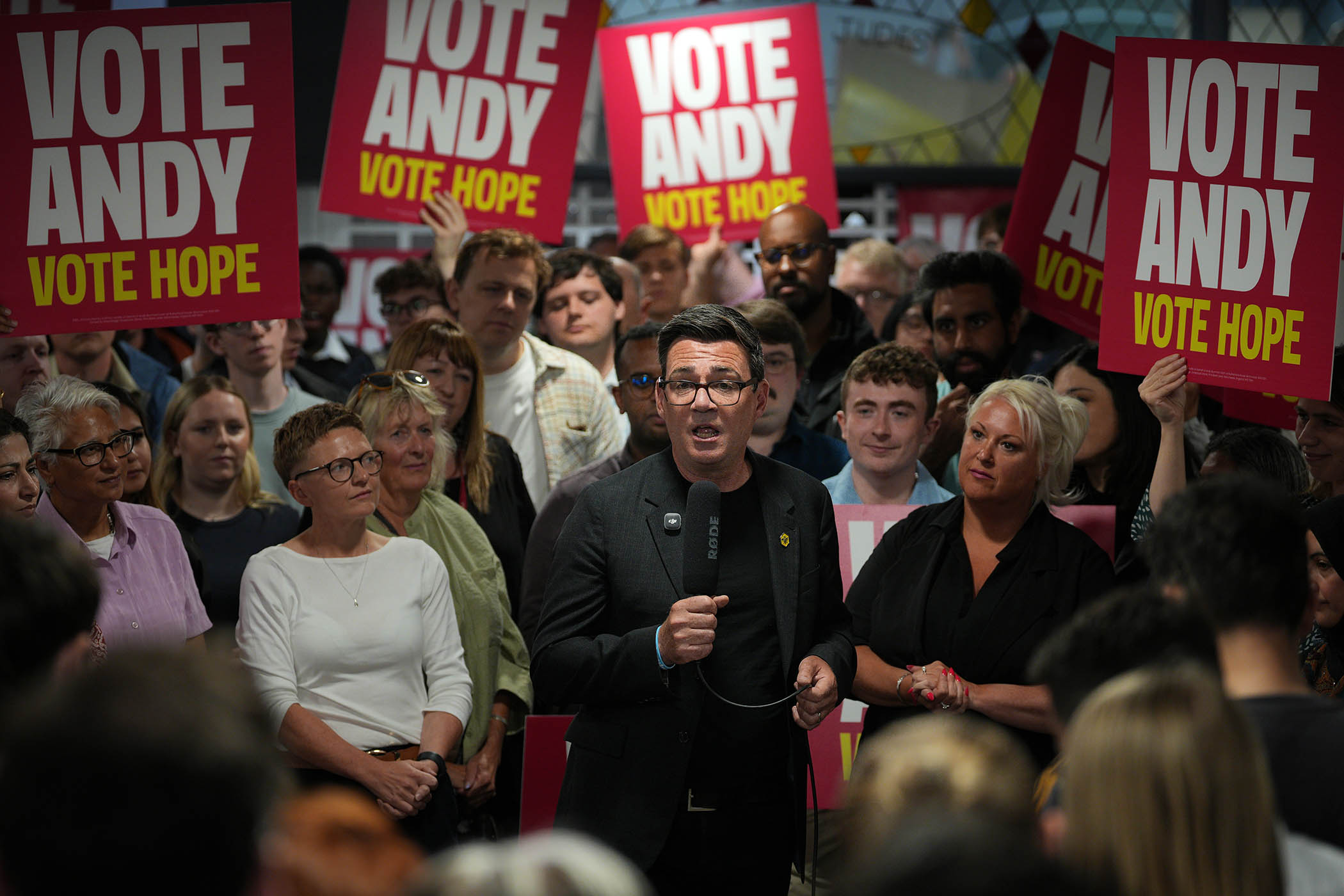

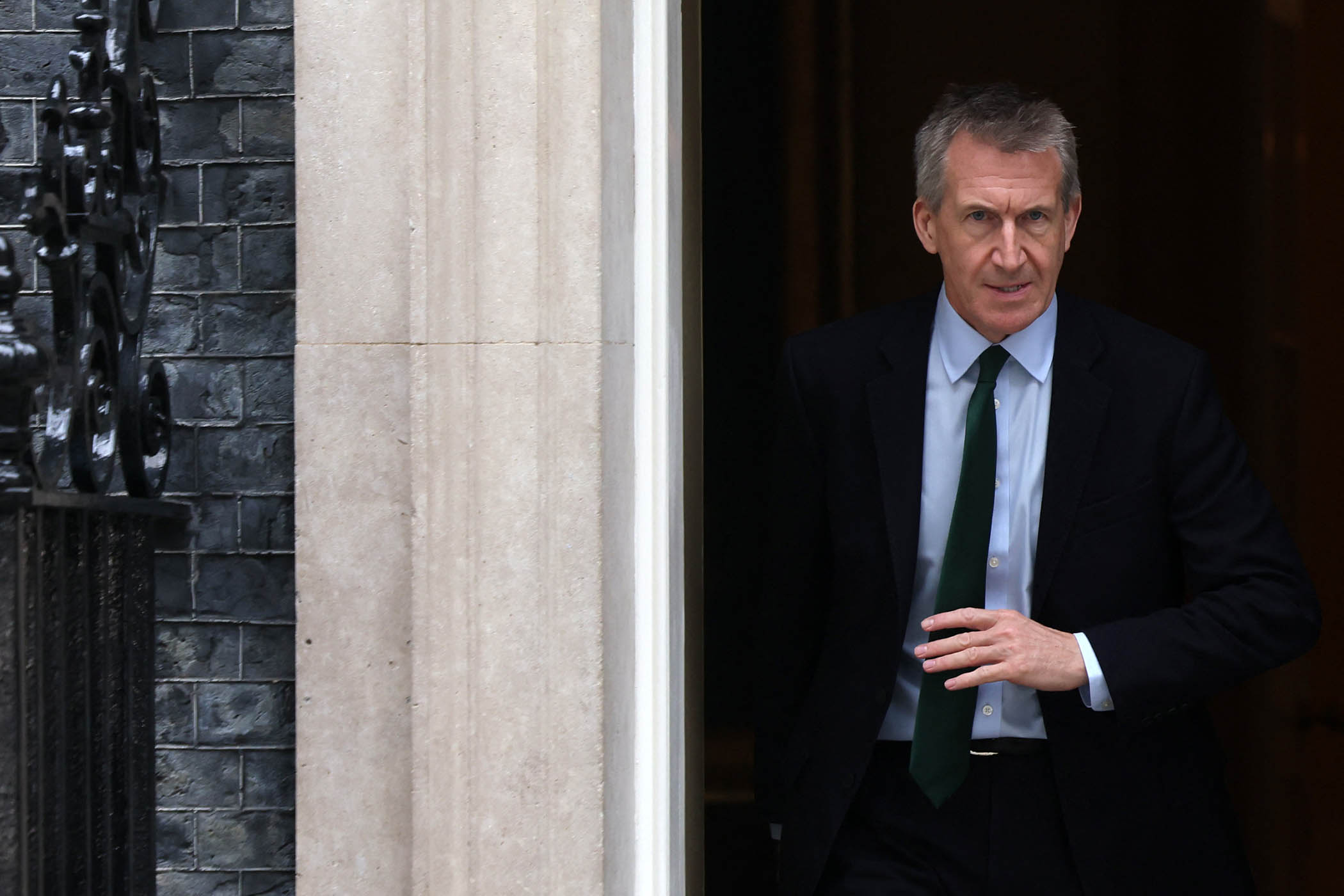
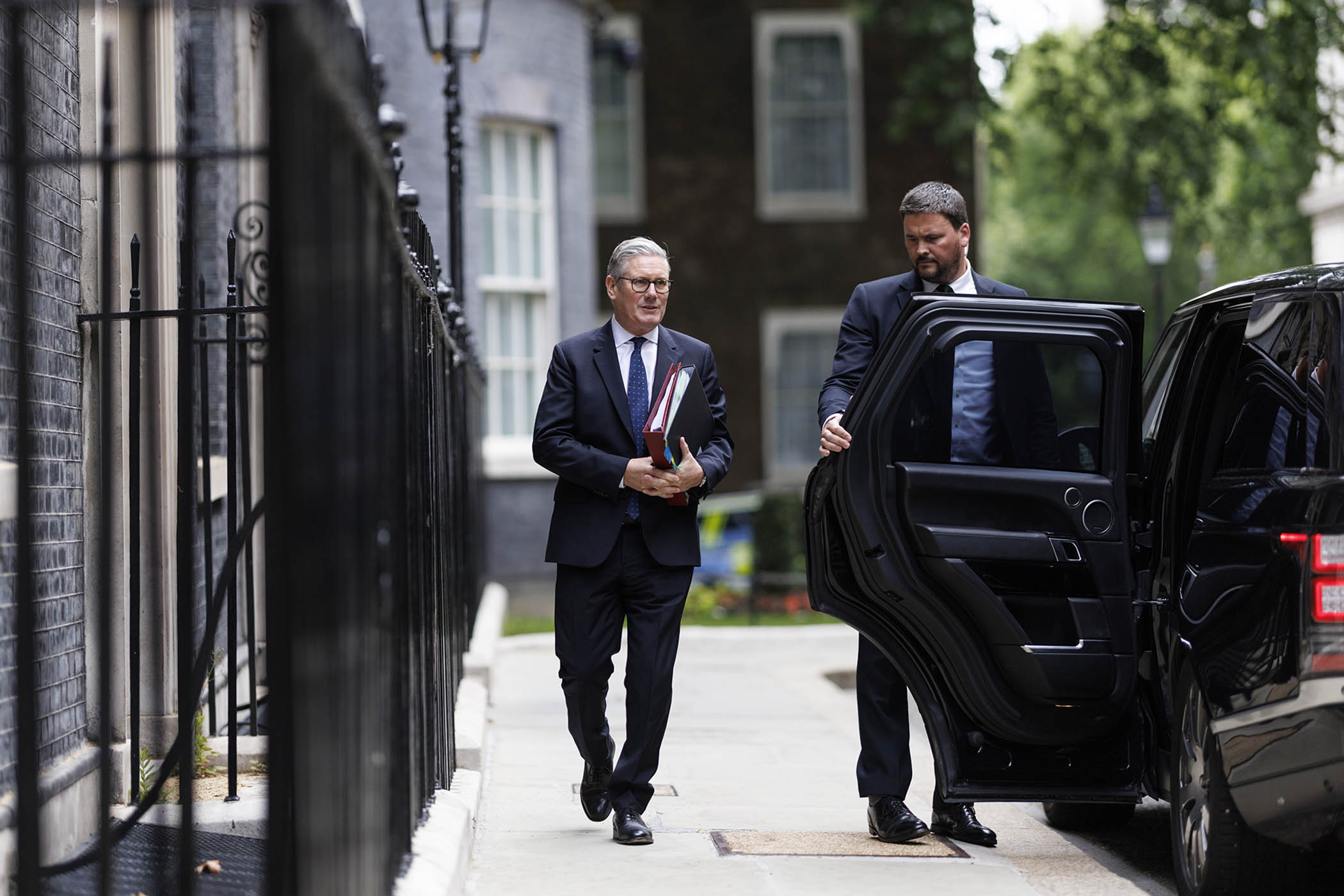
By Friday afternoon, the most important byelection in a lifetime had a strangely lifeless feel. The high fever of the early days of the Makerfield campaign seemed to have passed, and when The Observer called a Reform UK official to check the temperature on the doorsteps, he was downbeat. “To be honest,” he said, “I’m not sure I can help very much. There’s nothing to say; nothing has changed.”
The betting markets had Labour as a shoo-in; you could get 7-1 on a Reform victory (£80 back on a £10 bet, for the uninitiated), and those are rare odds in a two-horse race. And, privately, Labour and Reform were saying the same thing: they had fired their best shots, and now they feared they may lose more from messing up than they could gain from throwing a last-minute firework.
Then, long after the day’s canvassing was done, came an opinion poll that put the two parties only 5 percentage points apart, and Reform’s rightwing rival Restore Britain on 8%. Suddenly, there was electricity in the air and everything to play for again.
The art of predicting election results is always part crystal ball, part open book. The crystal ball in Makerfield – the three opinion polls that have been carried out – suggests that Labour is leading Reform. But last month’s council elections are an open book, and a bracing reminder that the Greater Manchester mayor, Andy Burnham, can take nothing for granted.
The eight Wigan council wards fought in May do not exactly mirror the Makerfield parliamentary seat, but nearly do. Across them, Reform got a total of 14,223 votes to Labour’s 7,686 (all the other parties combined got just over 6,000). The numbers also contained important clues about the commitment of voters. Turnout was down sharply compared with the general election two years earlier, but despite that, more people turned out to vote Reform last month than in 2024, while the numbers showing up for Labour dropped off a cliff.
Caveats abound, naturally. There will be more tactical voting in Thursday’s byelection, and Reform readily admits that, even though the elections were local, the dislike of Keir Starmer was a big motivation for its voters. This week, by contrast, you can vote Labour if you want to get rid of the prime minister – and probably see it done more quickly.
Underneath those variables are two hard truths. Voters who shift from Labour to Reform are notoriously difficult to win back, so Reform believes it can bank most of its 14,223 local election votes. And in Reform’s estimation, either it or Labour will probably have to get about 20,000 votes to win in Makerfield. The momentum may be with Burnham but his opponent, Reform’s Robert Kenyon, will be starting from second base.
As an exercise in itself, the campaign in Makerfield has provided more confirmation than revelation. It has confirmed Kenyon as currently a better-qualified plumber than a politician, and it has reinforced more views of Burnham than it has changed.
Two years ago, Burnham co-wrote a book, Head North, that is part memoir, part manifesto. In it, reflecting on his time at the Treasury, he appears to concede a truth that worries some of his doubters: “As anyone who knows me will verify, I’m more of a spender than a saver. I would much prefer to say yes.”
That question dogs Burnham more than any other: is he too much the people-pleaser to take difficult decisions? He breathed life into it again last week when he seemed to promise compensation to the “Waspi women” (Women Against State Pension Inequality), the 3.6 million born in the 1950s who believe they suffered financially because changes to the state pension age were badly communicated. Burnham had to send out one of his team to row back his position after a price tag of more than £10bn was attached to it.
Newsletters
Choose the newsletters you want to receive
View more
For information about how The Observer protects your data, read our Privacy Policy
The Waspi women themselves are not yet critical of the U-turn. Privately, they admit they are holding back for a reason that Burnham may not find appealing; they hope he may change his mind again if he becomes prime minister. And a potential cabinet minister in a future Burnham government laughed at the idea that it was a surprising slip-up: “What’s your responsibility when you haven’t been in Westminster for a long time? You basically go around saying: ‘Oh my God, that’s terrible – something should be done about it.’”
It was a reflection, on this source’s reading, of the political transition Burnham is going through. It would not matter in the constituency but “it did precipitate a reaction at Westminster”.
With too much at stake in Makerfield for Labour supporters to talk freely, and with Burnham having left behind so many once-close colleagues when he quit Westminster almost a decade ago, independent, up-to-date judgments about his toughness are hard to come by. Richard Leese may be the best-placed witness. He led Manchester city council from 1996 to 2021, and was deputy mayor to Burnham for the last four of those years. He is not an acolyte; stories abounded that the two men rubbed along uncomfortably.
Leese offers examples of Burnham making difficult decisions but he is at his most convincing when he shifts the question away from a simple test of personal authority: “Quite often, building consensus is a lot harder than just taking a top-down decision, but it tends to be a lot more effective.
“I said to him: ‘Well, now you’re mayor, you’ve got a cabinet that you don’t appoint, you can’t sack and you can’t tell what to do’ because it’s the leaders of 10 councils. And he’s worked very effectively with that. Now that is quite serious learning for somebody coming from a Westminster background. But Andy’s come, learned and adapted.”
Leese acknowledges that, left to his own devices, Burnham may have lacked the patience to remake Manchester over the decades, not years, that it took. But he is forgiving of the mayor’s positional shifts, which have become the stuff of comedy: “I know people ask why, why he’s changed his mind about certain things. Well… apart from the crash, apart from the recession, apart from austerity, apart from Covid. You know, anybody who thinks the same as they did in 2008 has got something wrong with them.”
Among Burnham’s potential colleagues in Westminster, a sort of uncertain curiosity dominates. How much has he grown while they have not been watching him closely? How much have the requirements of politics changed while he has been in Manchester?
One of them rattled off questions about what leadership amounts to these days: “Do you have an innate optimism? Can you communicate? Do you have a clear political project and a policy agenda that’s an authentic expression of it? Can you create high-performing teams?
“Those are much less sexy than: ‘Is he leftwing? Is he rightwing?’ but they make a massive difference to the effectiveness of a government you might lead. And I don’t know the answers to those questions.”
In a normal political environment, that much uncertainty may rule out Burnham as a contender for Starmer’s job. What makes it abnormal is that many senior Labour MPs may not know the answers to those questions about Burnham, but they do know them when it comes to the prime minister. And the answers are no.
Photograph by Christopher Furlong/Getty Images