The doyenne of the French far right came out swinging against her centrist rival in the 2017 presidential election debate. Facing off across a table, Marine Le Pen lambasted Emmanuel Macron as the candidate of “wild globalisation”, a “smirking banker” and a “darling of the system”.
It took seconds for Macron to seize the advantage: “You are the true heiress,” he responded coolly. “Not only of a name, but of the political party of the French far right – of a whole system that has prospered on the anger of the French.”
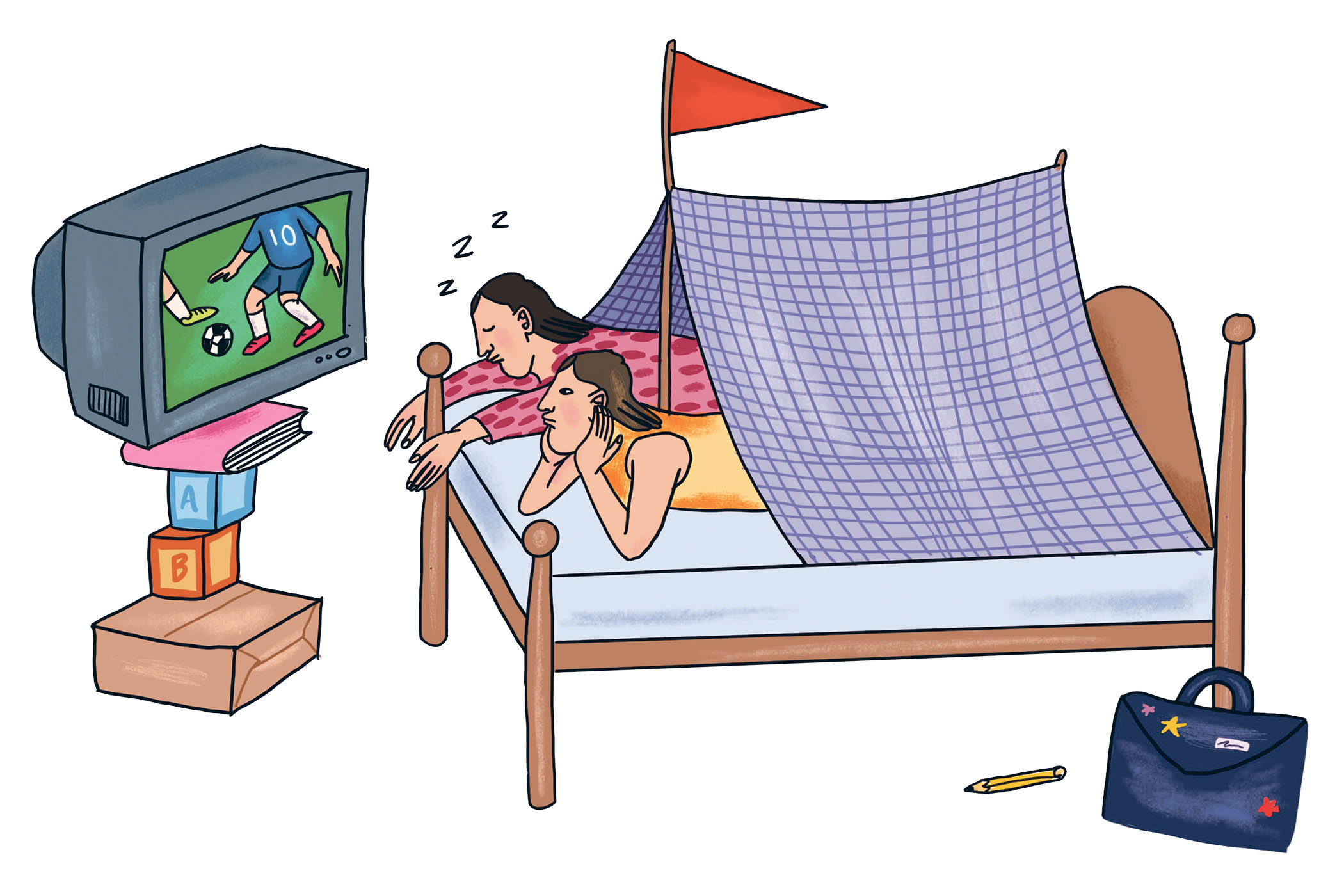
Viewers – all 16 million of them – watched as Le Pen struggled to explain how leaving the euro would work in practice. She appeared to muddle aspects of her own policies, and shuffled through folders during the two-and-a-half-hour slanging match. Polls showed her shedding votes at a rate of 30,000 a minute.
The disastrous performance was a low point for the leader of one of western Europe’s oldest and most electorally successful far-right and populist traditions. “She just came across as somebody who didn’t know what they were talking about,” said Victor Mallet, author of Far-Right France: Le Pen, Bardella and the Future of Europe. “Everybody said: ‘She’s finished.’”
But it was not over for Le Pen. The next time round, she held her own in the debate against Macron, leading the National Rally (Rassemblement National, or RN) to its best result ever in the 2022 election. The party has only grown in popularity since, and an election next year could be Le Pen’s best shot yet at becoming president – if she can overcome the latest stumbling block in her way.
“She’s always faced sort of apparently insurmountable challenges and has always managed to come back from them,” Mallet said.
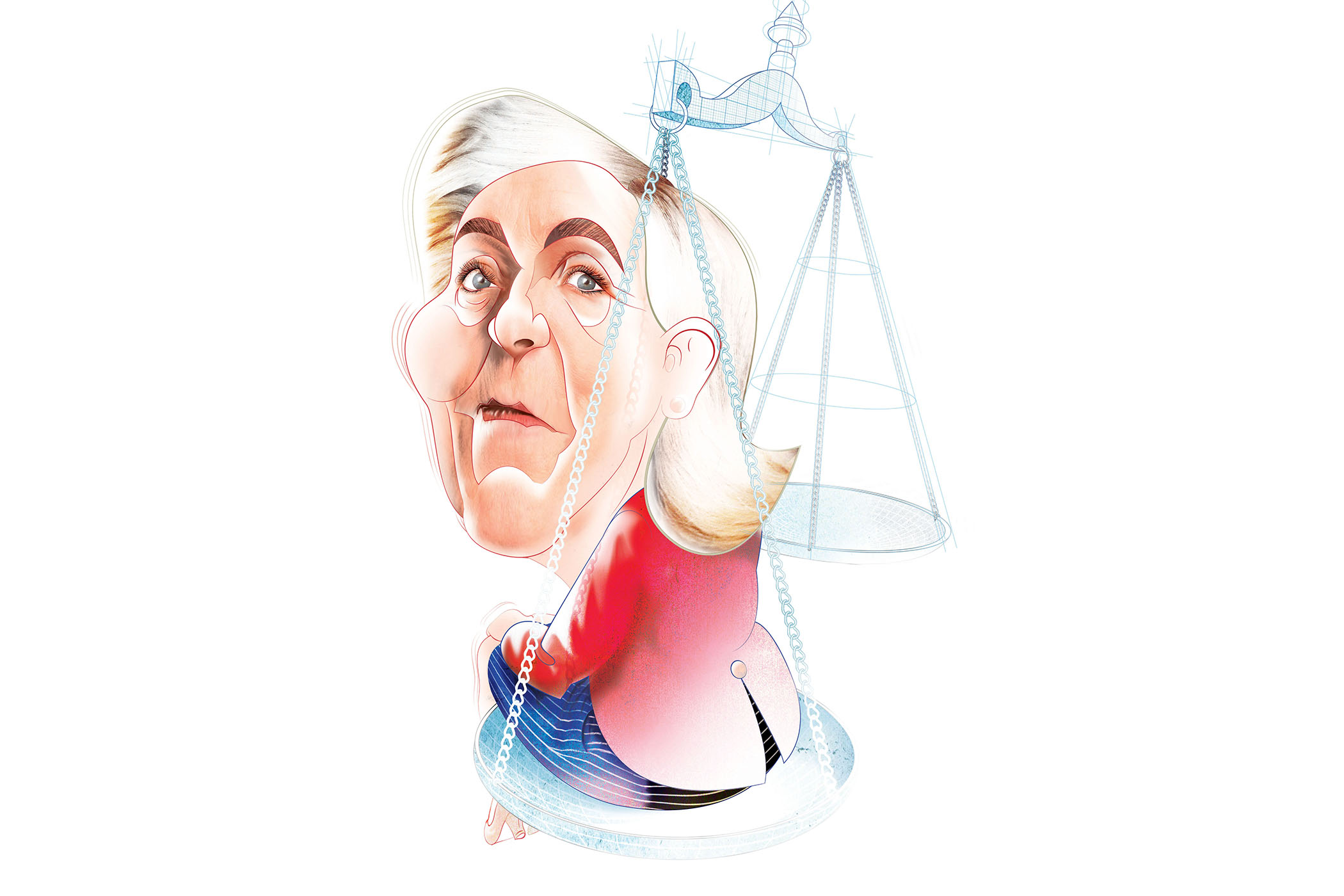
On Tuesday the 57-year-old politician faces a crunch verdict that will determine the next chapter of her political career. Le Pen has appealed against a March 2025 ruling that banned her from public office for five years after she and other RN members were found guilty of allegedly misusing EU parliamentary funds to hire aides, who were accused of working for the domestic party instead of performing tasks for the European parliament.
If her conviction for embezzlement is upheld, she faces being barred from running for the presidency or being ordered to wear an electronic tag – or both – among other options. That would clear the stage for her 30-year-old protege Jordan Bardella, the RN’s president, to run for the Élysée.
The struggle against adversity is a favoured theme for far-right politicians – and Le Pen is no exception. Her autobiography, À Contre Flots (Against the Current), describes her battle against the establishment, the media and elites that have it in for the Le Pens “just because of our name”.
Nicknamed Marine, Marion Anne Perrine Le Pen was born west of Paris in 1968, the youngest of three daughters. In a photograph, the four-year-old Marine appears tucked up in bed in the family’s modest fourth-floor Paris apartment, her adoring parents looming over her. A teddy bear leans against a wall plastered with election posters for the Front National (FN) – the RN’s former name – bearing slogans about “Marxist dunces”.
Newsletters
Choose the newsletters you want to receive
View more
For information about how The Observer protects your data, read our Privacy Policy
Her father, Jean-Marie Le Pen, had co-founded the far-right party in 1972, together with French former members of the Waffen SS who fought for Hitler during the Second World War.
Marine’s own political awakening would come in the form of 5 kilograms (11lb) of dynamite that exploded by the entrance to the family home in a small dead-end street in the 15th arrondissement on 2 November 1976. Then eight, Marine was found, unharmed, beneath the rubble and broken glass. The perpetrators were never caught, but the attack was attributed to the inflammatory and racist rhetoric of her father.
“Politics for me started in violence, against me,” Le Pen would later say.
From that moment, she understood that her father was a public figure, that people might want to kill him and that her family were not treated like others, said David Doucet, who wrote a book about Le Pen’s early years titled La Politique Malgré Elle (Politics in Spite of Herself). At school, she faced stigma because of the family name.
“From that came a sense of injustice and a clan mentality,” said Doucet. In interviews with Le Pen, the recurring themes are loyalty to her father, and a form of revenge.
She trained as a lawyer, but every attempt at forging her own path led back to her name. When an internal feud split the FN in 1998, Le Pen stuck by her father. Against them was her elder sister and designated heir to the party, Marie-Caroline, who had reportedly been sent to study at Oxford, and who sided with Jean-Marie Le Pen’s No 2, backing the latter’s ultra-right splinter group.
“It was that betrayal – plus the spectacle of her father under attack from all sides – that pushed Marine to commit for good,” said Doucet. “Let’s say the name predestined her; circumstances did the rest.”
To her mother, Pierrette, it had been clear all along: “Marine is the absolute clone of her father,” she once said.
After taking charge of the NF in 2011, Le Pen sought to rebrand it. She threw out overtly neo-Nazi elements to make it more palatable to voters, steering it into the political mainstream. But the supposed “detoxification” brought her into conflict with her own father. After he repeated an opinion he first expressed in 1987 that the Nazi gas chambers in the Holocaust were a “detail of history”, he was expelled from the party in 2015. His daughter described it as one of the most difficult decisions of her life.
“You could say she took back control of a destiny she had never wanted,” said Doucet.
It paid off. The party, which was renamed National Rally in 2018, went from being a fringe nationalist movement to the single biggest party in the French parliament today.
Opinion polls project both Le Pen and Bardella would comfortably win the first round of the 2027 election to reach a run-off vote.
The RN’s current platform is typically viewed as less hardline than some of the newer parties on the European far right, though it remains one of the more restrictive parties on immigration.
When he was leader of Ukip, Nigel Farage refused to form an alliance with Le Pen’s FN in the European parliament, citing “prejudice and antisemitism” embedded in its roots. But he subsequently praised her Euroscepticism and endorsed her during the 2017 presidential election.
Le Pen has since abandoned “Frexit”, which proved an unpopular policy with voters. And Farage more recently criticised her economic policies as a “disaster” for France, suggesting instead that rightwing parties could learn from the example of Italy’s prime minister, Giorgia Meloni.
With the election in sight, there are questions as to what kind of president Le Pen would be. “Will she be like Giorgia Meloni, who’s been relatively pragmatic on a lot of things?” asked Mallet. “We don’t really know, but my feeling is that she would be quite pragmatic.”
Illustration by Andy Bunday