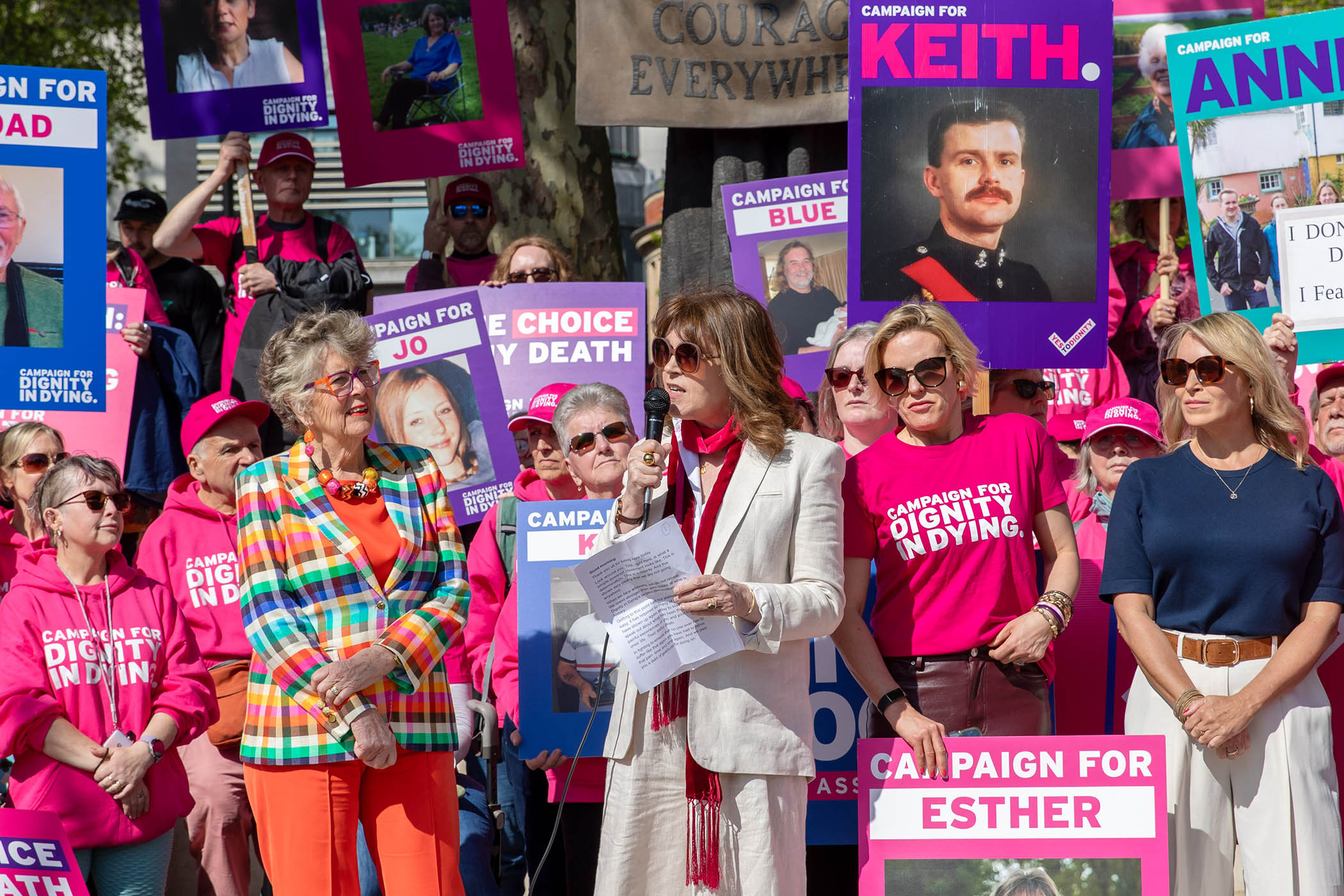


MPs who opposed the assisted dying bill have pledged to reintroduce it to parliament, with some accusing the bill’s opponents in the Lords of “trying to stop government functioning”.
Supporters of assisted dying believe more than 150 MPs are likely to bring back the bill if they are successful in the next private members’ bill ballot.
The terminally ill adults (end of life) bill failed on Friday when it ran out of time. Peers had 14 Friday sessions for debate but members had tabled more than 1,200 amendments. By the end, they had managed to cover only seven of the bill’s 59 clauses.
Since about 800 of those amendments were introduced by only seven peers, supporters of assisted dying believe their opponents have been filibustering – deliberately attempting to block the bill by delaying it – instead of fulfilling the unelected chamber’s role of revising and improving legislation passed by the House of Commons.
Those seven peers have strongly denied filibustering, saying the bill was badly drafted and many amendments were introduced at the request of disability or religious campaigners.
The bill’s failure has sparked anger among MPs, including those who voted against it. More than 30 MPs who were opposed have either spoken out against the tactics used in the Lords or written to constituents criticising the peers, according to evidence gathered by Dignity in Dying, a campaign group.
One is Paul Foster, the Labour MP for South Ribble, who voted against the bill in its final reading in the Commons but told The Observer he would bring it back. “This is the Lords at its worst,” he said. “A handful of peers have done this because they don't like the bill. So if I'm high enough up in the private members bill ballot, I would put my name to it – I feel that strongly about it.”
Foster said it showed the need for “wholesale renewal” of the Lords and that a small number of peers had also been unnecessarily blocking government bills, including on pensions and English devolution. “In my view, they're trying to prevent the government functioning.”
Other MPs who have opposed the bill have told constituents that they are concerned about the Lords’ amendments, which one said “appear designed to delay or wreck the bill”.
“I do not believe it is healthy for democracy,” one MP wrote to a constituent linked to Dignity in Dying. “The self-regulating principle of the Lords risks being exploited by a few opponents,” another wrote. “This should be concerning to anyone who values democracy,” said a third.
Newsletters
Choose the newsletters you want to receive
View more
For information about how The Observer protects your data, read our Privacy Policy
The bill would have allowed a mentally competent adult with less than six months to live to be assisted to end their life, subject to approval from two independent doctors, overseen by a panel, including a lawyer, psychiatrist and social worker, with a cooling-off period.
Some peers, such as the Archbishop of Canterbury, opposed it on principle that life should never be taken or that no safeguards could prevent assisted dying being used wrongly in some cases. Others objected on grounds of practicality: it was too hard to diagnose a six-month period, or that a high court judge should decide issues of mental capacity.
The private members bill ballot, which takes place shortly after the king’s speech opens the new parliamentary year, gives backbench MPs an opportunity to introduce bills. With 13 Fridays available for debate, only the top few bills have a chance of passing.
Sarah Wootton, chief executive of Dignity in Dying, said that if the bill was introduced in exactly the same form, peers would not be able to block it.
The chances of the bill coming back are substantial if the one or more of the quarter of backbench MPs who have asked for more parliamentary time for it come high up in the ballot.
“There are certainly well over 100 MPs who will be prepared to put the existing bill back in as a private members bill,” said Peter Prinsley, a Labour MP and surgeon.
Andrew Mitchell, a former deputy foreign secretary, said he would consult his constituents but he would “seriously consider bringing the bill back in precisely the form that the House of Commons agreed to”.
The passage of the bill has led to further calls for Lords reform, since peers have created a precedent for others to block private members bills for social reforms that parties are unwilling to put in election manifestos. Backbench bills in the 1960s led to the abolition of the death penalty and censorship in theatres, and the legalisation of abortion and homosexuality, and loosening of divorce laws. Others have led to same sex marriage, shops opening on Sundays, support for unpaid carers, and no-fault divorces.
Kit Malthouse, a former education secretary, has helped set up an all-party parliamentary group on Lords reform, partly due to the assisted dying bill. “The House of Lords has been like a delicate vase that needs to be handled with care, but they’ve cracked it,” he said.
“It means that [on] other matters of significant conscience, whether that’s abortion or something else, the Commons needs to think very carefully about whether the Lords can be trusted to do its job.”
Photography by Dignity in Dying