

On the first Thursday of every May we get an opportunity to step back from the churn of the 24-hour political news cycle and assess the longer term changes in our political landscape.
This year’s spring elections are bigger than most, with politicians in all three nations of Britain facing the voters, as devolved elections in Scotland and Wales coincide with local elections across much of England. The seats up next week were last contested four or five years ago, when Boris Johnson was still prime minister, and Covid was a recent memory.
With huge shifts in the polling landscape and in patterns of party competition since then, this election will ring changes almost everywhere. But the questions on the agenda in each country vary, and in each the answers that voters give are shaped by different electoral systems. The three nations of Britain look set to diverge as never before, and within England the common threads of competition will be replaced with a patchwork quilt of local patterns. Whatever else happens one thing is certain: electoral politics is about to get messier, again.
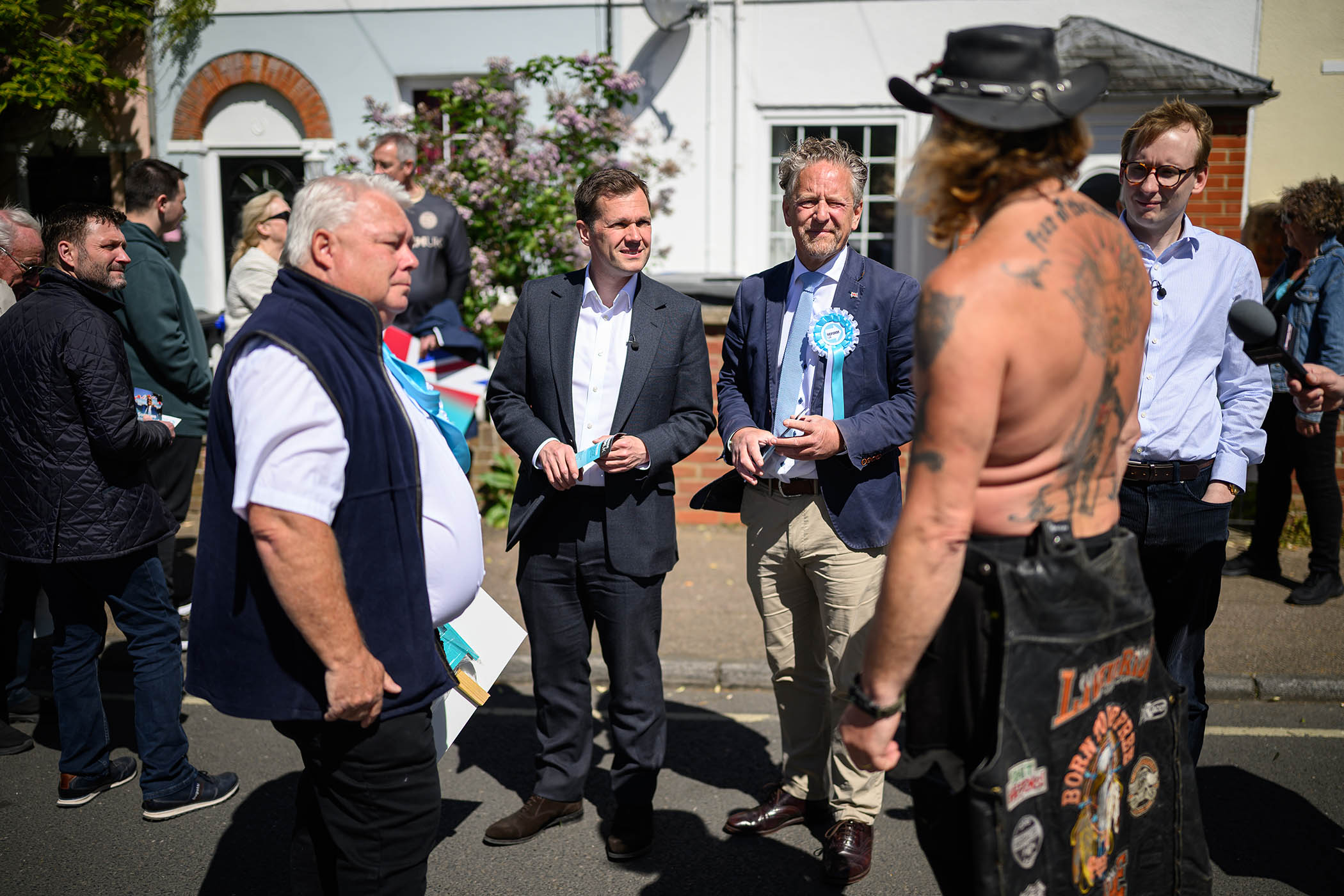
Reform UK treasury spokesperson Robert Jenrick, centre, campaigning in Norfolk
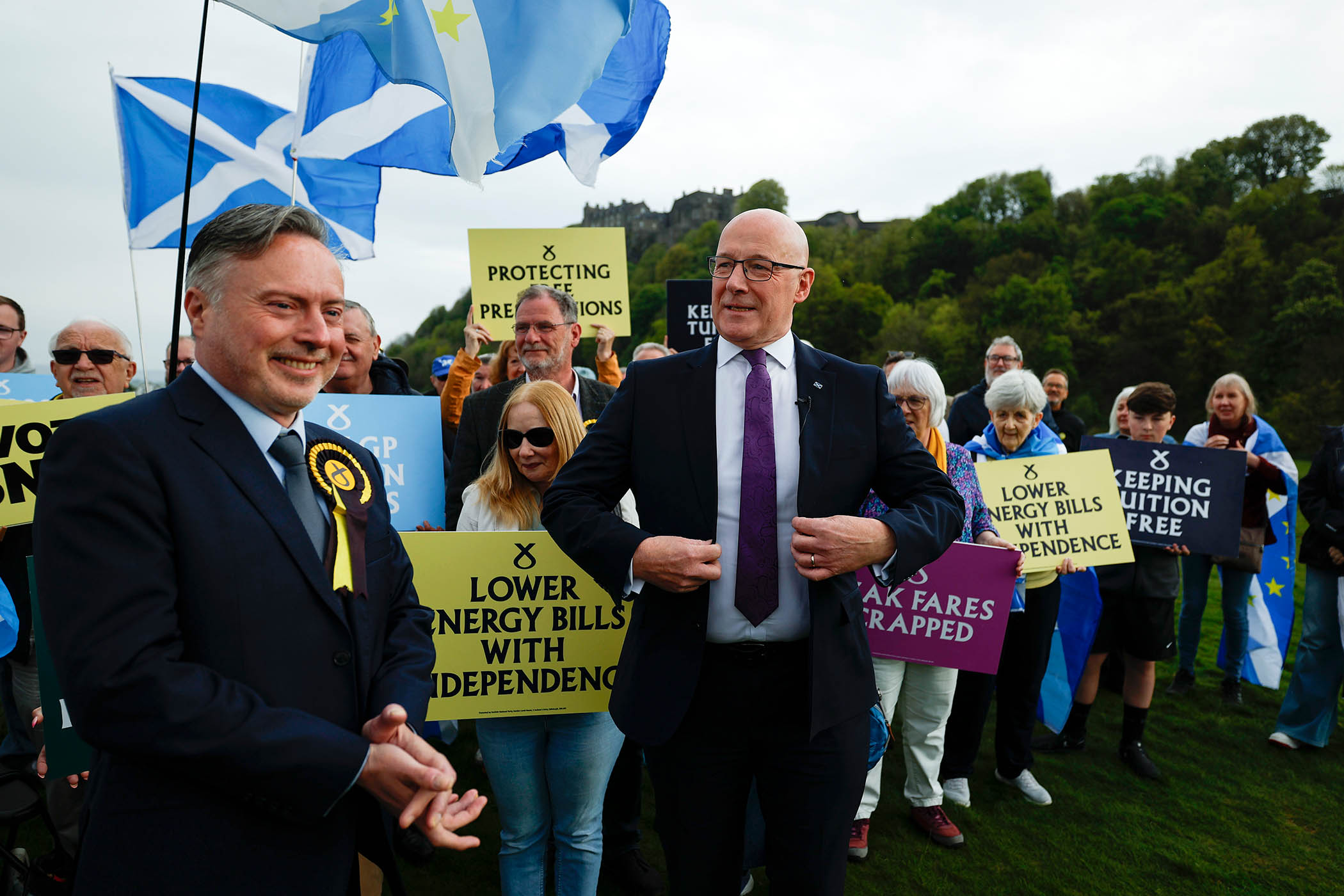
The two biggest questions in the Scotland’s Holyrood election are whether the SNP can secure a majority, and who will emerge as the strongest unionist opposition party. Fragmentation in Scotland works to the SNP’s advantage: the nationalists dominate the pro-independence vote, and as a result can expect to triumph over divided unionist opposition in almost every constituency. While regional lists restore some balance, a constituency landslide will ensure the SNP emerges as the strongest party for the fifth devolved election in a row despite waning popularity. However it is unclear whether the SNP will win the majority it regards as a mandate for a second independence referendum.
It is also not clear who will emerge as the strongest opponent of independence, as the field has been further scrambled by the rise of Reform UK. Scottish voters backed Remain by large margins and have warmed to Nigel Farage’s latest party in a way they never did with its predecessor Ukip. Polls suggest Reform could end up as the largest opposition party, which could make for some heated exchanges in the chamber as assertive Scottish nationalism collides with an equally fiery Brexit-tinged nationalism.
The rise of nationalism is also the big story of the Senedd elections. It is hard to overstate the scale of the electoral earthquake about to hit Wales as the Labour party – which has dominated all Welsh elections for a century, and has led every devolved government in Cardiff – looks set to slump to a distant third, while the Conservatives may fall from second to fifth. A new form of nationalist two-party politics is arriving, as the Welsh nationalists of Plaid Cymru and the Brexiters of Reform battle for the top spot in an enlarged and reformed Senedd. Yet the contest to be largest party is mainly symbolic, as the new PR or closed proportional list system introduced this year makes it all but certain the Senedd will return a Plaid friendly (and Reform hostile) majority. It is still up for grabs whether Plaid will need Labour’s support to govern, or can leave Wales’s humbled former hegemon out in the cold entirely.
In England we will witness record-breaking advances for insurgents, record-breaking retreats for the traditional parties of government, and unprecedented uncertainty as the first-past-the-post system buckles under the strain of party competition. For the first time, five England-wide parties will compete in almost every ward, and there is plenty at stake for each.
In England, while the three smaller parties advance, the two traditional parties are poised for an unprecedented second simultaneous slump
In England, while the three smaller parties advance, the two traditional parties are poised for an unprecedented second simultaneous slump
Reform wants to prove that last year’s local elections breakthrough was no fluke, by showing the same electoral strength in Labour towns as they showed when sweeping to power in Tory shires.
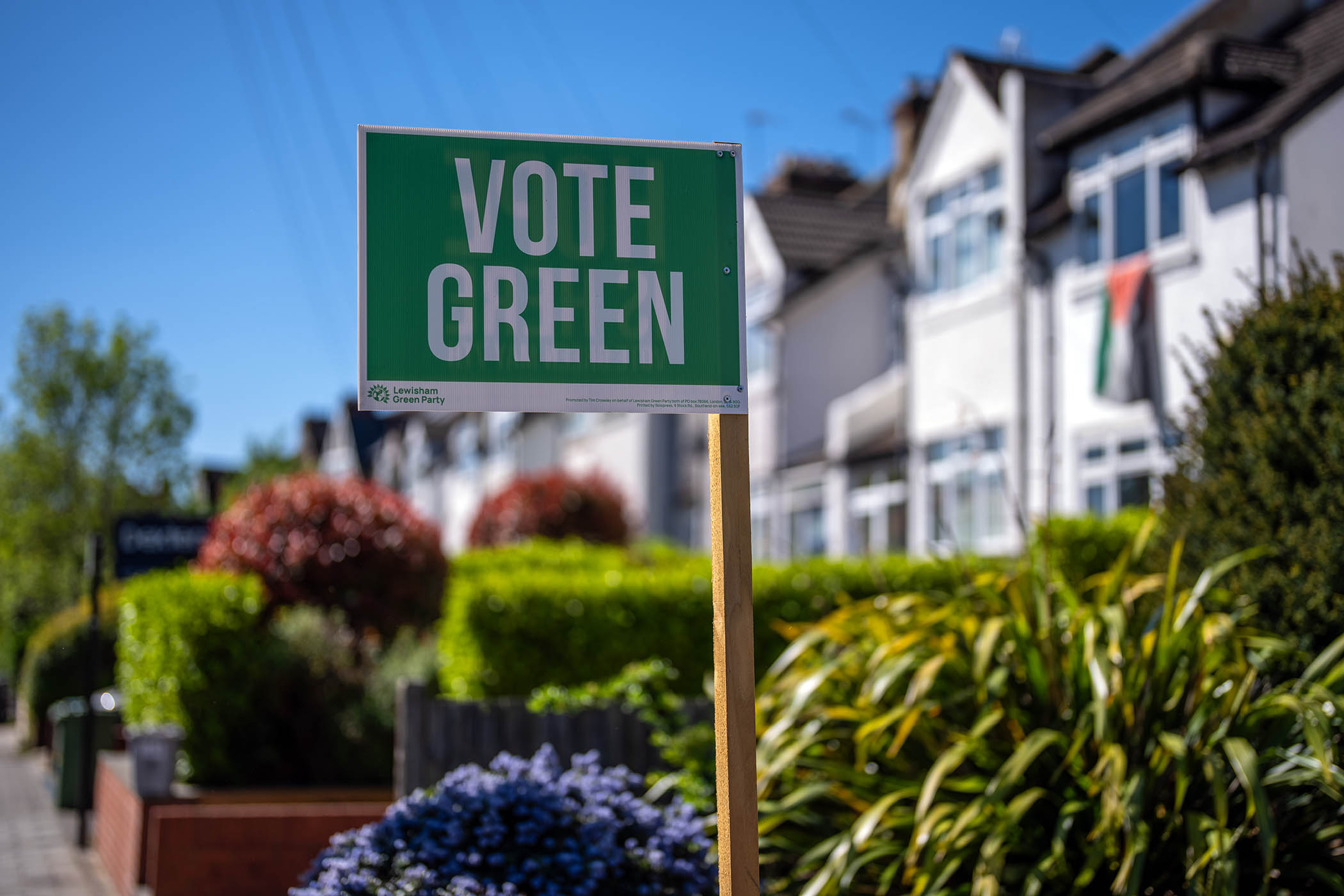
A Green Party placard outside a property in Lewisham, south east London
The Greens face their first nationwide electoral test under Zack Polanski and will hope to seize hundreds of seats from Labour by mobilising discontented progressives in hitherto deep red boroughs of London and other big cities. The Liberal Democrats, though treading water in the polls, will hope to profit from others’ misfortune and make further gains in their southern England heartlands, but will worry about fresh competition from the energised Greens.
Newsletters
Choose the newsletters you want to receive
View more
For information about how The Observer protects your data, read our Privacy Policy
While all three smaller parties advance, the two traditional parties are poised for an unprecedented second simultaneous slump. The Tories’ continued collapse may see their leader, Kemi Badenoch, break records set by Jeremy Corbyn, Labour’s former leader, for the worst local elections performance by a main opposition party. Questions about its future as the main party of the right will grow louder if it is once again swept aside by Reform in its remaining areas of strength.
Yet while Tory incumbents will struggle, a red-tinged electoral map means it is the Labour party which stands to lose most, with supporters scattering in many directions. London boroughs and northern towns which have remained loyal through thick and thin are likely to fall as both the Greens and Reform make gains – though what replaces Labour in these places is less clear. Fragmented voting will turn many contests into an electoral fruit machine, with little link between votes cast and seats awarded. This will increase concerns about an electoral system unable to coherently represent the diversity of representation English voters now demand.
Robert Ford is professor of political science at the University of Manchester and author of The British General Election of 2024
Photographs by Jeff J Mitchell/Getty, Leon Neal/Getty, Carl Court/Getty