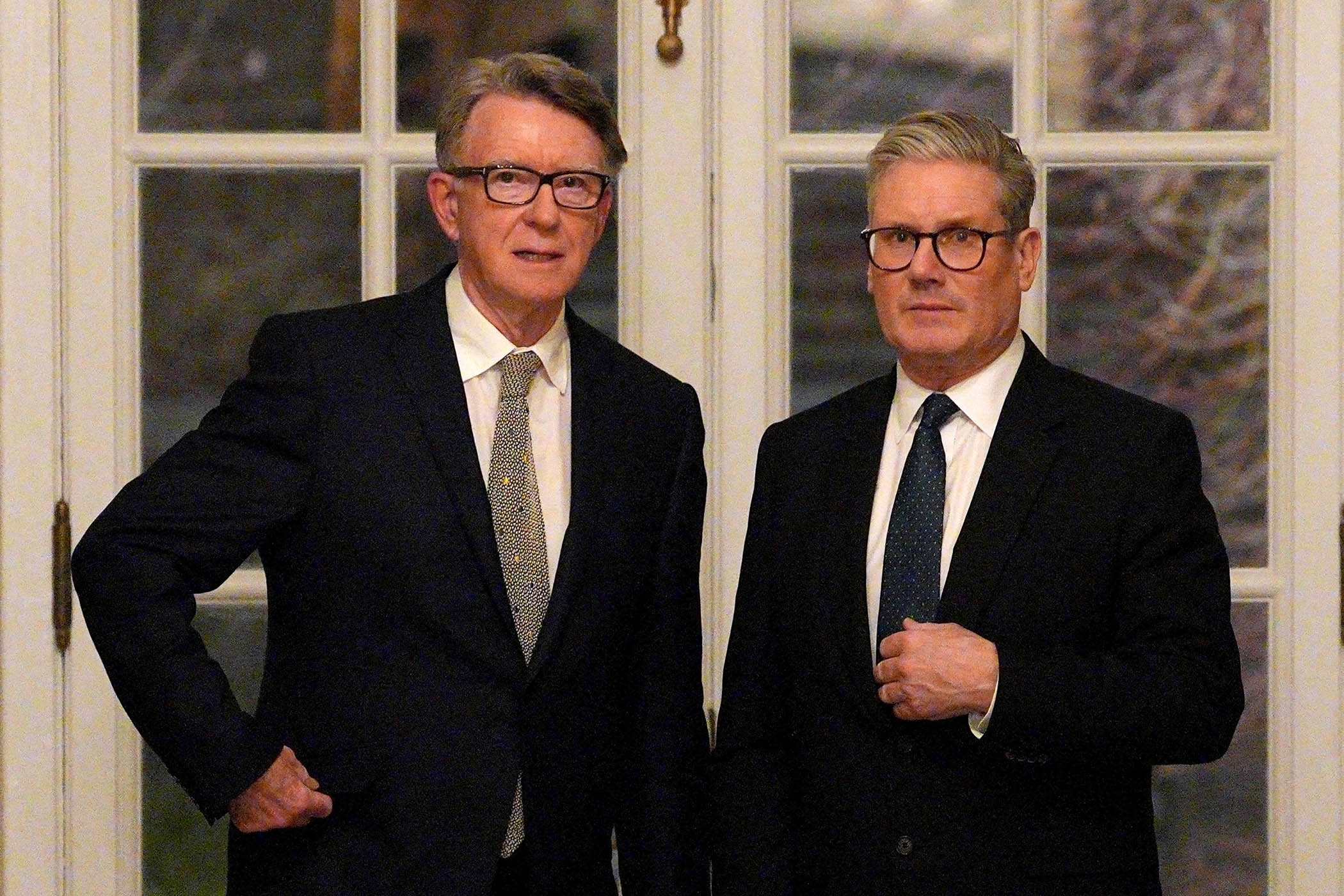


Even after being cast out of Labour for ever, stripped of his titles and covered now only in disgrace, Peter Mandelson has still managed to leave behind a steaming fresh pile of problems for his former party.
This is not just the increasingly febrile speculation about whether the saga over Mandelson’s appointment as US ambassador last year is so toxic that replacing Keir Starmer has been made more imminent. Paradoxically, it is that this scandal makes the task of finding a suitable replacement more difficult.
For a start, if being too close to and trusting of Mandelson means this prime minister must go, Wes Streeting might be viewed as a strange choice to be the next one. In contrast to Starmer, who until a couple of years ago had deliberately held Mandelson at arm’s length, the health secretary was part of a small circle of personal friends who reportedly held a stag night dinner for him. Then there is the regular Friday night strategy-making supper club the pair used to attend with like-minded figures from the party’s right – including, in those days, Downing Street’s chief of staff, Morgan McSweeney – which became so legendary that Streeting once joked they should commission a blue plaque for the dining table to mark the spot where they helped “save” the Labour party.
Similarly, just when renewed questions are being asked about propriety in politics, it might seem a bit odd if Angela Rayner were now picked by party members to move into No 10. After all, it has been only five months since she was removed as deputy prime minister on the recommendation of the government’s ethics adviser in a row over an unpaid tax bill that has not yet been fully resolved.
Now, before anyone asks, this is not me – as Starmer’s biographer – trying to trash his most likely successors. I happen to think both are good people and that Rayner’s enforced resignation was a harsh one. This working-class northern woman was held to a higher ethical standard than others, including Mandelson when he was appointed ambassador to Washington, and the right-wing candidates favoured by the party’s headquarters in parliamentary selection contests before the last election.
Equally, it is ludicrous to suggest that Streeting, McSweeney or anyone else who has ever been friends with Mandelson should not occupy top jobs in government. Yet that hasn’t deterred some on the left from claiming that the public shaming of this architect of New Labour discredits any notion of the party returning to the modernising pro-business project of Tony Blair.
Such factionalism from both the right and left of the party does not serve either the government or voters. Although the lack of a “Starmer faction” is often described as a weakness for him, it might yet be regarded as a strength for anyone who would prefer Labour to be talking about the country rather than itself for the next three years.
The prime minister is justifiably frustrated that policy announcements this week – on cancer treatment, breakfast clubs and the government’s “Pride in Place” initiative – are barely covered by a media obsessed with what he calls a “political game” in which they have become accustomed to getting a new entrant into Downing Street every couple of years.
Only when this week’s frenzy about this being “the greatest political scandal ever” is wiped away will the focus return properly to the horrific trafficking and abuse by Epstein of dozens of young women and girls. Mandelson was sacked in September after Starmer discovered the ambassador had lied about a friendship with Epstein that continued for three years after the latter’s first conviction for sex crimes in 2008. The latest release of files indicate that Mandelson and his husband received five-figure payments from their paedophile friend in the US, while as business secretary in 2009-10 he allegedly leaked market-sensitive government secrets to Epstein.
All of which would be a real and very shocking scandal, but also one that relates a lot more to the previous Labour government – when Gordon Brown was prime minister – than it does to this one.
Newsletters
Choose the newsletters you want to receive
View more
For information about how The Observer protects your data, read our Privacy Policy
Starmer faces different questions about his judgment on an important political appointment and the way he runs his government. These are by no means trivial. There are good reasons to believe that sending Mandelson, someone whose career has so often been chequered by his weakness for wealth and power, to Donald Trump’s narcissistic Washington DC was always going to end badly.
For instance, the former ambassador’s recent comments suggest he has imbibed a lot of Maga-ish ideology that put him at odds with Starmer’s government over Greenland, China, climate change and the importance of a rules-based global order. Perhaps his position would now have been untenable even without the Epstein files. At the same time, the controversy over Mandelson’s appointment as ambassador will shed more light on the inner workings of Downing Street, where Starmer has too often sub-contracted important political decisions such as this one to McSweeney.
Yet it’s still fair to point out that these issues pale into relative insignificance compared with what was going on long before Starmer became an MP. Many of the commentators now proclaiming the prime minister is finished because of Mandelson were among those who hailed Mandelson’s appointment as US ambassador last year as some sort of master stroke.
Only if it can be shown that Starmer knew substantially more than was publicly available at the time will there be a substantial reason for him to go. The release of documents that can prove this, one way or another, has been delayed by the police, who do not want to prejudice any future prosecution. A bigger batch of paperwork, potentially including all correspondence with Mandelson during his time in Washington, will not see the light of day until it has received security clearance from a cross-party committee of MPs.
No one quite knows what will happen in the meantime. The whole process could take months, and it is possible, with potential leadership campaigns temporarily parked while Westminster waits for a report, that a period of relative calm could descend. Starmer might for once even be allowed to get on with governing.
But I wouldn’t count on it. The sense of crisis in Westminster and impending doom around Downing Street this week will not be easily dispersed. As Mandelson himself said this week about his relationship with Epstein, “Like dog muck, the smell never goes away”.
Tom Baldwin is the author of Keir Starmer: The Biography
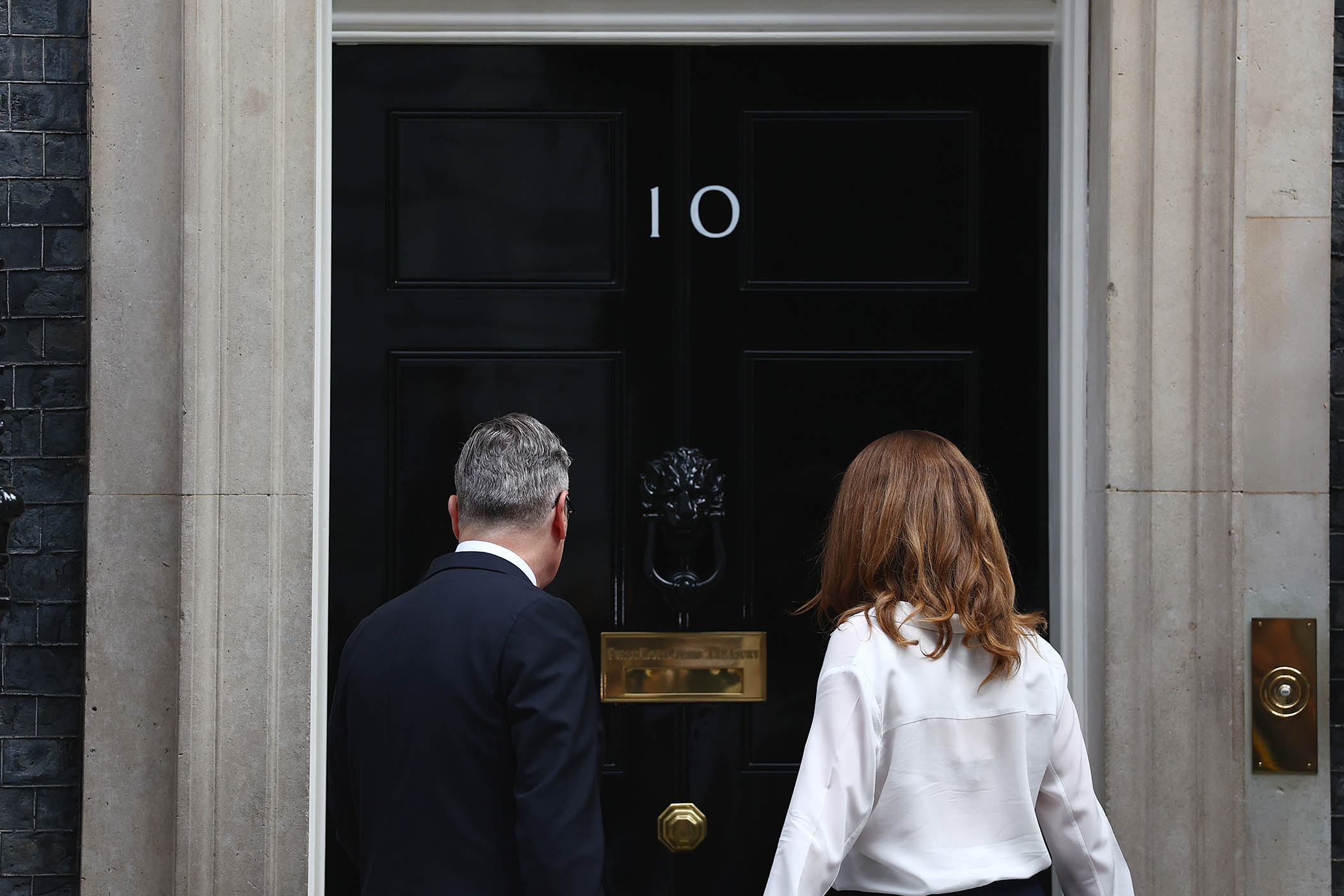
Picture by Carl Court/PA