
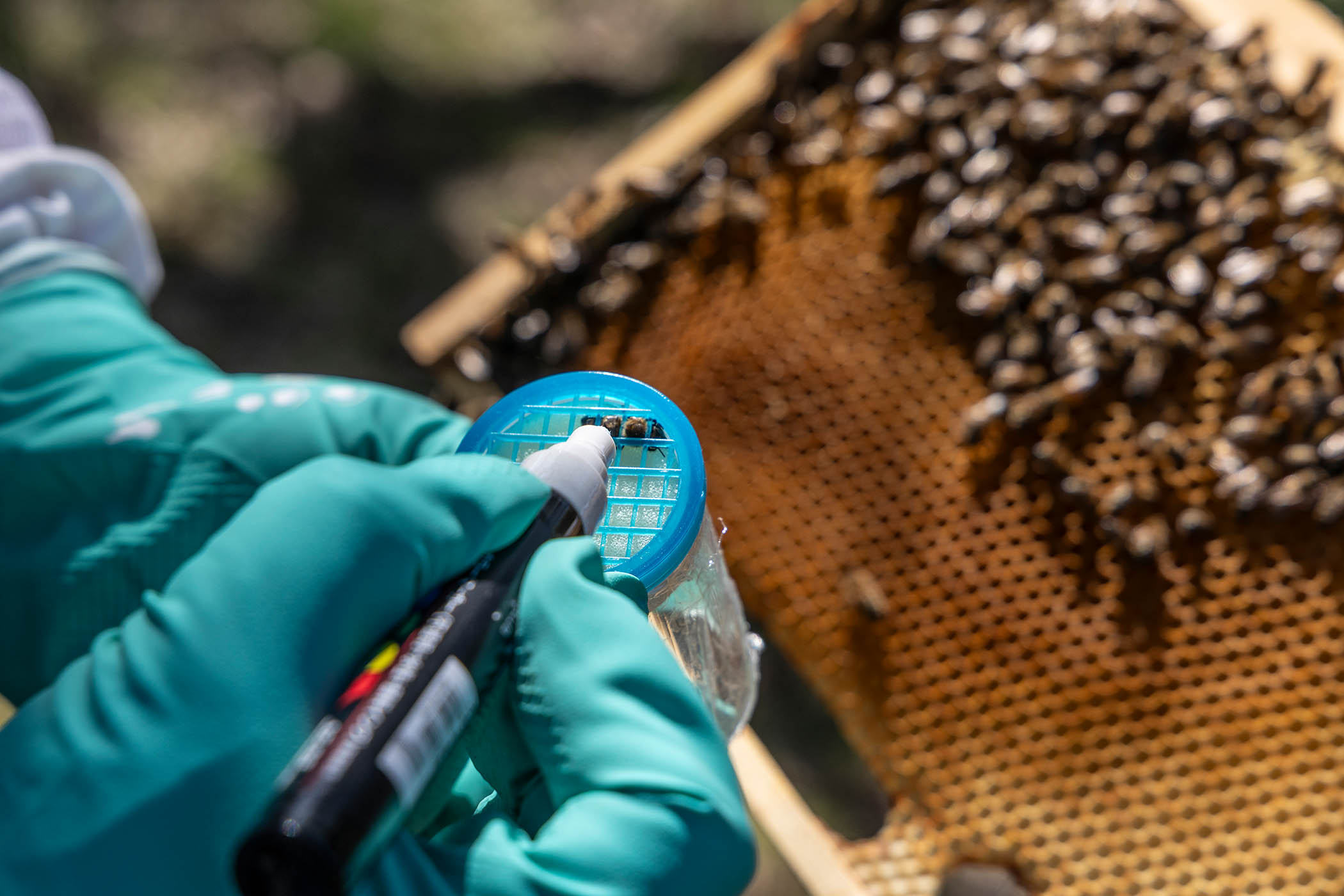
Richard Gill pops his experimental subject on to the bee trapeze. The bumblebee has a tiny magnet glued to the hairs on her thorax, harnessing her to a feather-thin wire.
As soon as the scientist lets go, the worker bee flaps her wings and the arm starts spinning round, about as fast as a Swingball. Gill, a professor of evolutionary and experimental ecology at Imperial College London, has done this hundreds of times but almost never gets stung.
“Bumblebees are less likely than honeybees to sting, but they’re more likely to poop at you,” says Peter Graystock, an animal health professor, watching his colleague working at their lab at Imperial’s Silwood campus in Berkshire.
“They fire what is essentially poo – usually highly concentrated sugar,” Gill says. “It has this sickly lemon smell.” He looks at his hand and sniffs. “Just a little droplet.”
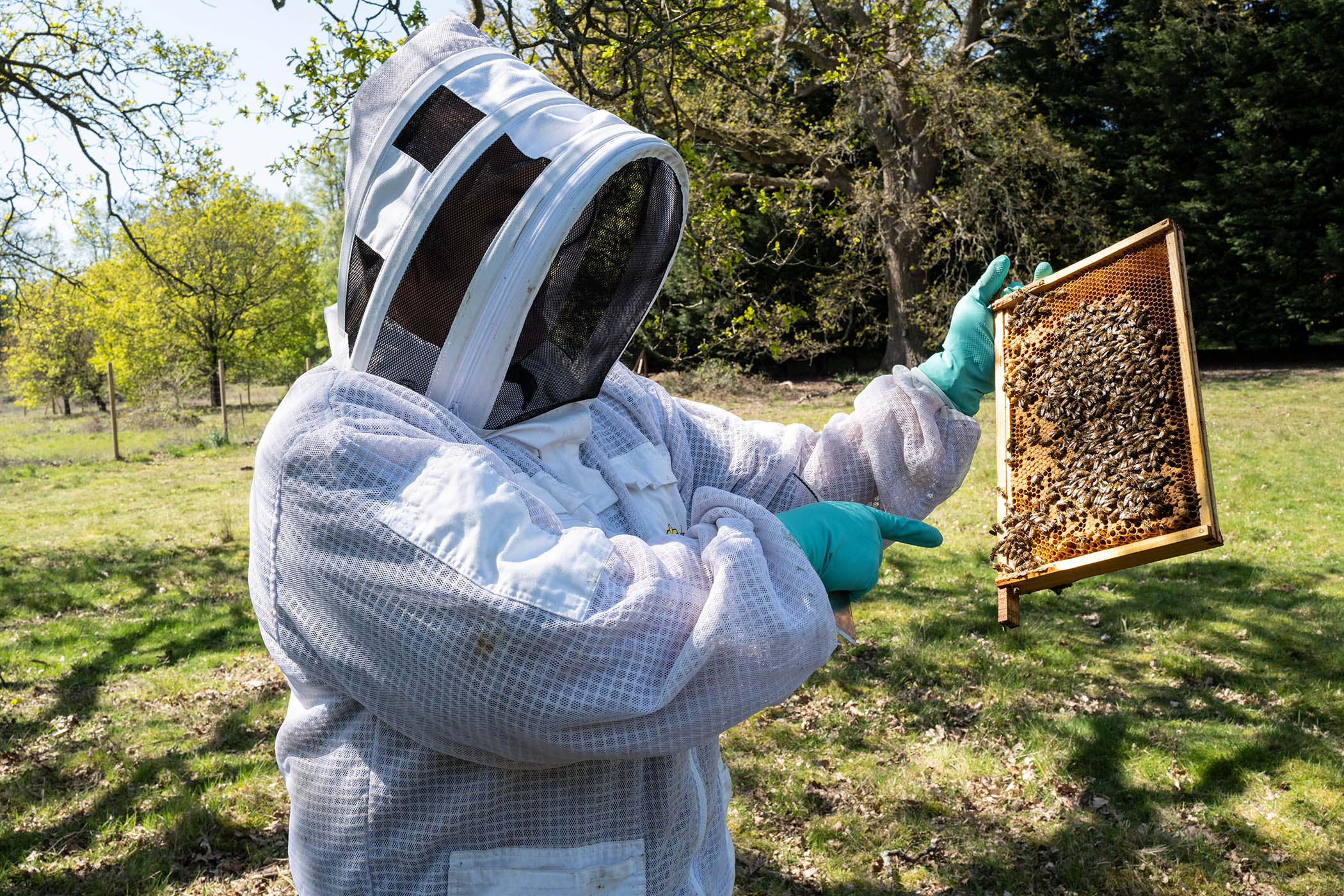
Peter Graystock studies a honey bee at Imperial College London’s Silwood Park campus in Berkshire
Despite occasional dirty protests, these experiments have allowed Gill and Graystock to work out how bees are affected by pesticides, fertilisers and other substances used in intensive farming – and what they can do to help. (Spoiler alert – it involves breeding pesticide-resistant bees.)
Populations of bumblebees and the UK’s other wild bee species are under pressure, with numbers expected to decline by 30% in the next 40 years. Neonicotinoid pesticides have been banned outdoors in the UK, but others including pyrethroids and organophosphates continue to be used.
The bee trapeze – or “flight mill” – allows Gill to see how far the bee can fly. By comparing bumblebees before and after they have been exposed to pesticides, Gill has discovered that they take longer to forage for pollen and bring back less of it. Their brains are smaller, they learn more slowly, and they can’t fly as far – after being exposed to neonicotinoids, they fly faster due to the pesticide’s nicotine-like effect, but run out of energy when the buzz wears off.
In their latest research, Gill and Graystock have discovered that bees exposed to neonicotinoids also have colder body temperatures and find it harder to warm up. That means bumblebee nests are colder – and warm nests are essential for larva to grow.
Newsletters
Choose the newsletters you want to receive
View more
For information about how The Observer protects your data, read our Privacy Policy
“[That] leads to lower numbers of adults in the nest,” Gill says. The effect is more pronounced when the weather is unusually cold, and climate change means that the UK may see more extreme temperatures. “In recent decades we’ve been getting unpredictable cold snaps, at a time of the season when bees are often exposed to plant protection pesticides,” Gill says. “This suggests the effect could be placing colonies at risk.”
The Imperial team have been examining how to help bumblebees – a key aim for them and their funders, which include the British Beekeepers Association, Bee Diseases Insurance and the CB Dennis Trust.
One idea is to use near-infrared thermal radiation to essentially heat up beehives and nests. There is “tentative evidence” that this might help, Gill says, and two papers on the heat treatment and the cold nests have been published as preprints and are undergoing peer review.
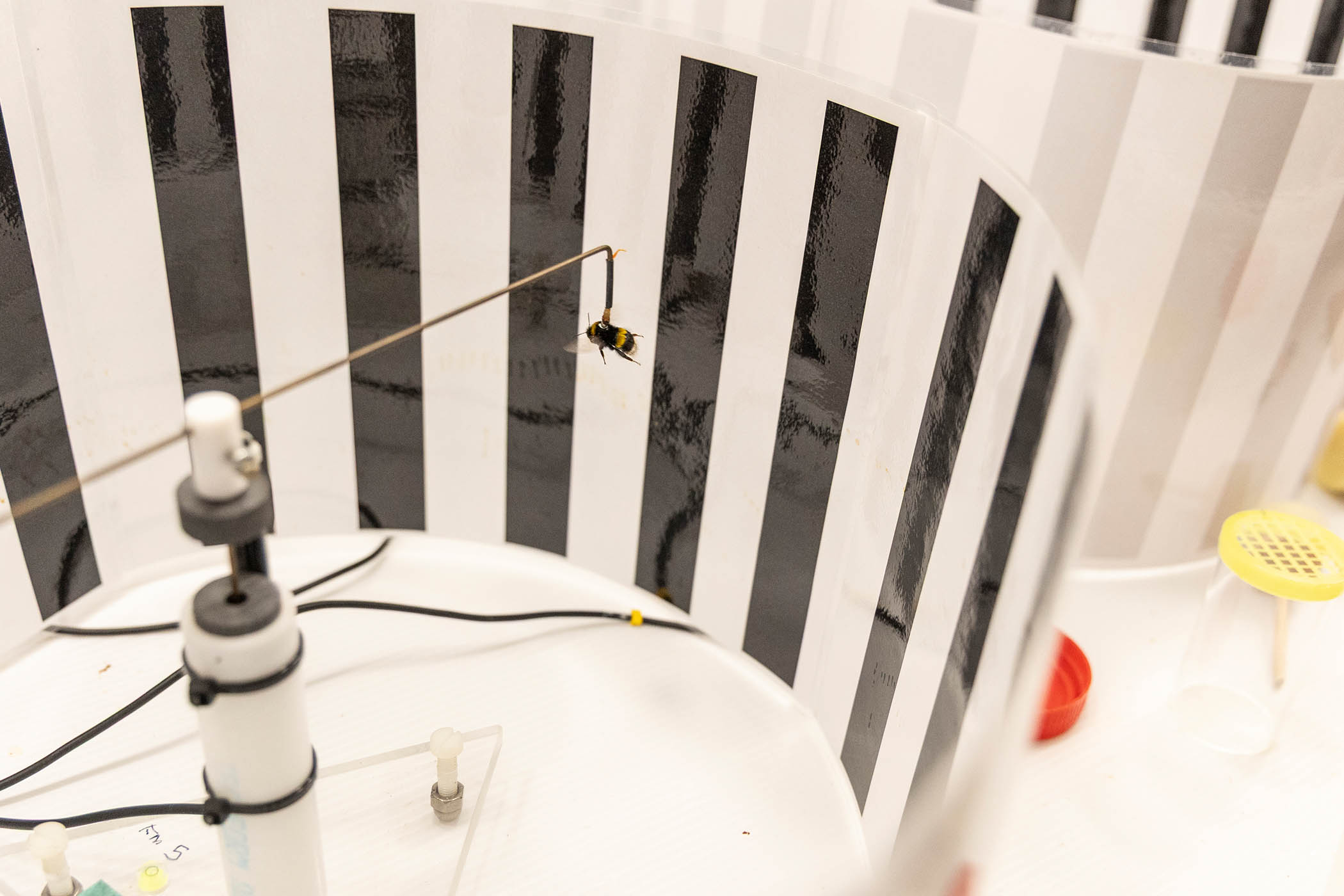
A bee is put into the bee trapeze, or flight mill, in order to study the effect of pesticides
Graystock is working on another idea: making bees resistant to pesticides, some of which contain heavy metals such as cadmium, lead and copper.
“We’re looking at how we can use microbes to metabolise these chemicals, which means they are broken down before they are exposed to the bees,” Graystock says.
His lab is trying to engineer the bees’ microbiomes – the community of bacteria, fungi and other microorganisms living inside bee guts – through a process of natural selection. The technique was pioneered by Ulrich Mueller, who noticed that leafcutter ants cultivate a type of fungus as food in their nests. It has been used to create plants that are tolerant to salty soil.
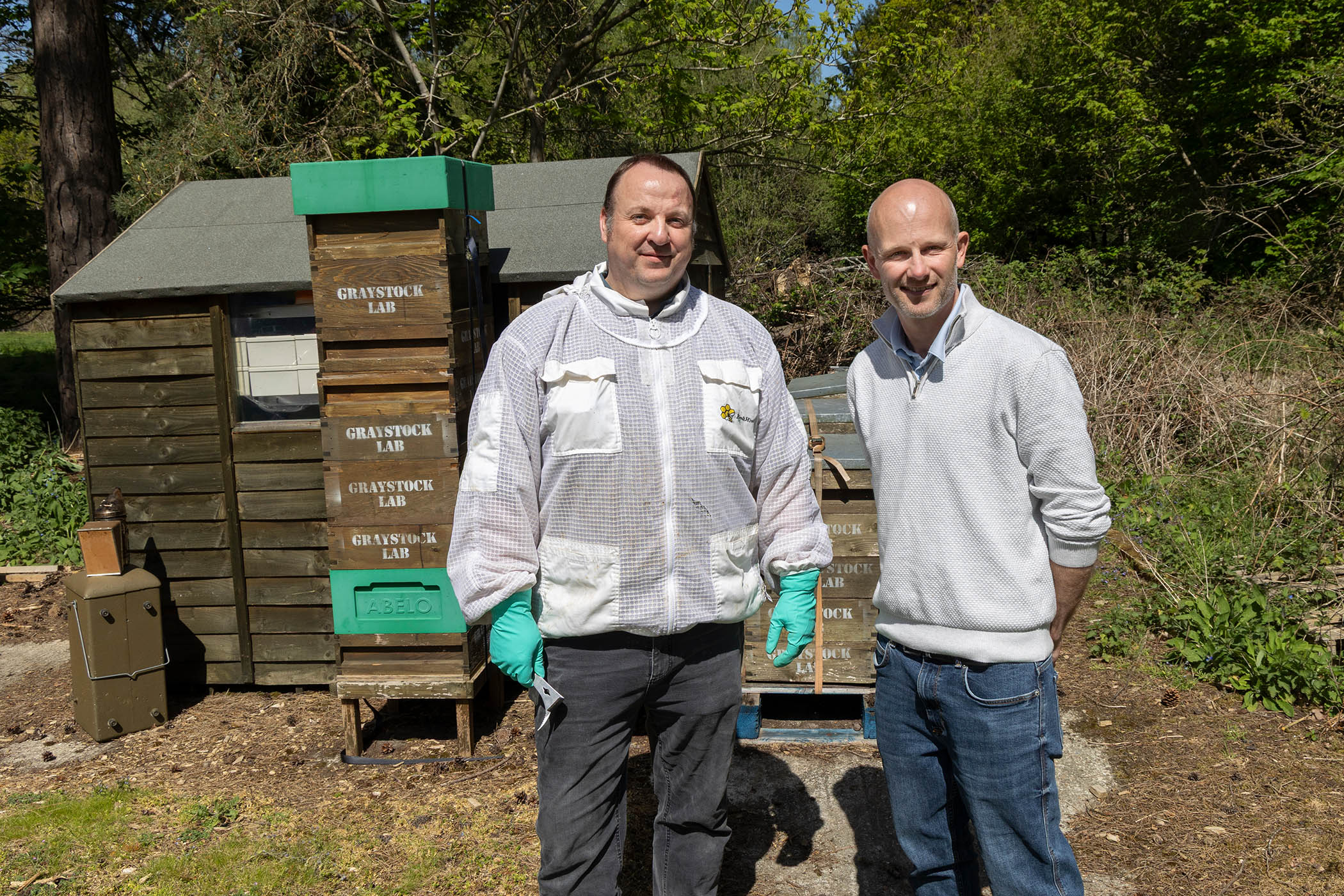
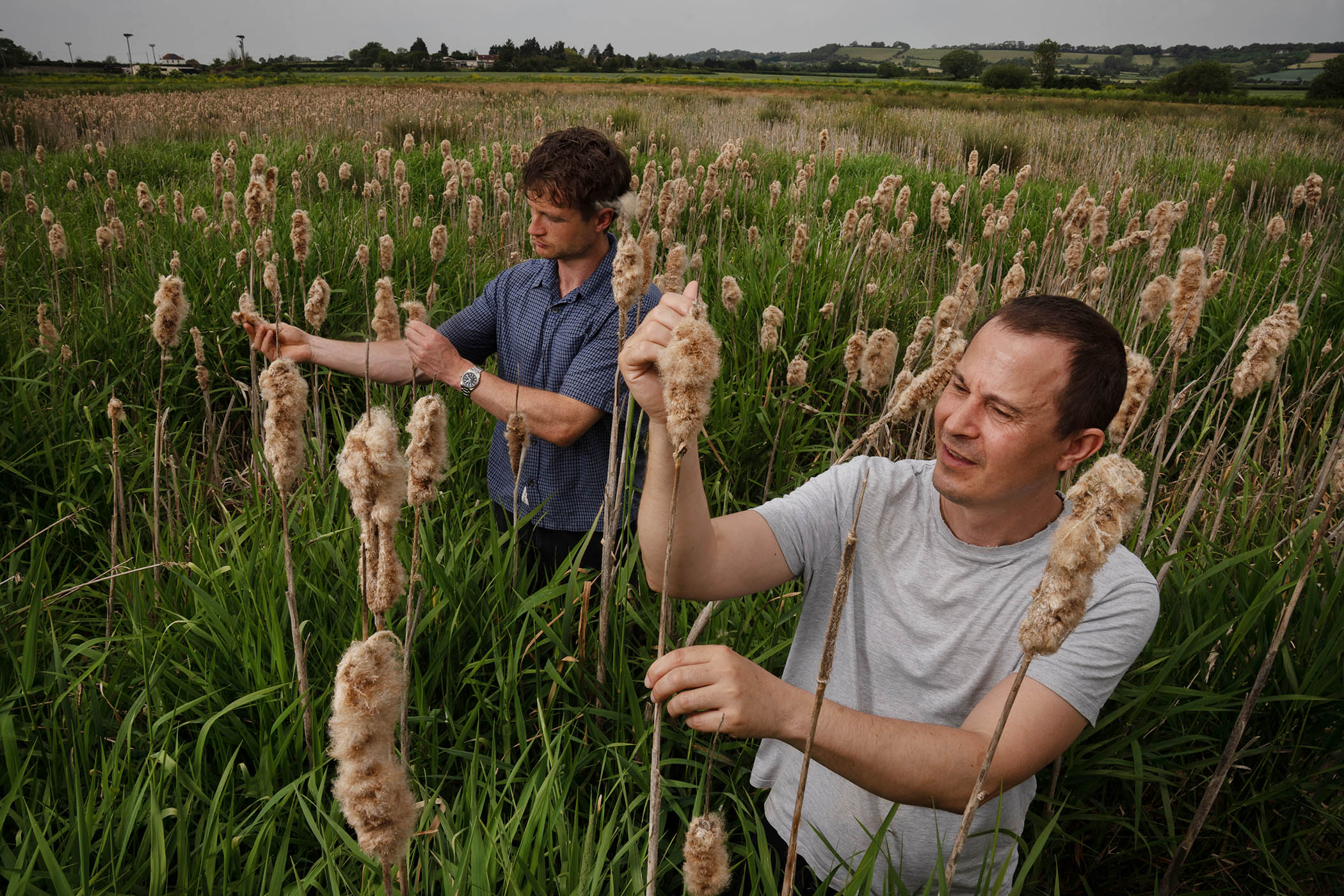
Bee researchers Peter Graystock, left, and Richard Gill at Imperial College London’s Silwood Park campus in Berkshire
Graystock’s full results are being submitted for peer review but the microbiome breeding has gone well. “Without giving too much away, we have been able to improve the survival of bees after being exposed to pesticides, so we’re looking at the mechanism as to why that’s happening.”
The next step is working out how to spread the microbiome to other bees.
“If the microbiomes do what we want, then potentially we could just inoculate the hive, and put the hive outside,” Graystock says. “All those bees will visit flowers, they’ll leave microbes on the flowers, and subsequent bees foraging will pick up those microbes organically. They’re basically inoculating each other.”
Photographs by Andy Hall for The Observer