

About 15 years ago I went to see a wonderful and singular man called David Cope in California. I was writing a proposal for a book about the likely impact of machine learning on human creativity, and Cope seemed a good place to start. The book never happened - the story still seemed like science fiction to publishers – but Cope’s story stayed with me. He was a professor of music at the University of California, Santa Cruz. But he was also a pariah.
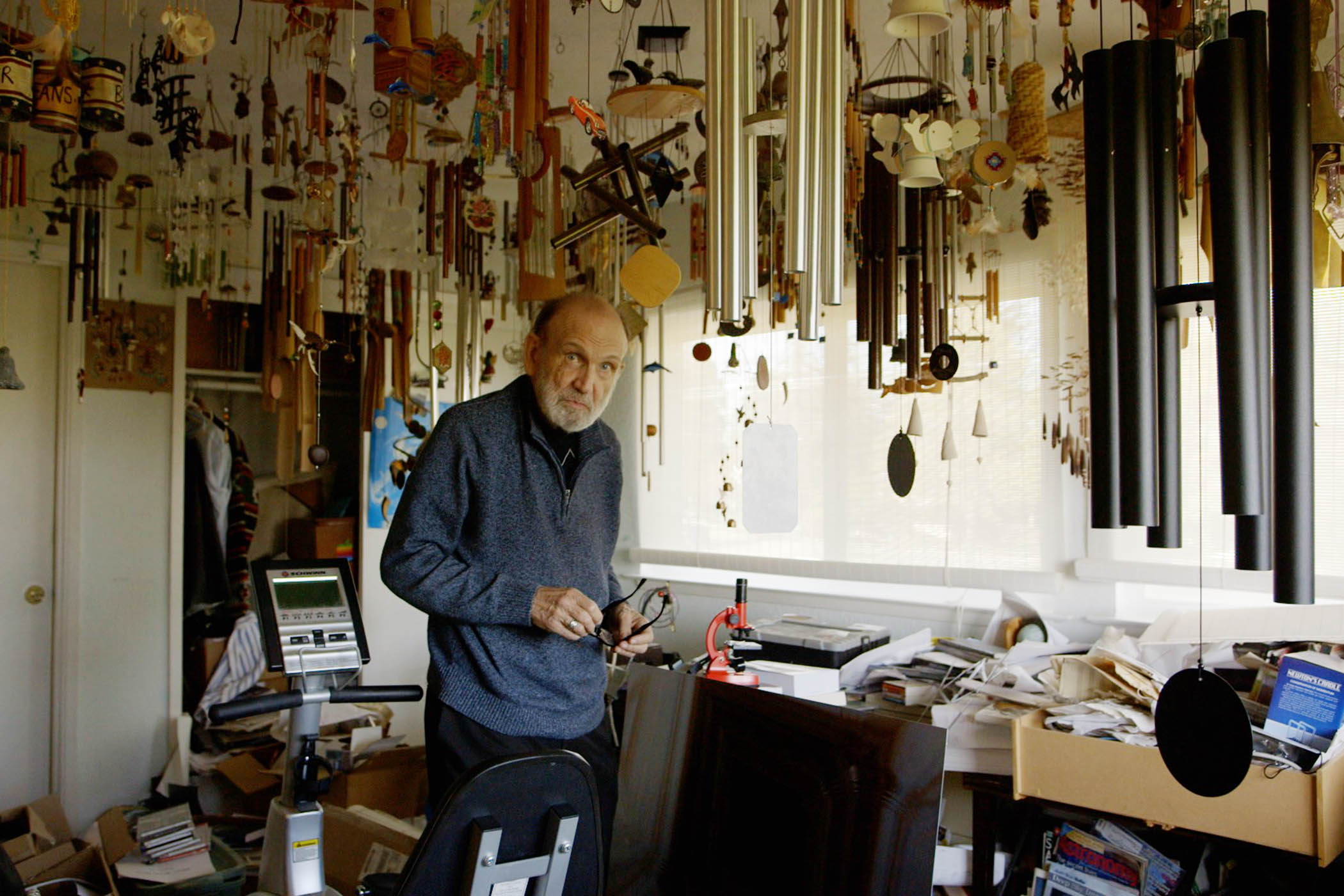
I spent the afternoon with him in an upstairs study in his suburban home that he lived in with his wife – they had four grown-up sons. Cope, then 70, had shared this study for the previous thirty years with the other two women in his life, Emmy, his great passion and obsession, and Emmy’s ‘daughter’ Emily Howell. Both were computer programmes, and had taken on lives of her own. Emmy had been created at a moment of crisis in Cope’s life, when he was in his late thirties.
He described it to me like this: back in 1980 he had been one of the pre-eminent young composers in the States. His music had been performed at Carnegie Hall, and won great praise, and now he had been commissioned to write an opera. For weeks and months he had gone through his usual rituals – rising early, sitting at his piano, feeling for chords and melodies, but nothing came. The flow of inspiration seemed to be completely blocked. In desperation he turned to a different keyboard, that of his computer.
He knew a bit about coding, and wondered if he might create some software that could unblock his creative flow, prompt him with some new ideas. To achieve this aim, Cope started feeding coded versions of favourite symphonies into his rudimentary programme in the hope that they would recombine into something to help him. He was working on an ancient Power Macintosh 7500, but his data mining was among the first examples of a process that now underpins all large language models, like Claude and ChatGPT.
Painstakingly inputting vast amounts of musical reference on his own, Cope came to understand how he might shape an artificial musical memory. As he worked on his programme, and worked out how it might start to “write” music from the stored data, he recalled how the programme seemed to develop an uncanny sensibility and style. He had called his project “experiments in musical intelligence”, but it quickly became Emmy.
Emmy became good at creating pastiches of favourite composers. Cope recognised that the more “mathematical” a composer was, the more chance Emmy’s digital sensibility had to understand it. JS Bach was the obvious model in this regard. The breakthrough moment was when Cope – and Emmy – came to understand how to locate the mathematics of certain “foundational principles” in Bach’s style. In partnership with his computer Cope developed a set of rules – an algorithm – that stuck to those principles and produced deviations from expected sequences of notes that could create little shocks of surprise and pleasure in a listener. Working with Bach’s chorales Emmy got better and better at creating “new” examples, until the point, Cope recalled, that he “pressed a button one day, went out to get a sandwich, and there were 5000 new Bach chorales waiting for me when I got back”.
In 1993, Cope produced an album of the “best” – the most authentic, moving, surprising - of these pieces; the response was excoriating. The musical establishment reacted with horror and derision. It was not that the work was terrible, however, it was that it was too authentic. Many critics believed that they could spot the difference between the real Bach and Emmy’s version, but a few controlled experiments proved otherwise. In Cologne, Germany, after listening to Emmy compositions one musicologist stood and pointed at Cope and shouted, “Musik ist tot” (“Music is dead”). When Cope followed his Bach album with Virtual Mozart, and Virtual Rachmaninoff, he was ostracised from concert halls and ridiculed as the “Tin Man”, the composer without a heart.
"People tell me they don't hear soul in the music," Cope told me years later. "When they do that, I pull out a page of notes and ask them to show me where the soul is. We like to think that what we hear is soul, but I think audience members put themselves down a lot in that respect. The feelings that we get from listening to music are something we produce, it's not there in the notes. It comes from emotional insight in each of us, the music is just the trigger."
Not all listeners were turned off. The philosopher Douglas Hofstadter, author of a landmark book on the fundamentals of cognition and creativity, Gödel, Escher, Bach, was stunned by the implications of Cope's work in understanding how the mind – and music – works. “In 20 years of working in artificial intelligence,” he told me, he had encountered “nothing more thought-provoking than David Cope's experiments.” Hofstadter had distilled his thoughts on Cope's work into a lecture performed in rhyme that began with a question:
Is music a craft
Or is it an art?
Does it come from mere training
or spring from the heart?
Did the études of Chopin
reveal his soul's mood?
Or was Frédéric Chopin
Just some slick "pattern dude"?
My questions to Cope on that long afternoon, listening to him explain his life’s work, became focussed, I recall, on the fact that though the response to any piece of art comes from within us, it is the expression of fellow feeling. We respond to music, or any great painting or novel, not in the abstract – but in the understanding that it is an expression of a particular moment in an artist’s life. A knowledge of the creator’s biography is not peripheral to our response, but fundamental to it. We care about work created by humans, because we can imagine what it takes to create it.
Cope wasn’t convinced by that argument, though he had, he suggested, given Emmy a kind of beginning and a middle and an end – a lifespan – by unplugging her. His knackered old Mac sat in the corner of his study; after producing 11,000 concert pieces Emmy’s work was done. Cope’s excitement was now all about the younger model, Emily Howell, with whom he was then at work in creating an intimate knowledge of 36 composers, “starting with Palestrina [an Italian court musician of the 16th century] and ending with David Cope”. He felt that Emily was on the brink of her mature style.
In the years since that meeting, as the creative world that Cope imagined has become more and more like reality, I’ve often thought of that afternoon. Cope died last year, and I read the obituaries that announced him as the “godfather of AI music”. It’s interesting though, that in all that time, I’ve never once been even vaguely moved to listen again to any of the music – the best of Emmy and Emily Howell – that he sent me, even though I recall being wowed by its technical mastery. But I have often returned to the implications of my parting question to him that day: had the fact that he had once and for all solved his writer’s block been a source of satisfaction and relief to him? Had outsourcing his creativity provided the satisfaction that writing without the aid of Emily Howell promised?
He laughed. “No," he said. "Not at all. I still get anxious and despairing. It never turns out as well as I hope it will. Every morning I wake up with the notion that I have failed at everything and I have to create some reason to exist." The tin man was still a composer at heart.
Photograph by Jae Shim/Opus Cope
Newsletters
Choose the newsletters you want to receive
View more
For information about how The Observer protects your data, read our Privacy Policy