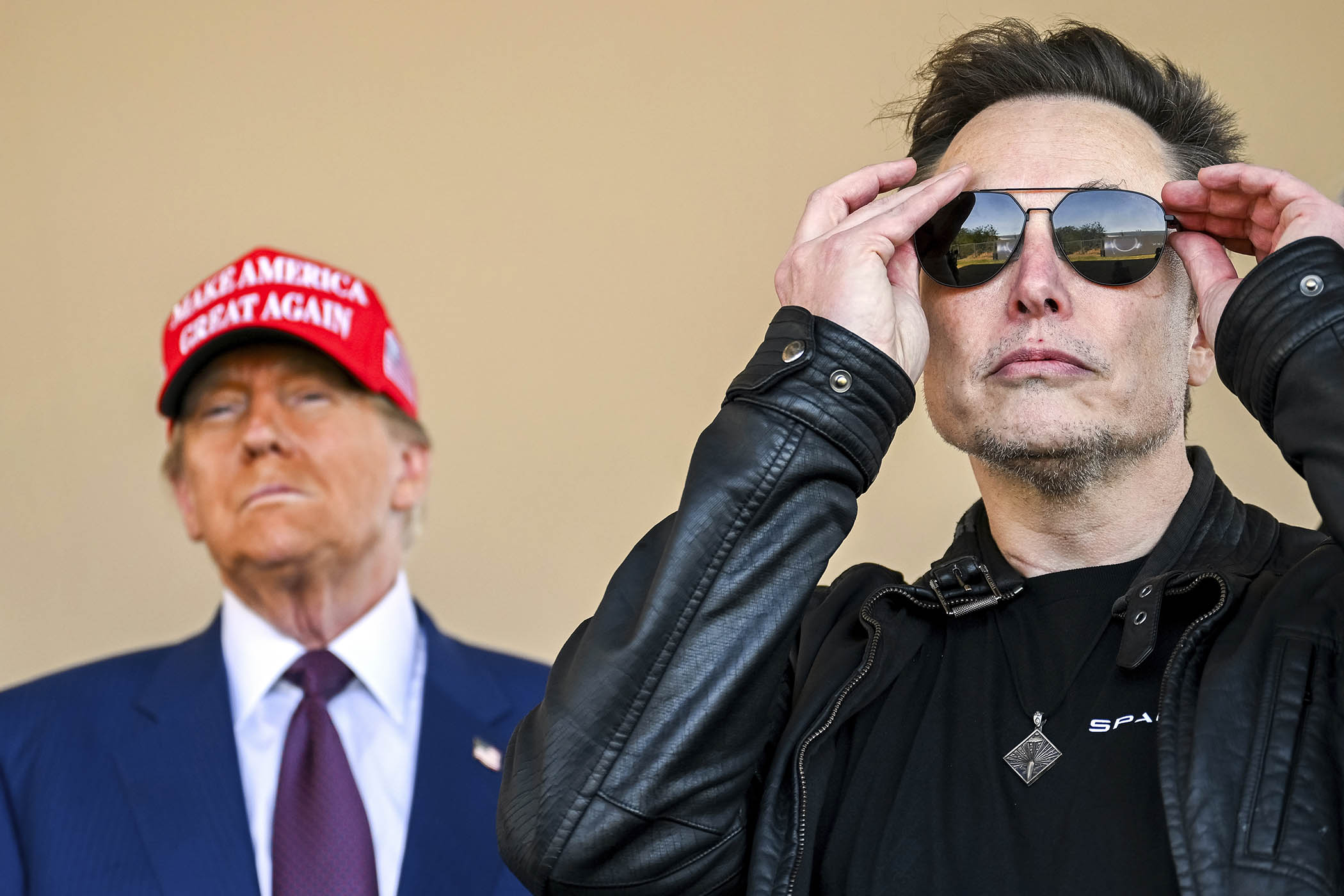



What is Elon Musk? Genius, meme lord relentlessly inflating tech bubbles (SpaceX’s recent record-smashing initial public offering), raver about population collapse and cheerleader for far-right conspiracy theories? All of the above, and more. But focusing on Musk as an individual is a mistake, say Quinn Slobodian and Ben Tarnoff in their recent book, as it misses the big question about him: what does he really stand for?
Their answer is that Musk is the spiritual heir of Henry Ford in two ways. One, is that Ford invented a revolutionary way of manufacturing cars, and Musk pioneered a new way of making the next generation of them: electric vehicles. But their key insight comes from recognising that Ford not only made cars. He also spawned a new kind of capitalism: what we now call “Fordism”.
This combined mass production with mass consumption and became the operating system of 20th-century socioeconomic life. Musk, they claim, is spawning something on the same scale. They call it “Muskism” (hence their book’s title, Muskism: A Guide for the Perplexed).
Like Fordism, Slobodian and Tarnoff write, Muskism is a modernising project, but of a radically different stripe. “Fordism rewrote the social contract with a promise of rising living standards for all: cars in every garage, fridges in every kitchen, wages climbing with productivity.” Muskism, in contrast, tears up that social contract, offering only “sovereignty through technology” for a wealthy few and exclusion for everyone else.
Musk doesn’t just sell cars, rockets and satellites, in other words. He sells a fantasy that “in an increasingly unstable world, both states and individuals can fortify their self-reliance by plugging into his infrastructures”.
This gave a reader of my blog a terrific idea for an experiment. They fed the text of the book into eight of the best-known large language models (LLMs): ChatGPT, Claude, Grok, DeepSeek, Gemini, Copilot, Manus and Perplexity. They were all asked the same question: “How would the 19th-century philosopher Karl Marx analyse this 21st-century phenomenon?” The individual responses were then fed as sources into Google NotebookLM, which was asked to provide an audio commentary on them.
Lots of interesting things emerge from the transcript of that commentary. One, is the way the different LLMs identified the key question posed by Slobodian and Tarnoff’s book: if Muskism doesn’t integrate workers as consumers, how does it sustain itself financially? The answer, say the authors, rests on two pillars: state symbiosis (SpaceX, Tesla and Starlink are heavily dependent on government contracts and subsidies) and financial fabulism (valuations rest on speculative, messianic visions of the future, or what Marx called “fictitious capital”)
Newsletters
Choose the newsletters you want to receive
View more
For information about how The Observer protects your data, read our Privacy Policy
Another was the way the LLMs had spotted the significance of Musk’s obsession with “vertical integration” in his factories. He wants every aspect of the manufacturing process to be done under the same roof; this is the idea of the “fortress factory” that the book’s authors trace back to apartheid-era South Africa, where Musk grew up.
Also intriguing was how the LLMs highlighted the way the book’s authors had mapped the Marxist concept of “alienation” on to Musk’s vision of workers as mere appendages of machines. Or how Antonio Gramsci’s theory of “hegemony” is deployed in the book: Musk functions as an “organic intellectual” for the new techno-capitalist class, repackaging wealth concentration and enclosure in the language of free speech, meritocracy and human salvation.
At this point, AI sceptics in academia will say that these are the kinds of observations you might expect bright students to bring up. Which is true, I guess.
But that’s a question for another day. The really useful discovery from the experiment comes not from the ability of LLMs to pick out the big ideas in the content of an interesting book, but from how it has revealed that none of the AIs is a neutral oracle. Each analysed the book through the lens of its corporate owner’s survival and market strategy.
For example, Claude (supposedly the least unethical of the LLMs) challenged the book’s premise, questioning whether Muskism is a stable new regime or merely a symptom of capitalism in terminal decline. ChatGPT ignored questions of who owns the factory floor and pivoted instead to who controls “cognitive infrastructure”.
Grok, Musk’s own LLM, deflected any direct critique of him by using fatalistic Marxist language to predict capitalism’s inevitable collapse, thereby shifting focus away from Musk specifically. Copilot (Microsoft) and Gemini (Google) both gave dry, encyclopedic summaries and drew no sharp conclusions.
And DeepSeek and Manus – the non-US LLMs with fewer guardrails protecting American state corporate interests – engaged more directly with the exploitation and social decay described in the book.
The big takeaway? LLMs may be useful as what Berkeley professor Alison Gopnik has called “cultural technologies”, but independent oracles they ain’t.
What I’ve been reading
Top heavy
Meet the New Bosses, Worse Than the Old Bosses is a sobering Substack post by Nobel economics laureate Paul Krugman.
Cry fowl
Margaret Heffernan’s When Super-Chickens Started to Roost examines tech bro arrogance and how Tony Blair is choking on AI Kool-Aid.
Industrial inaction
The Los Angeles Review of Books has Dave Mandl writing about the why tech workers will never man the anti-AI barricades in his article The Revolution Will Not Be Digitized.
Photograph by Brandon Bell/AP