
Leeds United’s players were sitting, exhausted and despondent, in their changing room at Elland Road when Daniel Farke called for their attention. They had just suffered their heaviest home defeat for almost three years, overpowered with conspicuous ease by Arsenal. Most managers would regard two of the four goals they conceded as self-sabotage.
Farke, though, was not angry. He wasn’t even disappointed. He told his players he expected the defeat to sting initially, but not to linger on it. There was no reason to “overinterpret” the loss. He was not planning on holding the standard team meeting a few days later to see what could be learned. The game was gone, forgotten. Sometimes, Farke said, you just run into a better team.
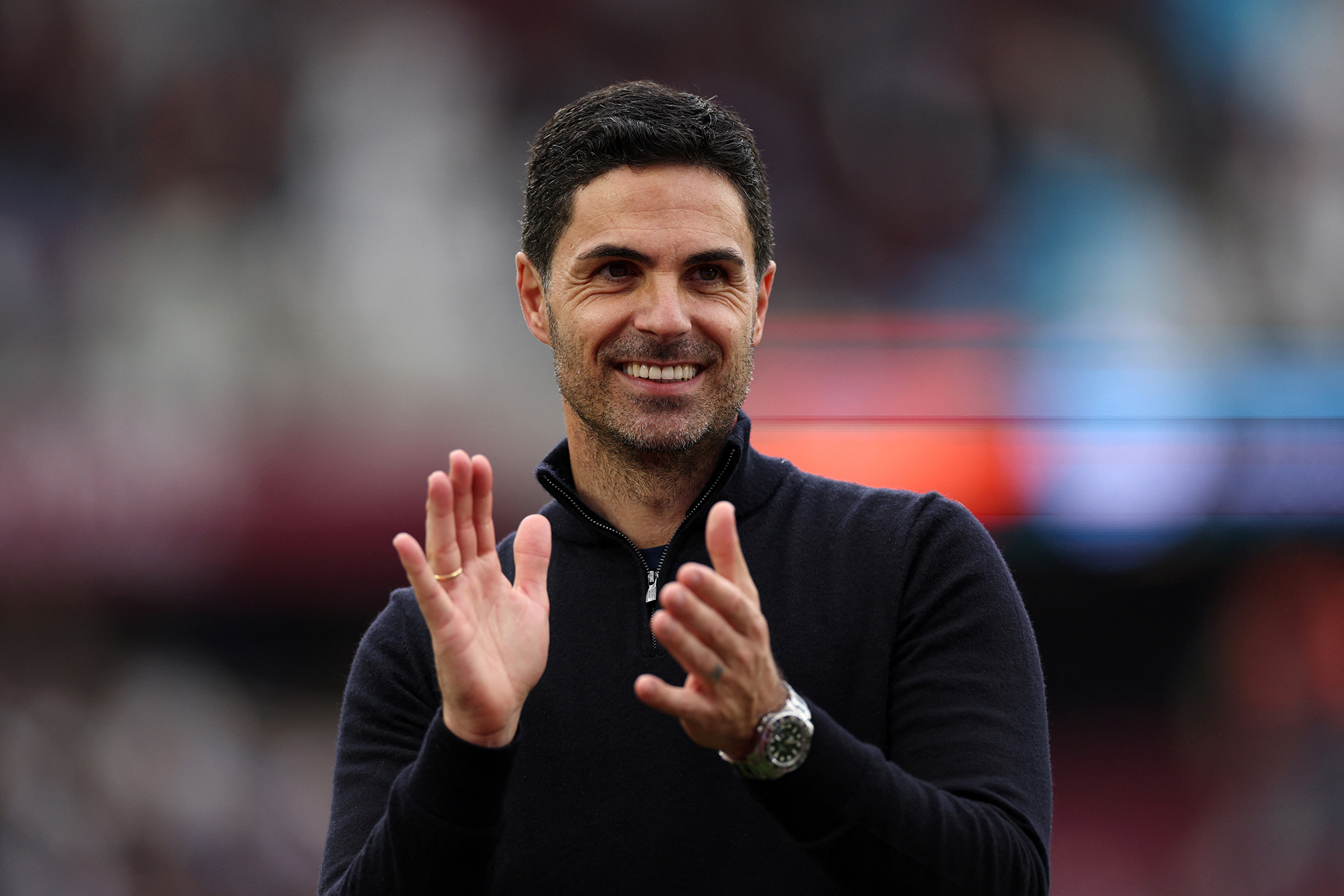
The approach in which they have sought to end the agonising wait for a Premier League title has not, it is fair to say, won universal approval from those observers who might – with varying degrees of accuracy – regard themselves as neutrals. The set-pieces, the robust physicality, the focus on efficacy over aesthetics: many have come to regard Mikel Arteta’s Arsenal as the sort of team it takes a mother to love.
Among Arteta’s peers, though, the response has been very different. Listening to Farke in the aftermath of Arsenal’s win in West Yorkshire on a filthy January evening was striking. There was nothing self-serving in the German’s panegyric; it did not seem to be an attempt to wrap his team’s own shortcomings in gushing praise for their conquerors.
His admiration, instead, played as entirely genuine. Farke was not judging Arsenal for their entertainment value; he did not offer an opinion on anything so subjective as the nature of beauty. Rather, he assessed Arsenal from the perspective of a coach and a manager, analysing them almost as a feat of engineering. And what he saw, clearly, he regarded as a masterpiece.
Three times in the course of nine minutes, he described them as “the best team in Europe”. Whatever he tried to do to unsettle them, he said, “they always had an answer. They had good solutions to all of the processes we tried. Their quality against the ball was on the top level.” When Leeds, chasing the game, started to take more risks, “they showed the quality of what they can do if they have a bit more space. There are not too many hard feelings about the game.”
‘They are a benchmark for many things. There are not many teams set up better’
‘They are a benchmark for many things. There are not many teams set up better’
Vincent Kompany, the Bayern Munich head coach
Farke’s view is one that is broadly shared across not just England, but Europe. Arsenal’s opponents in the Champions League final, Paris Saint-Germain, may be the most fearsome attacking force in the game, but plenty of managers have come to see Arteta’s team as the best-drilled, the best-structured, the most well-organised. They are, in other words, very much a coach’s team.
“They are a benchmark for many, many things,” Vincent Kompany, the Bayern Munich head coach, said earlier this season. “For a manager, one thing is winning trophies, but another thing is to look at how they are being coached. How they set up in every phase is outstanding: how they defend the box, how they [use] set-pieces, how they defend them, how they take kick-offs. There are not many teams that are set up better.”
Much of the focus, admittedly, has been on Arsenal’s defensive solidity: Ernesto Valverde, the Athletic Bilbao head coach who faced them in the opening game of their Champions League campaign, suggested that Arteta’s team were so difficult to break down that they would “win La Liga 10 times in a row” if they were to move to Spain.
“They are very difficult to play against,” as the Fulham head coach Marco Silva put it. “When at their best level, they are a top side. Compact, solid, they work hard off the ball, starting from the striker. They are a team that don’t give up a lot of space to the opposition.”
Newsletters
Choose the newsletters you want to receive
View more
For information about how The Observer protects your data, read our Privacy Policy
But that is not to say Arsenal have nothing else to recommend them. “They are a complete package,” said Arne Slot, the Liverpool head coach, and curiously the only Premier League boss to have faced Arsenal twice this season and not lost. “Their main strength is that they have so many strengths, and hardly have a weakness. They hardly concede goals. They can score from open play, from set-pieces, they have very good ideas about build-up, but they can also play a long ball.”
Perhaps most impressive, according to the Sunderland head coach Régis Le Bris, is how Arsenal force their opponents into problems. “They counterpress aggressively, really well-organised, and it’s so hard to escape,” he said in November. “You go long, but if you can’t win the first contact, they go again. You can’t breathe.”
Le Bris’ gameplan had been so complex that he had, in effect, designed a side to play in “three structures”, as he put it: three distinct formations in order to make Arsenal think. He had required that level of detail, that level of thought, in order to snatch a draw; even then, it was only after enduring a period in the second half which he regarded as the most difficult 20 minutes of their season to date.
Very few of Arteta’s peers will begrudge him the victory. Even Fabian Hürzeler, the Brighton head coach who intimated Arsenal had not “tried to play football” in their victory at the Amex Stadium earlier this year, would likely have to acknowledge the work the Basque has done.
Arsenal’s triumph might be one of set-pieces, of playing the margins, of finding edges. They are not unique in that. What has made them stand out, what has them standing on the brink of glory, is the coaching. It might not always have felt like great art, but this is every inch Mikel Arteta’s magnum opus.
Photograph by Adrian Dennis/Getty Images