
Now we know what Manchester United’s vaunted DNA stands for: “Damage Nervous Arsenal.”
People are fond of saying the only team that can stop Arsenal winning the title this season is Arsenal. The potential for self-sabotage is discussed with glee by their enemies and dread by the Emirates audience.
But opponents have a hand in it too. After beating Manchester City in Michael Carrick’s first game in charge, United made a big-name double of it with a 3-2 win over the league leaders. The game was redolent of the glorious rivalry these clubs shared before Manchester City and Liverpool took control.
“Self-sabotage” could equally be described as fatalism. When one thing goes wrong the nervous team convinces itself everything is going wrong. Anxiety’s contagion is spread by an individual error that assumes a significance out of all proportion to its actual cost.
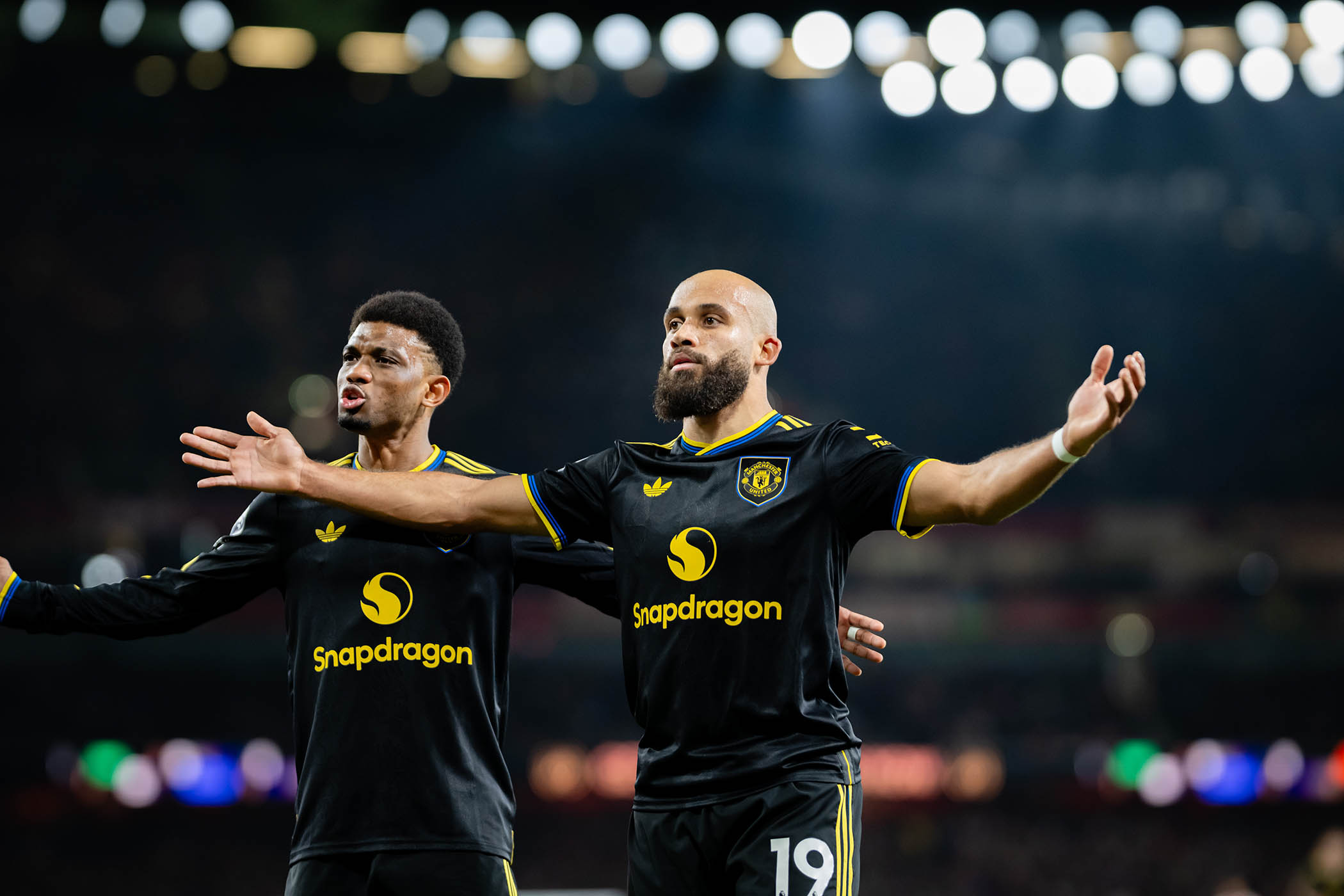
Exhibit one: Arsenal are leading Manchester United 1-0 when Martín Zubimendi, their usually dependable midfielder, fluffs a nothing-pass into the path of United’s Bryan Mbeumo, who makes the most of the gift and levels the score.
With the game only 36 minutes old, there’s no reason for Arsenal to think the end of the world is nigh. But there’s a noticeable deflation in their demeanour. United see it – and are encouraged. Less than an hour later, Arsenal have conceded three goals in a Premier League for the first time since December 2023.
Zubimendi’s mistake displayed the power an aberration has to undermine. “We gave them the goal – and hope. And that shifted the energy,” said Mikel Arteta, who cited the 3-1 win at Inter Milan in midweek as proof that Arsenal have not lost their way.
With his admission though, Arteta only confirmed why Arsenal fans are fretful. “That shifted the energy” prompted the question: why? Great sides don’t allow that to happen.
Arsenal wouldn’t be the first team to allow a state of mind to cost them a title. Kevin Keegan’s Newcastle are the best modern example of league leaders unravelling under external pressure and their own inability to cope with it.
A four-point lead now over Manchester City and Aston Villa falls a long way short of a healthy margin
A four-point lead now over Manchester City and Aston Villa falls a long way short of a healthy margin
Arsenal are stalked by the memory of three consecutive second-place finishes. For one of them – last season – they ran into a superior opponent (Liverpool). In the other two they stood accused of blowing an advantage, even if it was a bit more nuanced than that.
A four-point lead now over Manchester City and Aston Villa falls a long way short of a healthy margin, given Arsenal’s squad depth and recent slips by City. Nor should it be framed as impending collapse.
Consecutive 0-0 draws against Liverpool and Nottingham Forest preceded a first home league defeat of the season, against a club with a manager appointed only until the end of the season: a club stuck in perma-crisis, until this two-game bounce under Carrick.
The return of United’s enthusiasm was as noticeable as Arsenal’s self-doubt when United refused to stand aside and allow their old foe free passage.
Just before half-time, Arsenal came buzzing out of their penalty area on a counter-attack. Seven Manchester United players sprinted after them with piston legs and straining lungs. Even the stately Carlos Casemiro ran as if trying to win an Olympic trial.
Football’s chatterati can talk all it likes about tactics, team shape and selection – but sometimes it’s the simple things that show whether a team is on its way back. Exertion. Effort. Energy.
By those measures, United’s players are glad to see the back of their previous manager Ruben Amorim and relieved to return to the simpler formula set out by Carrick: 4-3-2-1, with counter-attacking to the fore.
‘You’ve got to be humble enough to realise how we’ve just achieved these two results. It doesn’t come easy’
‘You’ve got to be humble enough to realise how we’ve just achieved these two results. It doesn’t come easy’
Michael Carrick
United have seen several positive reactions from the dressing room to manager sackings. Few have been sustained. Carrick is bound to be wary of a swift return to the old lethargy. Which is why he spoke of the need for “good routines, good habits”.
“You’ve got to ride it. You’ve got to use the emotion, use the energy,” he said. “You’ve got to be humble enough to realise how we’ve just achieved these two results. It doesn’t come easy. You’ve got to bottle it and use it again.”
Arteta’s quadruple substitution after 57 minutes was another debating point. With a win, Arsenal’s manager would have been praised for his decisiveness. In defeat, the four subs felt like a rebuke to his team for losing control, even if fatigue from midweek Champions League action also played a part.
In the TV studios, Patrick Vieira was among ex-Arsenal players who questioned the team’s resilience and suggested they should take “more risks”.
“There’s still some questions about the mental strength of the team,” Vieira said. “It’s not the fact that they lose the game – it’s the way they lose the game.
“If you look at the players here they want to win it so badly and of course they’re feeling the pressure and the expectation from the fans.”
Top of the Premier League and Champions League tables are healthy vantage points. Disintegration is a self-fulfilling prophecy only if Arsenal allow it to be.
Newsletters
Choose the newsletters you want to receive
View more
For information about how The Observer protects your data, read our Privacy Policy