
In football, little escapes feverish chat. Strangely ignored, though, is the loss of Gulf state ownerships’ claim to be a haven of order and certainty.
The owners of Newcastle United (Saudi Arabia), Manchester City (Abu Dhabi) and Paris Saint-Germain (Qatar) are under attack from Iran in the Middle East war. So, from a greater distance, is the country where American private equity bought Chelsea from a sanctioned Russian oligarch, Roman Abramovich.
There are no signs yet that being assailed by rockets and drones will undermine the urge of Gulf states to own big European football clubs. But the collapse of the Middle East’s equilibrium and mayhem in the global oil trade means that being owned by an autocracy awash with petrodollars is no longer an eternal golden ticket.
All those features ruminating on how life has changed for the “tax-and-crime-free” Gulf states that are so attractive to digital nomads and YouTubers have yet to extend to football. But only because no-one has yet given it any thought.
Elite football has feasted on nation-state wealth. That makes it vulnerable to global upheaval. This midway point in Champions League last-16 ties is an eerie place to observe Newcastle, Paris Saint-Germain and the rest going about their business while their owners are suddenly beset by sirens and explosions.
Six Premier League clubs made the Champions League’s last 16 and none won their first-leg matches.
Saudi-owned Newcastle were the best of them. A 1-1 home draw with Barcelona contrasted with Chelsea’s 5-2 defeat at PSG, which featured a late-game collapse. Pedro Neto pushing over a ball boy was the embarrassing coda to a rotten night and further evidence of the team’s ill-discipline.
The loss of grip in the last quarter-hour of the game itself sowed doubt over whether either of Chelsea’s main two goalkeepers are worthy of the shirt.
In Paris in midweek, Liam Rosenior’s team seemed to be holding on until Filip Jørgensen passed straight to Bradley Barcola and Vitinha lobbed him to put PSG in front. Robert Sánchez, whom Jørgensen had replaced, had made errors against Arsenal and been dropped against Aston Villa and in Paris. As goalkeeper dilemmas go, it wasn’t quite Antonín Kinský for Tottenham at Atlético Madrid – but it came at an ominous time for Chelsea as the season approaches the chaff-sorting stage. Here, Rosenior took Jørgensen out and put Sanchez back in, with 22-year-old Teddy Sharman-Lowe, not Jørgensen, the replacement keeper on the bench.
Step forward, then, a new culprit, the captain Reece James, who signed a contract extension this week and is Chelsea’s most important player. An academy product and Champions League winner, James connects the current kaleidoscope of “investment” buys to the club’s golden era under Abramovich.
Newsletters
Choose the newsletters you want to receive
View more
For information about how The Observer protects your data, read our Privacy Policy
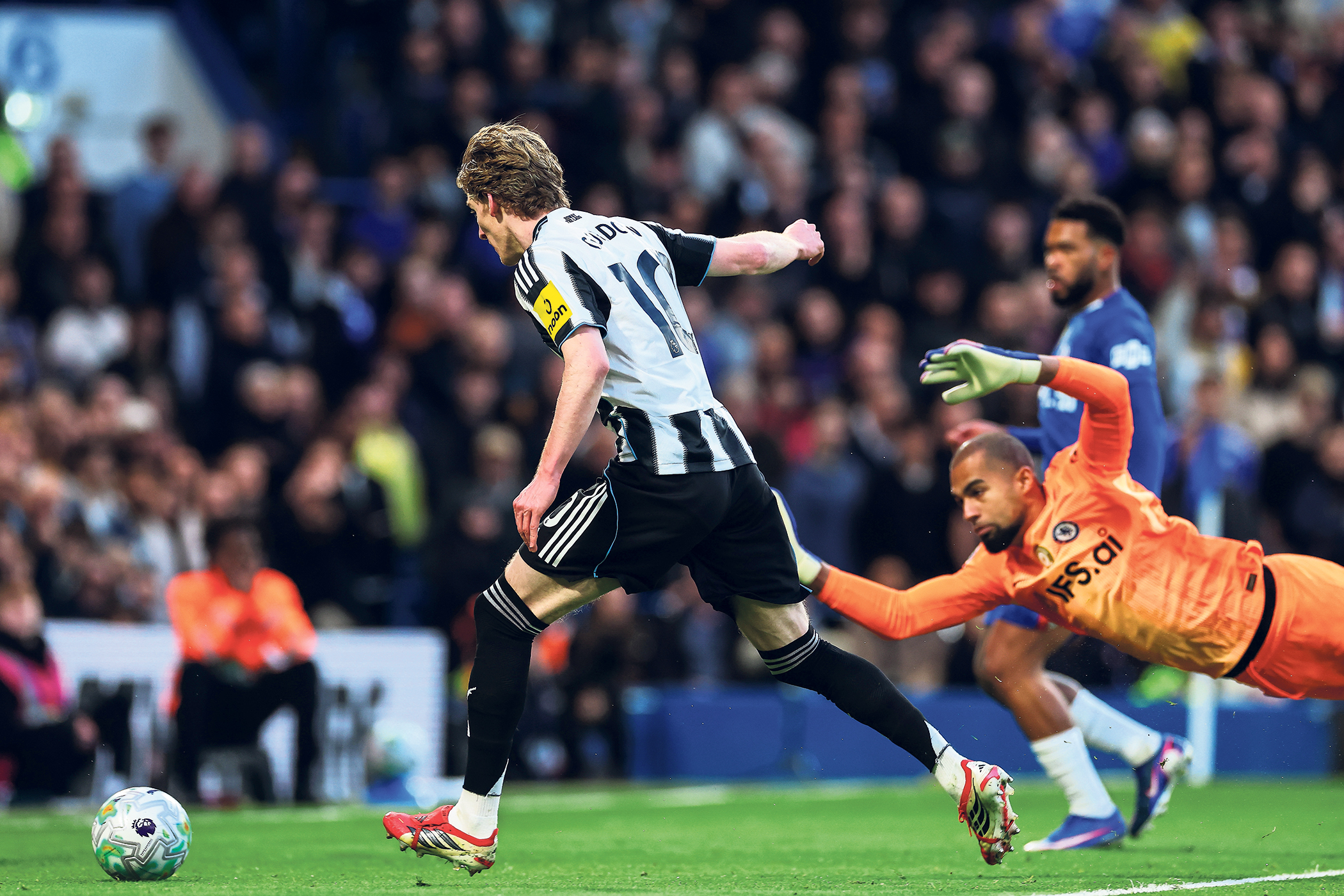
But when the ball was slipped through to Newcastle’s Joe Willock 17 minutes into the game, Reece was undone, from a bad starting position, and Willock had only to square the ball to Anthony Gordon for a tap-in. The effects of a bad night in Paris were visible in Chelsea’s lack of conviction around Newcastle’s penalty area and skittishness in defence. Taken off on the hour for Roméo Lavia, Moisés Caicedo slapped a seat in the dugout in anger so hard that you could hear it 20 rows back.
Gordon was unwell before the Barcelona game and didn’t start. Alan Shearer and Roy Keane questioned his absence. Shearer said only “something extraordinary” would have kept him (Shearer) out. Gordon, Eddie Howe insisted, had been too poorly to take part in a walkthrough session on the morning of the game, but had been “willing to play”.
With Newcastle some way off the Champions League qualifying spots in 13th place as this game kicked off – but a triumph over Barcelona still conceivable – Howe made six changes from the European game, bringing in Tino Livramento, Sven Botman, Willock, Nick Woltemade, Gordon and Jacob Murphy. Dan Burn, Kieran Trippier, Joelinton, Anthony Elanga and Will Osula were moved to the bench. Sandro Tonali was ill.
Booed off at half-time, Chelsea could hardly object to the grumpiness of their fans, who will have wondered again how their club let Lewis Hall join Newcastle at 19 years old in July 2024. Hall is tipped to be England’s first-choice left-back before long and displayed tremendous energy in a strong Newcastle defence, who will need to play this well again in Catalonia.
Chelsea chased the game knowing that Tuesday’s return leg against PSG will likely be one of those ceremonial exits – ideally with no further damage done to their disciplinary record.
Newcastle, on the other hand, travel to Barcelona believing that even a snatched, narrow counter-attacking 1-0 win would put them in the Champions League’s quarter-finals and alleviate some of the frustration around their underwhelming league campaign. Their mindset at Stamford Bridge was first rate.
In this week’s big European deciders, the noises emanating from the Middle East will be drowned out by the sounds of peaceful battle. Maybe these football ownerships and the moves by Gulf states to annex chunks of world sport will ultimately remain unaffected by war.
There will be reason this week to dwell, however, on the thought that even top-level football is vulnerable to forces which, once unleashed, have a habit of developing their own direction. Clubs in the shadow of war are always affected, even if the signs aren’t always visible.
Photograph by Andrew Kearns – CameraSport via Getty Images