An English friend interrupted my enthusiasm about the upcoming World Cup in my native country with a reminder.
“You have to remember,” he said, “that for many of us the World Cup is simply a recurring four-year event in which England loses to Germany on penalties.”
Point taken.
His remark reminded me of an old radio essay on National Public Radio by the American sportswriter Frank Deford. I tried unsuccessfully to find it again recently. I know it aired sometime after the 2010 World Cup and before Deford died nine years ago this week.
Deford was one of those rare sportswriters who understood that sport contributes not only to the happiness of society but also to its self-understanding. He treated games as a way of observing a culture’s habits, aspirations, and blind spots.
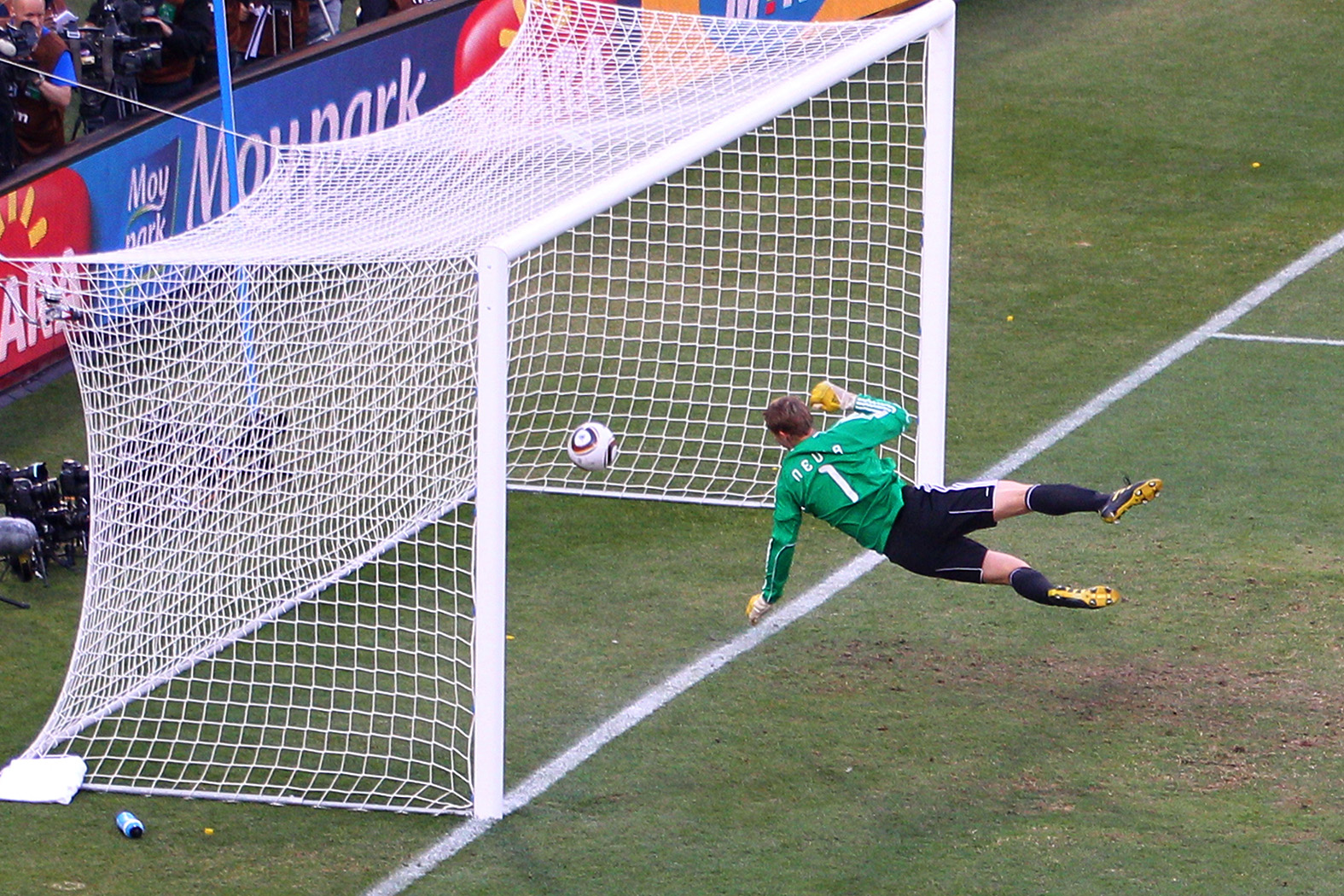
The essay centred on the infamous Frank Lampard “goal” against Germany in South Africa in World Cup 2010.
Near the end of the first half, Lampard struck a shot that hit the underside of the crossbar and bounced clearly over the line before spinning back out. German goalkeeper Manuel Neuer scooped it up and quickly played on. There was no goal-line technology then. No video replay. The referee missed it.
Everyone watching on television could see it was a goal except the officials who mattered.
England went on to lose 4–1.
After the match, Neuer admitted he knew perfectly well the ball had crossed the line and had tried to behave as though nothing had happened.
Newsletters
Choose the newsletters you want to receive
View more
For information about how The Observer protects your data, read our Privacy Policy
Deford’s point was not that English fans were outraged. Of course they were. Nor was he surprised that German fans celebrated. That too was understandable. He wanted to talk about the rest of us.
Deford asked listeners to imagine an earlier era of sport — perhaps more imagined than real by now — in which a goalkeeper would have handed the ball to the referee and admitted the goal. Think Chariots of Fire. Honour. Fair play. The game above the result and all that.
Then Deford asked us to imagine a later era. Not one of perfect sportsmanship, but still one in which the goalkeeper might have concealed the goal in the moment yet later felt embarrassed enough not to boast about it publicly.
Then later still: an era in which he would admit it openly, but neutral fans around the world would wince a little. They would sense that something had been lost, even if they admired the nerve of it.
But that was no longer where we were, Deford observed.
The world applauded.
That was his point. Not simply that standards among athletes had changed, but that the crowd had changed; we had changed. We no longer just tolerate certain behaviour. We enjoy it. We replay it. We circulate it with delight. We call it cleverness, competitiveness, winning mentality.
Deford did not call for some sentimental return to a misty age of amateur sportsmanship. He did not ask us all to become saints.
His admonition was much smaller than that:
“Stop clapping.”
It strikes me that something similar has happened in politics on both sides of the Atlantic over the past decade.
Many well-meaning people have called for a return to civility and respectful disagreement. That sounds fine, but to many people it also sounds impossibly remote — like asking soldiers to climb out of their trenches and start singing Silent Night in hopes the “other side” joins in.
That is asking too much too soon. But perhaps we could begin somewhere smaller.
Perhaps we could stop clapping.
Stop applauding politicians for humiliating opponents rather than answering them. Stop cheering when interviewers “destroy” guests instead of clarifying differences. Stop rewarding the strategic lie because it lands well online. Stop treating contempt as courage. Stop confusing mockery with strength.
Politics, like sport, is shaped not only by the players on the field but by the crowd surrounding it. Athletes adapt to what gets applause. Politicians do too. Culture is not only what leaders permit. It is what the rest of us reward.
In football, the Lampard incident helped usher in goal-line technology. Video replay arrived because eventually the game decided that getting the call right mattered more than preserving old ambiguities.
Politics has no replay booth. No official stepping in to reverse the call after cooler heads prevail. It only has us. And perhaps that is enough for a start.
Not reconciliation. Not agreement. Not a sudden return to genteel politics. Just this: Stop clapping.
Matthew Barzun is the former US ambassador to the UK, chair of Tortoise Media, and owner of The Observer
Photograph by Cameron Spencer/Getty Images