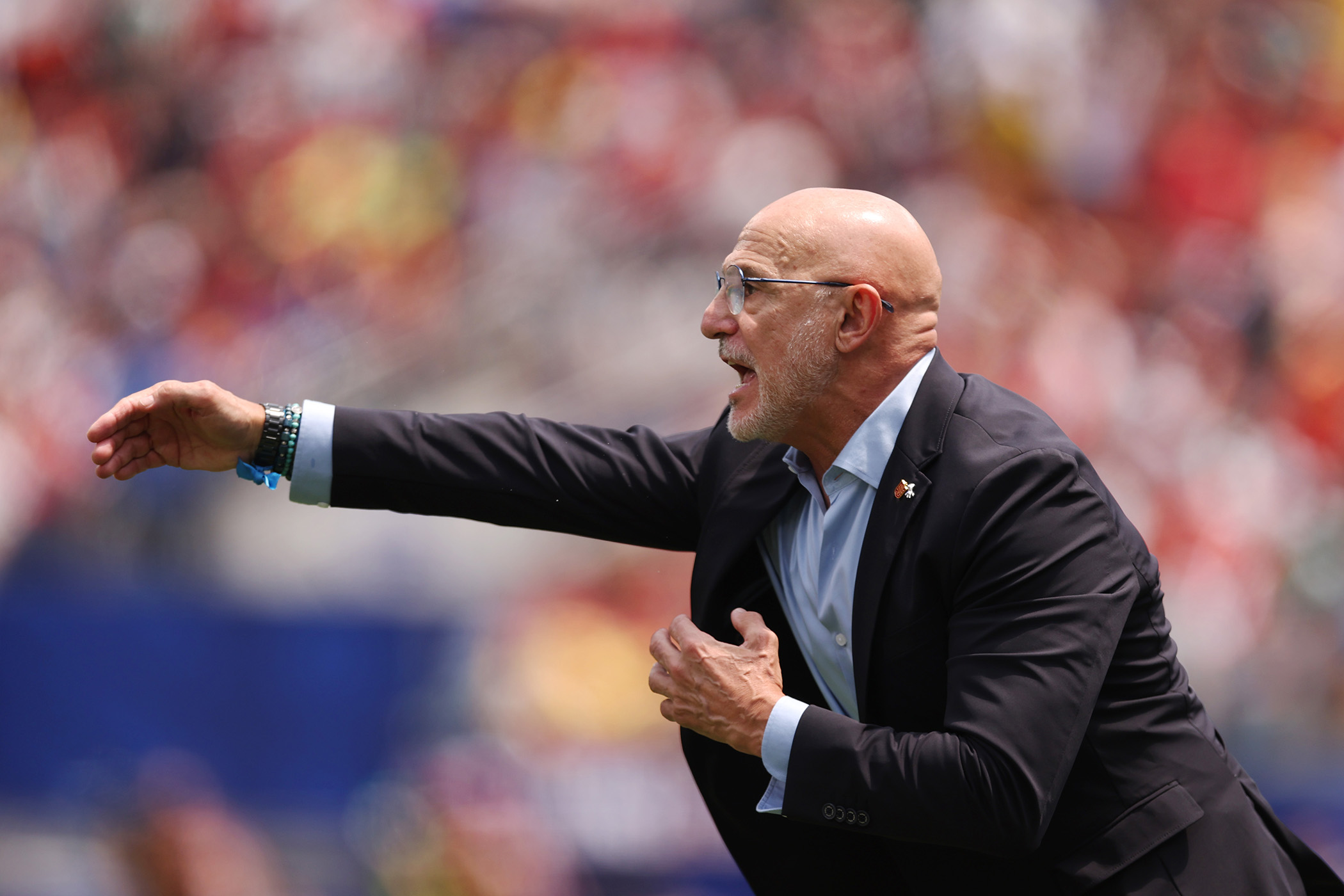

Even the most optimistic Spaniards turned to faith before football after the draw with Cape Verde in Spain’s opening match of this World Cup. As Cape Verde’s goalkeeper Vozinha’s Instagram following soared, the reigning European champions seemed to be losing believers at the same pace. Inside the dressing room, however, there was no trace of the doubts that had taken hold outside it. “These lads don’t let you down very often,” Luis de la Fuente said with quiet conviction. He was right. Spain would not stumble again.
Those were the words of a man who has never been handed anything. Thirteen years ago, unemployed, he had fallen into the routine of having breakfast every morning at the village bar in Haro. One day, while leafing through the back pages of the newspaper, he came across a two-line advertisement from the Spanish Football Federation looking for a coach for its youth teams. After several interviews – and with the support of former Spain manager Iñaki Sáez – he got the job. He has never looked back.
Now he finds himself leading Spain into a World Cup final against Argentina. It is quite the journey.
In an era in which football increasingly rewards noise and personality, De la Fuente’s success has come through something far less fashionable: consistency. He has made calmness look like a competitive advantage. That helps explain why so many of his decisions, before and during this tournament, have proved correct.
Leaving experienced figures such as Dani Carvajal and Álvaro Morata out of the squad was a bold call. So was sticking with Unai Simón in goal when much of Spain wanted Joan Garcia to start. Even more striking was his decision to leave Pedri, arguably the team’s most gifted midfielder, on the bench against Belgium in the quarter-finals and France in the semi-finals.
Each decision carried obvious risks. Each was vindicated.
To this generation of players, De la Fuente is what Vicente del Bosque was to the class of 2010: calm, measured, conciliatory, never drawn to theatrics. Football still rewards those who treat it with care rather than force, and that is why Spain are now one step away from becoming world champions. In the semi-final against France, De la Fuente’s dilemma was which midfielder to leave out. Didier Deschamps’s dilemma was who to bring in. The contrast could hardly have been greater.
Like the Spain side that conquered the world in 2010, this team have been built around Alfredo Di Stéfano’s timeless maxim: “No player is as good as all of them together.” From Sergio Busquets to Rodri, from Xavi Hernández to Pedri, from Andrés Iniesta to Dani Olmo, Spain’s success has always been rooted in collective strength rather than the brilliance of a single individual – even one as gifted as Lamine Yamal.
There is another similarity with the golden generation. Neither team have been burdened by nostalgia. The World Cup winners of 2010 followed their triumph by producing one of the finest performances in Spanish football history, thrashing Italy 4-0 in the Euro 2012 final. This side, having already won Euro 2024, have shown the same determination to keep moving forward rather than live off previous achievements.
If anything, the team have often had to convince the country of their own potential. Spain have long carried a curious tendency to doubt themselves, even at their strongest, as though there must always be someone better waiting on the other side. That perception is rarely shared abroad.
Newsletters
Choose the newsletters you want to receive
View more
For information about how The Observer protects your data, read our Privacy Policy
“If I had this team, I’d predict a 5-0 win every time,” a Brazilian journalist remarked recently, reflecting the admiration that this Spanish side inspire beyond their own borders. After outplaying Kylian Mbappé’s France in the semi-final, Spain now believe they can do the same against Lionel Messi’s Argentina in New Jersey.
That confidence mirrors the personality of their manager. Calm, composed and free from unnecessary drama, De la Fuente has passed those qualities on to his players. This is a team that no longer look intimidated by reputations, not even by the greatest footballer of his generation.
The Spain that dominated international football between 2008 and 2012 transformed the country’s relationship with success. It broke a psychological barrier and established a winning culture that had often seemed beyond reach. This new generation has inherited that belief while adding something different: the fearlessness of youth.
No one embodies that better than Yamal. Asked whether Spain fear their opponents, his answer was: it is the opponents who should fear Spain.
There is no arrogance in that response. It reflects the confidence of a generation that has grown up without the insecurities that once defined Spanish football. These players are comfortable expressing themselves, on and off the pitch. Even Marc Cucurella has joked that, if Spain win the World Cup, he will tattoo De la Fuente’s face on his body. With only one match remaining, he may have to keep that promise.
The final in New Jersey feels like more than a meeting between two outstanding teams. It is a meeting between eras.
For Messi, perhaps the greatest player the game has known, it offers one last opportunity to add another defining chapter to an extraordinary career. For Spain, it is the chance to confirm that the transition from one golden generation to another is complete.
Whatever the result, football will witness a passing of the torch. Messi remains the sport’s defining figure, but Spain arrive with the confidence, depth and clarity of purpose that has distinguished them throughout the tournament.
The doubts that surfaced after the opening game have disappeared. They have been replaced by a team that trust their football, trust their manager and, above all, trust themselves.
That may prove to be Spain’s greatest advantage of all.
Photograph by Alex Pantling /FIFA via Getty Images