
Look, I am as bad as anyone. I had bobbleheads of Alan Shearer and Les Ferdinand on my windowsill. I used to ask for a Michael Owen haircut. I saw the world in a shiny Panini sticker and heaven in Tim Flowers. If the 1990s has an ambassador, it is me, chief fanboy of Liam and Robbie, Fresh Prince and SMTV, Argos catalogues and malfunctioning Furbies.
But I am here to say the long 90s may be over when it comes to the England team. Don’t be deceived by the second life of Wonderwall or dear old Ally McCoist on commentary duties. Jude Bellingham means we should pack away the past before it does any more damage.
The popular view is that the England men’s team is haunted by the ghosts of 1966. Whenever England do something for the first time since that tournament – beating Argentina in 2002, reaching a major final in 2021, winning a World Cup game after conceding first in 2026 – it is duly noted as a demon exorcised from the days of pre-decimal money and the mini skirt.
Why then do we reach so often to the comeback against Cameroon in 1990, Paul Gascoigne’s volley in 1996 or Owen bursting onto the scene in 1998? There is a recency bias, for one thing. Many fans were not alive for Geoff Hurst’s hat-trick. But there is also the fact that so much of what we venerate happened in the 1990s, an intoxicating decade when capitalism, class and culture tried to convince us that they could be the best of friends. 1966 has maintained a grip on the public imagination, but the real ghosts are closer at hand.
England made it to the World Cup semi-final in 2018, but we better remember a defeat at the same stage in Italia ’90. England made it to two European finals in 2021 and 2024, but we get misty eyed about a semi-final loss in Euro ’96. Let me be clear: England are enjoying an unprecedented period of success. Since Euro 2016, they have reached semi-finals in four out of five tournaments, a record bettered only by France and Argentina. England won three knockout games during the 1990s. They have won 12 in the past eight years. Now count how many shirts you see today that carry Gascoigne’s name and tell me there is not a problem.
One of the issues is that the vibes around England in the 1990s have been airbrushed by internet clip merchants, who have chopped up the decade into nuggets of nostalgia and removed anything that cannot be categorised as a moment of success or heroic failure. Gazza’s tears, Southgate’s penalty miss and Beckham’s red card meet the threshold of romantic disaster but there is no space for England squeaking past Egypt in 1990, getting knocked out of the Euros by Sweden in 1992, or not reaching the World Cup at all in 1994.
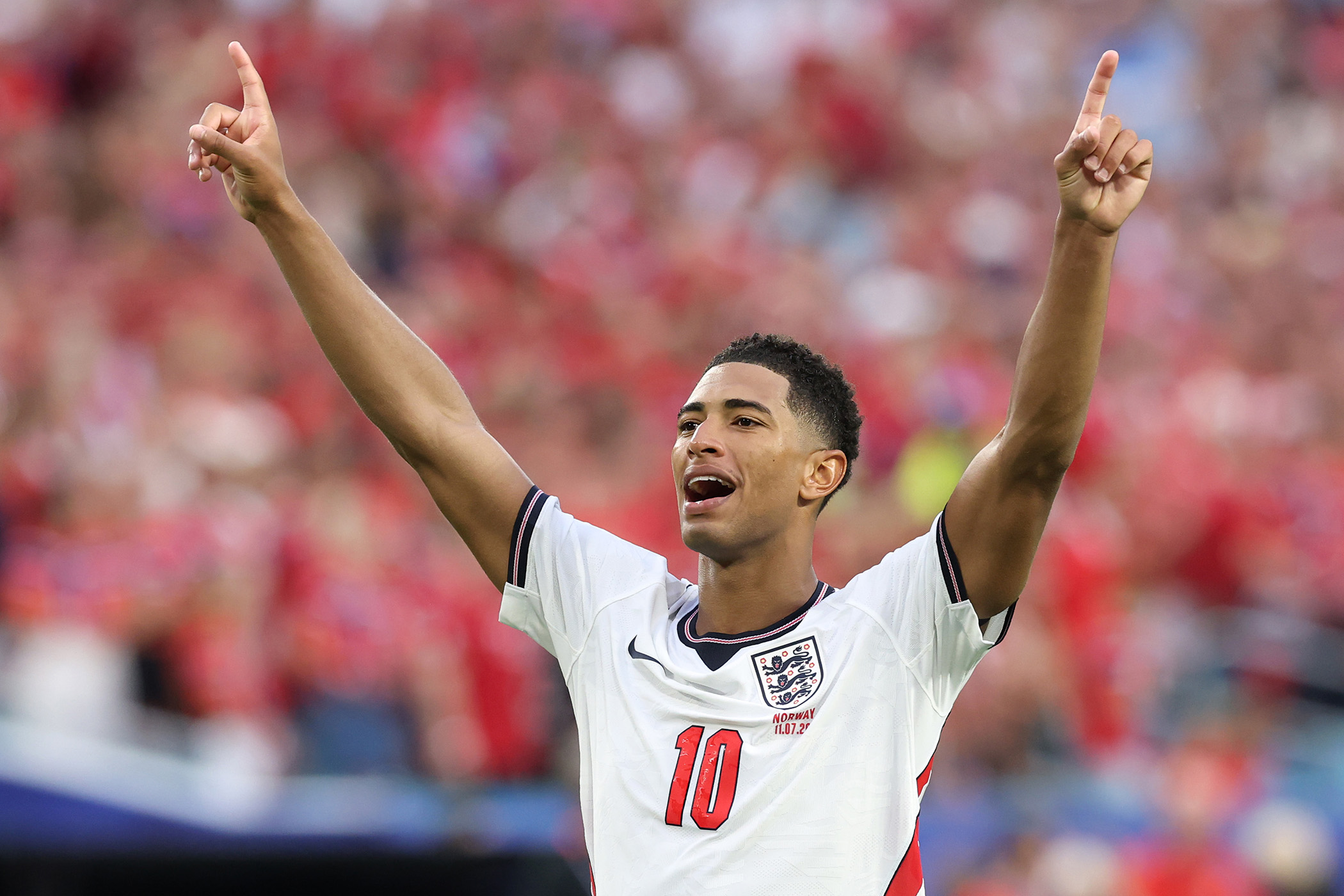
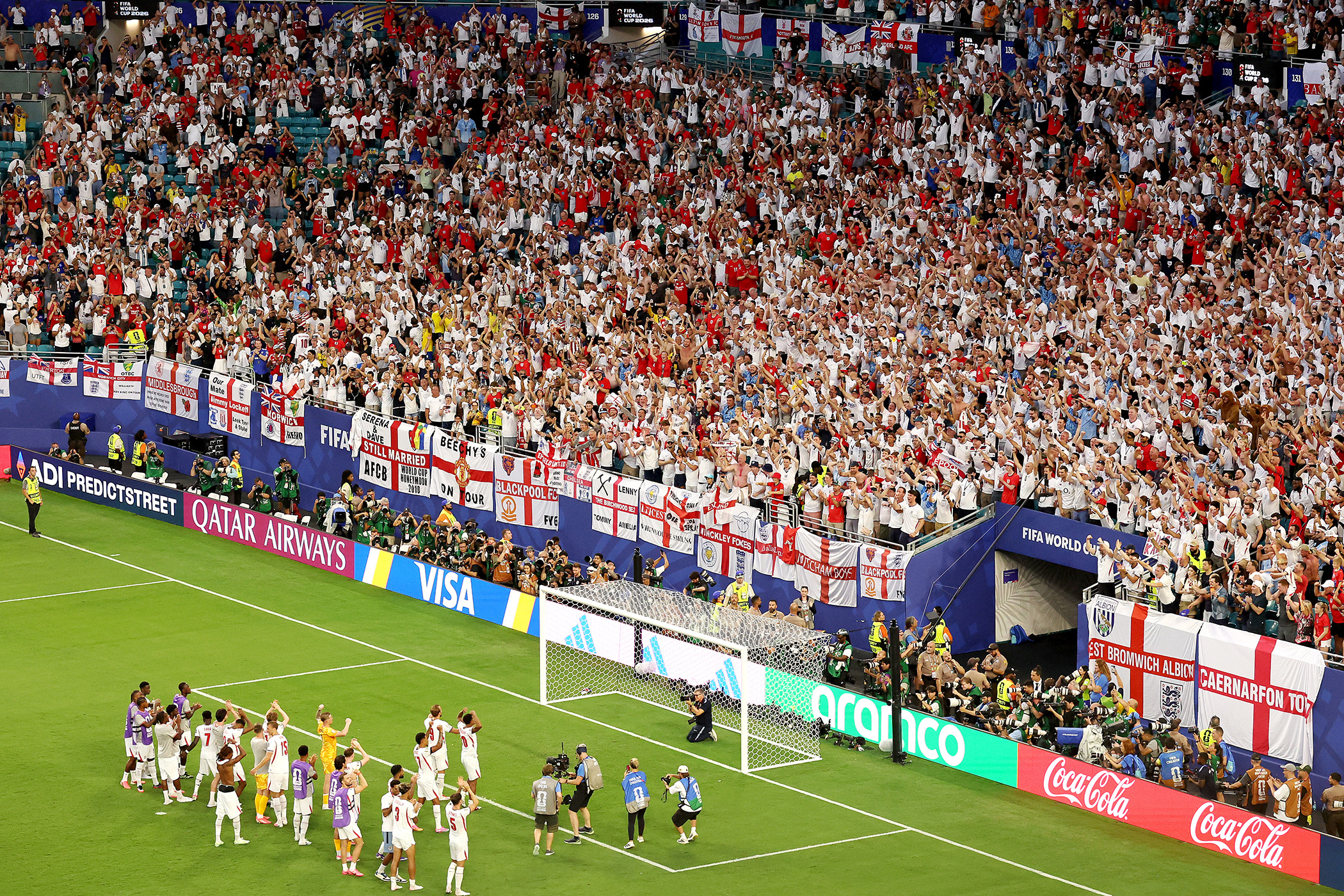
Some would contend that winning alone is not sufficient and that to be ossified by time you also need to ignite the spirit. On this point, Stuart Pearce, Bryan Robson and Tony Adams are brought to our attention. They were warriors in their day. But now we have Jude Bellingham. Bellingham is a generational player who, with the help of Harry Kane, has dragged England to a fourth World Cup semi-final. He was the driving force behind England’s victory against Mexico, our greatest win since 1966 and our greatest ever win on foreign soil. His seven World Cup goals put him third on England’s all-time list at the age of 23. His double against Norway made him the first player to score twice in consecutive World Cup knockout matches since Diego Maradona in 1986. He has skill, strength, and the air of destiny about him. He is a man who seems to decide when to score. He may be telegenic, too, but the way he thrived in the cauldron of the Azteca, then in the Miami heat, shows there is nothing bloodless about him.
Even within this World Cup, pundits have tried to compare Bellingham to stars from the previous generation. Jamie Redknapp has said that Bellingham is England’s best player since Gascoigne. Wayne Rooney, whose red card against Portugal in 2006 marked the definitive end of England’s long 90s, has said that Bellingham reminds him of himself. But notice how the tenor of conversation shifted after the Norway game. People are beginning to stop with the comparisons because Bellingham has made them look ridiculous. He is clearly better than Gascoigne and Rooney in every metric that matters, given he is scoring more goals in more important matches and at more important moments than anyone in my lifetime. He is on the greatest run of individual performances for England in 60 years, possibly in history. Gary Neville played with Gazza in 1996, Owen in 1998 and Rooney in 2004, and he is comfortable saying that he has “never seen anything like this”. The only comparison with mileage left in it is to Bobby Charlton, partly because he lifted the World Cup in a similar midfield role, and partly because he survives in the national psyche more as an idea, an abstract force, than as someone who graced the human plane. One day that may be how we see Jude Bellingham.
The question is what happens next. There is hope for those who want the collective footballing psyche to remain in the 1990s. Bellingham might do a Beckham and get sent off against Argentina. I think that some fans would find comfort in this; in the sense that gravity exists and history swings like a pendulum weight. What is harder to imagine is where we will put our beloved decade, the dentist chair and silly hair, the music and the motion, all that longing and all that loss, if Bellingham shrugs off the past and takes us all the way.
Photograph by Justin Setterfield/Getty Images
Newsletters
Choose the newsletters you want to receive
View more
For information about how The Observer protects your data, read our Privacy Policy