
Erling Haaland was joking. Probably. A few days before his Norway team faced France in the group phase of this eternal World Cup, the Manchester City striker was asked for his assessment of the team that Didier Deschamps had assembled, honed, perfected. “They will probably beat us,” he said. “And they will probably win the World Cup.”
Given that Haaland might well be football’s first postmodern superstar – an artist who is very much aware that he is a product – it felt safe to attribute those comments to his idiosyncratic sense of humour, his knowing performance of a public persona, his willingness to play with the form. Haaland, one of life’s protagonists, was not really that fatalistic.
But while the 25-year-old was not to be taken literally, he was very much to be taken seriously. This has been a tournament defined by its superstars, just as Fifa must have hoped it would be: there is nothing better to sell to an American public reared on LeBron and Curry, Brady and Mahomes, than the idea of enriched greatness.
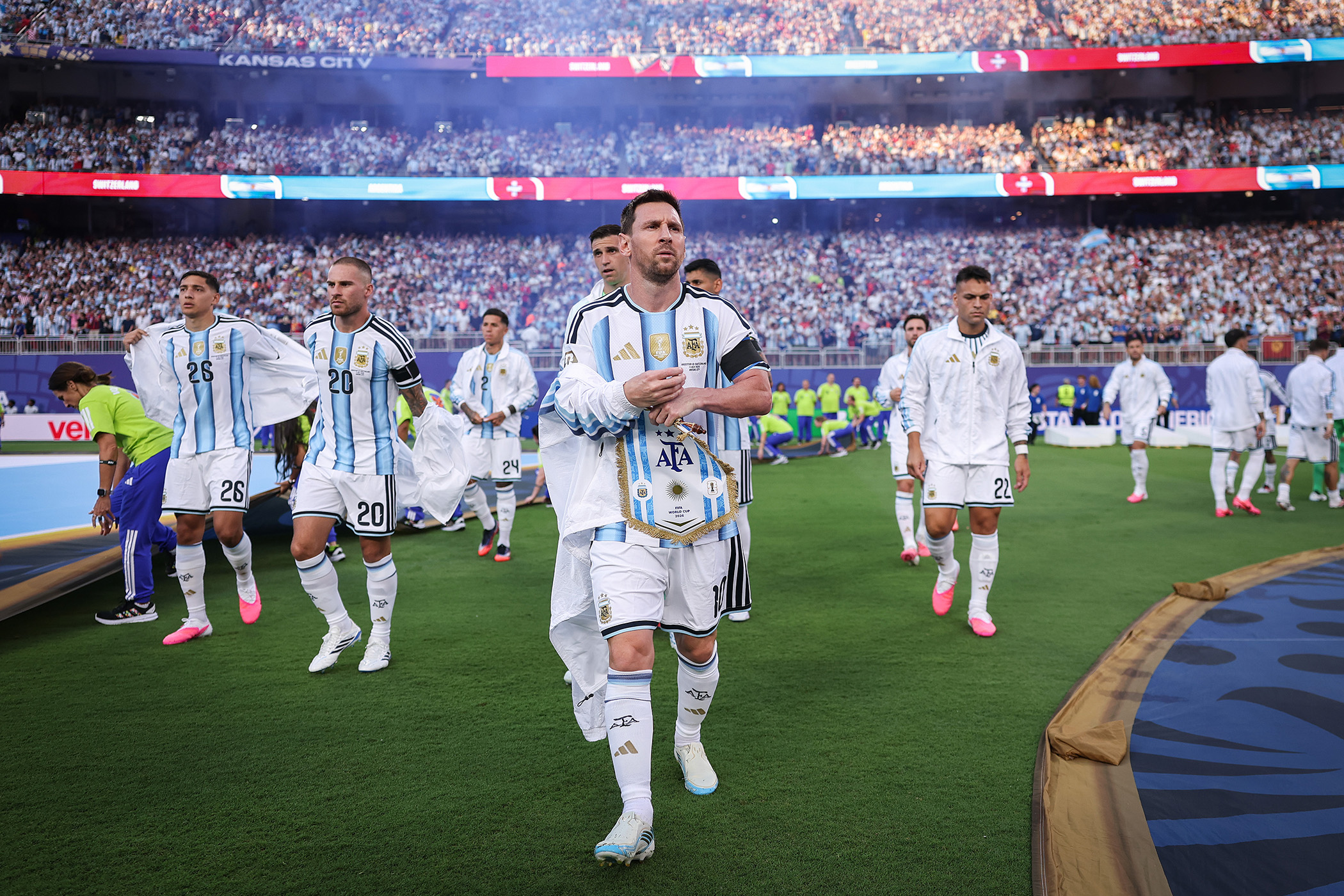
One by one, then, they have delivered: Lionel Messi took his bow with a hat-trick against Algeria; first Harry Kane and then Jude Bellingham shouldered the burden of delivering England to the semi-finals, and perhaps further still; Vinicius Junior burned brightly but briefly; Haaland himself hit his first World Cup like a slightly-quirky meteor.
But nobody boasted quite as many superstars as France; Deschamps’s attack seemed so supercharged that the idea anyone might be able to figure out a way to stop them was – as Haaland was happy to acknowledge, albeit with a veneer of irony – basically laughable. Brazil 1970 aside, there may never have been such a fearsome attacking quartet at a World Cup.
Ousmane Dembélé arrived in the United States as the reigning Ballon d’Or, a player who for so long seemed to represent unfulfilled potential finally at home with his own talent. His Paris St-Germain teammate, Desiré Doué, was already twice a European champion and stood on the cusp of going supernova. Michael Olise has been Europe’s form player for a year, the unanticipated catalyst for the full realisation of Deschamps’s vision.
And then, of course, there was Kylian Mbappé. At 27, Mbappé would be forgiven for starting to reflect on the choices he has made at club level. He has seven French titles under his belt, but he has still never won the Champions League, still not won the Spanish championship, still – and this one may sting more than most – claimed the Ballon d’Or.
The longer he has waited, the more his public image has soured. Nobody doubts that Mbappé is bright, determined, diligent. He is not an indolent wastrel, too satisfied with his own genius to try; there are no suggestions that he regards training as optional, a la Neymar, or that he is anything other than a dedicated professional.
But the speed with which a statistic suggesting he did less running that any other player in any of Europe’s top five leagues was disseminated indicated that an impression of him had taken hold: it was treated as empirical proof that Mbappé, for all his obvious talent, was as much of a curse as a blessing.
He has, though, always been a different proposition for France than he has for his clubs. It was at the World Cup that Mbappé established his credentials as the greatest player of his mini-generation; it is at the World Cup where he has always seared himself most indelibly on the global consciousness.
Newsletters
Choose the newsletters you want to receive
View more
For information about how The Observer protects your data, read our Privacy Policy
In the first five weeks of this tournament, Mbappé seemed to want to turn this tournament into his masterpiece. He scored two against Senegal, two against Iraq, two against Sweden, one apiece against Paraguay and Morocco. Messi was busy establishing himself as the highest scorer in World Cup history; more than a decade younger, Mbappé was keeping pace with him.
And on the rare occasions that he was somewhat subdued, one of his adjutants invariably stepped up in his absence. Dembélé scored a hat-trick against an understrength Norway. Olise equalled the record for assists in a single World Cup. The player he drew level with? Pelé. No big deal.
All of this meant that there were plenty of people who regarded this World Cup as something of a fait accompli. France were too stacked, too dangerous, too good to be stopped. That they would make the final, at the very least, seemed inevitable, particularly after they overcame Morocco; nobody, it seemed, would stand in their way.
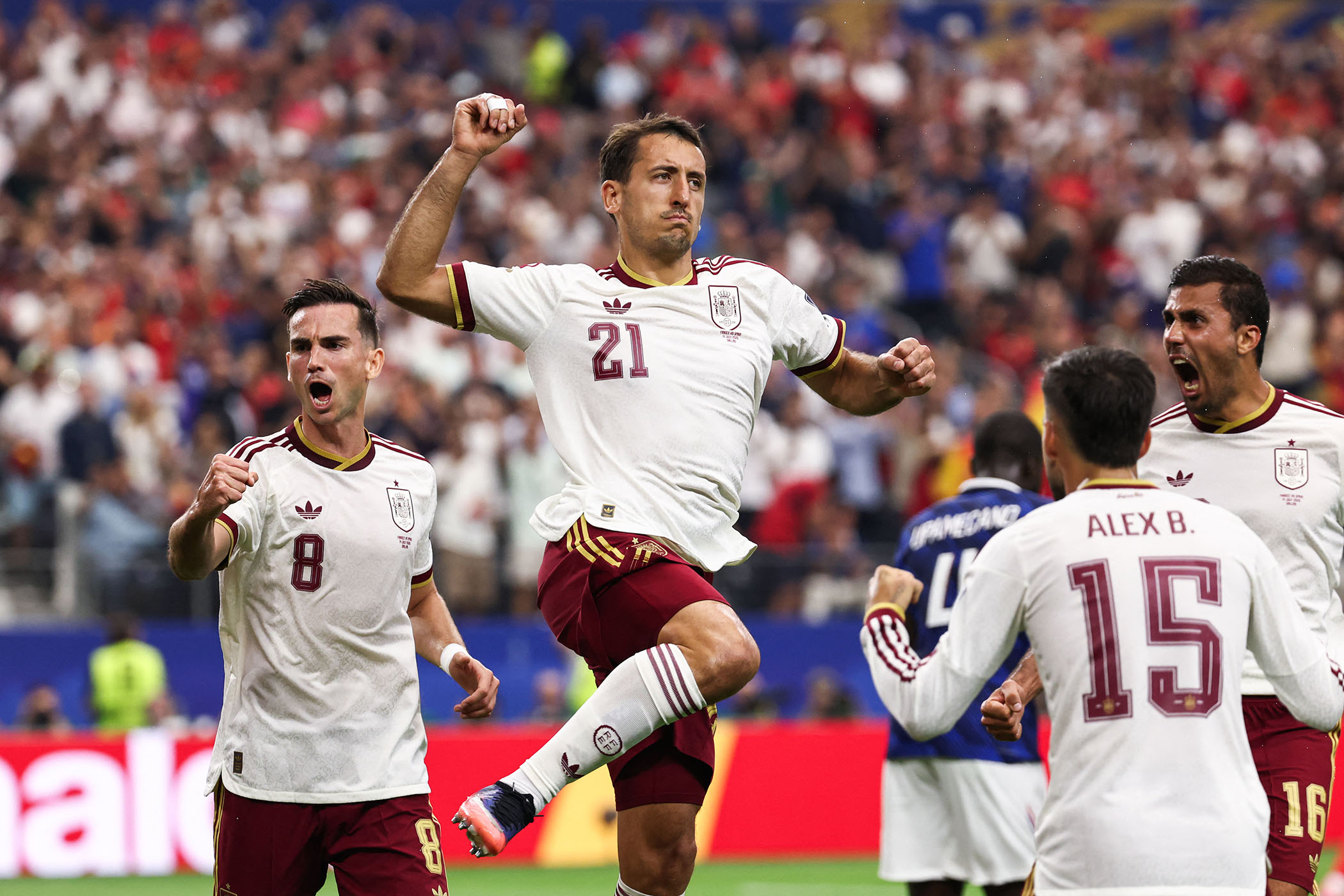
It is enough of a surprise, then, that Spain beat them in Dallas on Tuesday, but the greater shock was the ease with which they did so. France had barely created a chance before the final few minutes, when Dembélé finally flickered into life. By that stage, Doué had been thrown on for the ineffectual Bradley Barcola and Olise, entirely anonymous, had been removed. The most potent attack the tournament has seen for decades ended with an xG of 0.30 or so: Spain had conceded, at worst, a third of a goal.
Deep down, Deschamps and his staff had been concerned that might happen. Luis De La Fuente’s team have had the better of the French in recent years, most notably at the same stage of Euro 2024; they are uniquely well-equipped to stymie France thanks to the simple logic that they cannot hurt you if they do not have the ball.
But Spain’s victory, the one that secures their place in only their second World Cup final, cannot just be ascribed to the fact that, sometimes, styles make fights; it was testament to a slightly deeper truth, too. For the most part, Spain were studiously modest in victory; a World Cup semi-final is no time for the sort of playfulness that Haaland enjoys.
There was one line, though, that was a little more cutting. France, in De La Fuente’s telling, unquestionably have the best “squad” on the planet. They had lost because they had found themselves facing “the best team.”
Spain’s own superstar, Lamine Yamal, has seemed inhibited over the last few weeks, clearly not yet fit enough to escape the double- or treble-marking to which he has been subjected. That they have been able to thrive regardless, to find themselves 90 minutes away from the game’s greatest glory, is a salutary reminder that for all the glamour, all the advertising campaigns, all of the breathless adulation in its icon era, remains a game in which the collective always triumphs over the individual.
Photograph by Franck Fife/ AFP via Getty Images