
Once the moment’s gone, you can never get it back. You can try, you can throw on Ivan Toney and Marcus Rashford and have Jordan Pickford conduct an air-raid from inside the Argentinian half. You can instruct Ezri Konsa to fire crosses at Nicolás Otamendi as though aiming for him. You can run and jump and hit and hope. But you might as well be grasping at thin air, at the past.
Why do England always seem to end up on the wrong side of these games, miss their moments with such regularity, end up wandering these pitches valiant but vacant, staring into a future that isn’t theirs? They have now led two World Cup semi-finals and a European Championship final in the past eight years, and won none of them. Is it tactical, technical, an issue of national identity or psychology or belief? They have been here before, done the grateful clapping of the fans thing, the “not our day” thing. And yet they never really seem to learn and grow, never seem better suited to survive in the eye of hell, never quite realise that you make a day yours by force not fate, grab it and never let go. Two teams have scored first in a World Cup semi-final this century and not won. Both are England.
The clearest explanation is that Thomas Tuchel, hired almost solely for his perceived ability to govern games like these, his Big Game Experience, made a litany of errors. He seemed to believe that beating Mexico with 10 men at the Azteca and beating an Argentina side bolstered by divine purpose as much as a pact with the devil, were similar situations, that there was a playbook to unfold here. He brought on Ezri Konsa for Anthony Gordon, then followed it by parking the Burn once more, sticking Nico O’Reilly on the left-wing. He invited the sport’s ultimate chaos merchants to lean into the chaos, to stick Tottenham’s Cristian Romero up top. Alexis Mac Allister slapped the post twice, Nico González headed at Jordan Pickford. It was coming. Then it came.
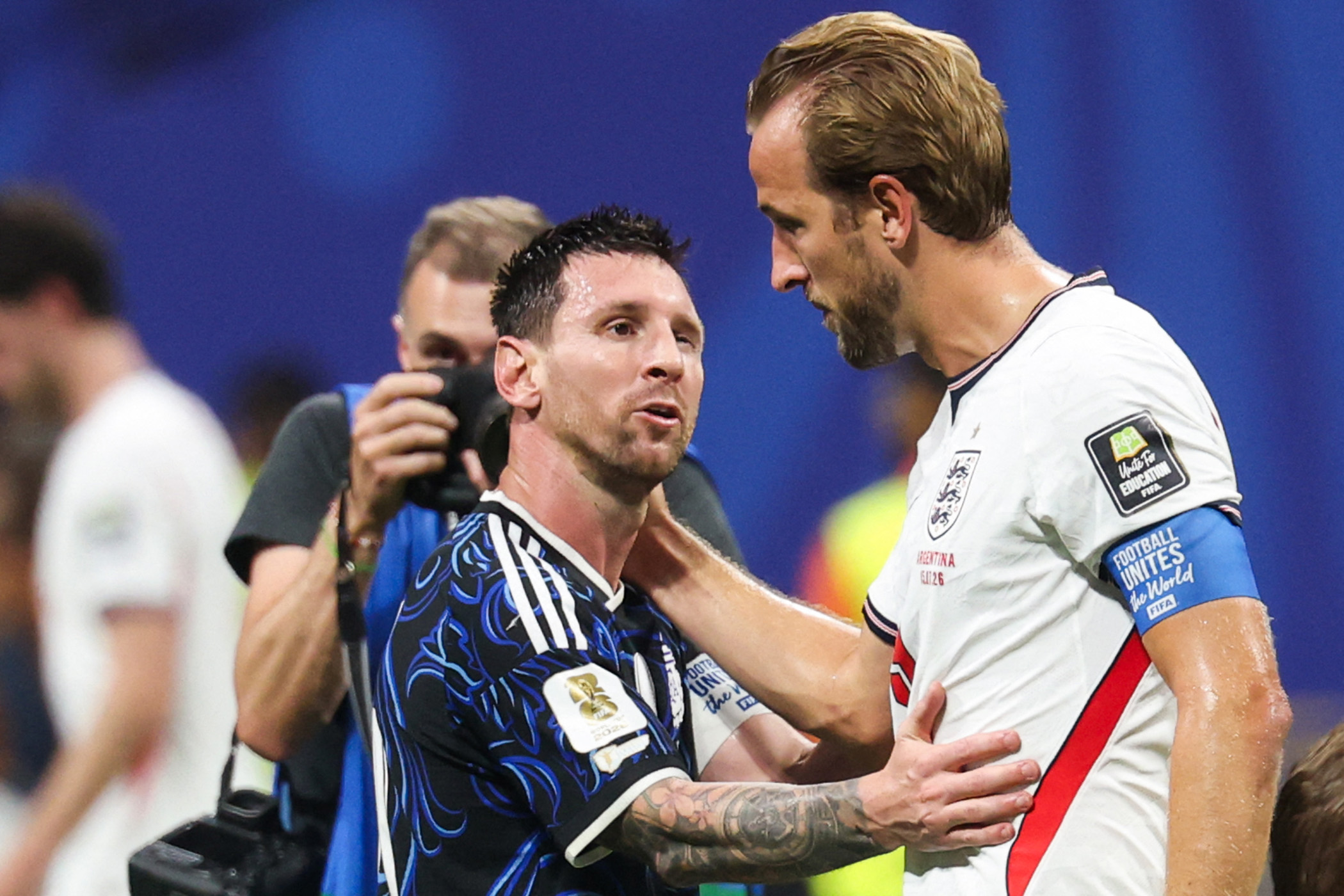
Maybe in the end the difference really was just Lionel Messi, as a player, a spirit, an idea to fight for. Maybe he is still the best player in the world, even after three years playing the Albuquerque Groundhogs and waiting for this game, unimpeachably transcendent at 39. He assisted both goals, the first a pass that created Enzo Fernández the space to hit the target with his third shot from 25 yards, the second a weak-foot cross from the right wing, that flew to Lautaro Martínez as though directed by God. The real conspiracy around Argentina should be whether he is human or something more, whether he can do this forever.
And yet for the first 70 minutes Tuchel did everything right. With Reece James and Djed Spence in at full-back, this was England’s seventh different back line from seven matches, including four different starting right-backs, and the first time James, Spence, Marc Guéhi and John Stones had ever played together. Tuchel also finally ended the Noni Madueke experiment on the right, moving Morgan Rogers into a position he rarely plays for Aston Villa. And yet both were vindicated, through Rogers’s delicious bouncing cross for Anthony Gordon’s opener, and through Spence’s astonishing speed and accuracy, particularly a penalty-area slide tackle on Giuliano Simeone that constituted art. As much as Tuchel masterminded England losing their moment, he had helped create it too.
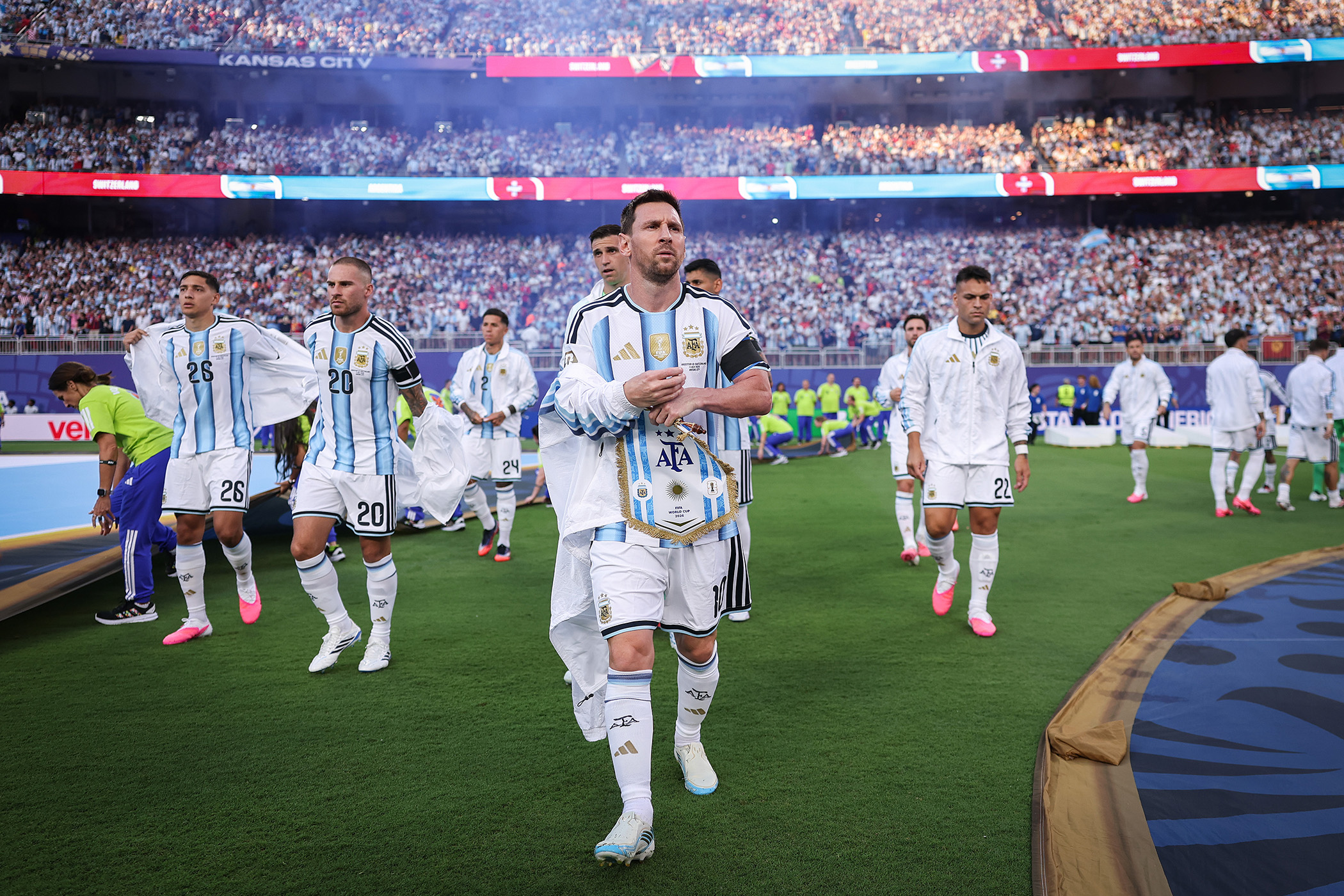
The Mercedes Benz Stadium’s glass exoskeleton creates the eerie sense it exists on a hostile planet, cramps you, traps all the air and atmosphere, forms a mini-world. The Argentine fans arrived with Messi on their back and hate in their heart, whistling the announcement England had arrived, booing the national anthem into oblivion, even booing David Beckham, the tournament’s perfectly-manicured mascot. Now 81, Michael Buffer was defrosted to announce two former “CHAMP-EE-ONNSSSS OF THE WOOORLD”, as though this was the WWE. And within three minutes Fernández went unpunished for thumping Elliot Anderson in the back of the skull with his forearm. Some petty shoving began that didn’t really seem to end until the final whistle. Even Messi seemed temporarily disrupted by the chaos, by the skewed gravity – in the first 20 minutes he fell over trying to control the ball, and was easily dispossessed by Anderson after a loose touch.
This became the first World Cup match where neither team recorded a shot in the first 30 minutes – the previous record was 29 minutes, which was England vs Norway last Saturday. There were no shots on target in the first half. Shortly after Anthony Barry said “we wanted to show our players there’s no inferiority complex,” which was something a team with an inferiority complex would say, always felt like something you don’t say out loud. Ultimately this was a team that believe a deity is on their side against one who believe everything is always about to go wrong.
And so after full-time, González banged a drum with Messi kissing the World Cup printed on its hide. Fans wailed in their seats and wheeled through the streets, ticketless thousands simply waiting to embrace a feeling they never doubted would arrive. England will now spend months and years trying to manufacture a new moment, deciphering how to make the next one their own. But maybe they just never will.
Photograph by Odd Andersen/AFP via Getty Images
Newsletters
Choose the newsletters you want to receive
View more
For information about how The Observer protects your data, read our Privacy Policy