
Rebuilds quite often require one common ingredient: pain. There was plenty of that last summer when Exeter Chiefs went through a punishing pre-season session on Exmouth Beach.
Earlier this season, Rob Baxter, the club’s director of rugby, mentioned watching one of the club’s many new signings, the giant South African hooker Joseph Dweba, battle a running drill on the sand.
“He’s standing on the beach and looks like he’s going to cry,” Baxter recalled. “At one stage he waved to a boat that was leaving, going, ‘Take me to South Africa!’ You slap him on the back and say, ‘Come on, Joe, you said you were going to enjoy this’. ”
Last week at half-time during the Prem semi-final, when Exeter were trailing Bath 26-10 away from home, Baxter and Dweba had another pivotal conversation. Baxter was plotting how Exeter were going to pull off an unlikely comeback, and gave Dweba and the rest of Exeter’s front-row replacements the heads-up that Dweba would be coming on early in the second half. Then he turned to Dweba specifically. “I said, ‘I don’t expect our scrum to go back. That’s what you’re here for. You are here for days like today’.”
New signings always sound great. There is a hope that comes with injecting a talented player into a group lacking quality in certain areas and then watching them magically turn things around. But each acquisition comes with an inherent sense of risk. How quickly will they settle, if at all, into both life on the pitch with their new team-mates and life off it, especially if they arrive with young families? You might pray that each recruit will be a hit, but there is no guarantee.
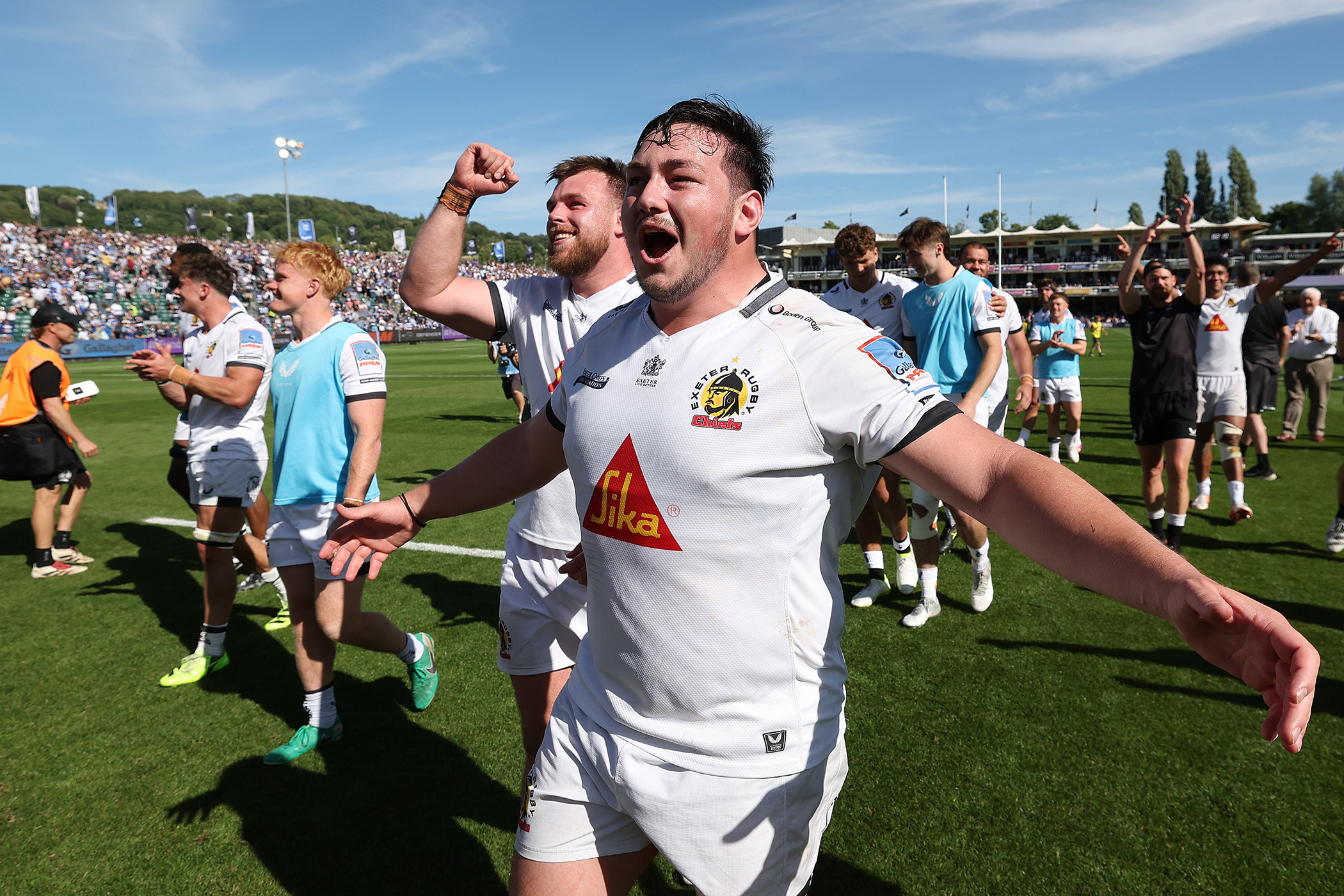
That’s why the impact made by so many of Exeter’s signings who arrived last summer, who ground through those beach sessions and integrated with a group coming off their worst-ever finish in the Prem since their 2010 promotion, has been extraordinary. To get a couple of season-defining contributions from new players would have been good. For that number to reach six players is remarkable.
Two of them, Andrea Zambonin and Tom Hooper, were named in the official Prem team of the season, but they could easily have been joined at scrum-half by Stephen Varney, who was so instantly effective that Exeter signed him up to a new long-term contract within three months.
Zambonin has led the Prem in lineout steals this season. Hooper was a highly-regarded signing, a Wallaby entering his prime, and has more than lived up to that high billing. Len Ikitau’s four-month absence with a fractured shoulder was unfortunate, but his return in April, taking Exeter’s attack up another level, was well timed. Add in Dweba and Tchumbadze and you have six success stories, all playing their part to get Exeter to the final, when most teams would be lucky to have a couple.
How did this happen? Baxter this week cited the environment those players arrived into, a squad bruised from last season’s disappointment but prepared to graft, with their pre-season plans ripped up and reassembled. And also there was a real attitude to back up any talk.
“You can use lots of words to describe things, but it’s actually doing the right things that matters,” Baxter explained. “And I think that’s one thing we really pushed this pre-season, which is in fact doing the right things, not about saying the right words. They’ve just all been defined by their actions.”
Newsletters
Choose the newsletters you want to receive
View more
For information about how The Observer protects your data, read our Privacy Policy
Exeter have also been a team, as witnessed at Bath, with a penchant for a comeback. Conceding in the first few minutes of the final due to a defensive mix-up between Olly Woodburn and Manny Feyi-Waboso? Barely a ripple on the Exeter waters compared to their 40-phase defensive effort to hold out Bath, or coming back from 33-7 down at Northampton to draw on the opening day. One unusual subplot here was the health of Alex Coles – who was also one the better players yesterday – given Steve Borthwick’s suggestion earlier this week that ideally the England captain Maro Itoje would be rested this summer if England’s other locks remained unscathed. With Coles surviving, Itoje presumably did not watch the final play out from a departure lounge, but he needs this break, mentally and physically, after a tough season.
As a contest, it matched the humidity; a claustrophobic, edgy affair dominated by defences forcing errors. The longer it went on, the more you backed Exeter, with those replacement props and a league-leading defence in terms of tries conceded. The side with nothing to lose nudged their noses into the lead for the first time after 52 minutes. Northampton’s stars, Smith, Tommy Freeman and Alex Mitchell, continually made errors and were lured into a street fight.
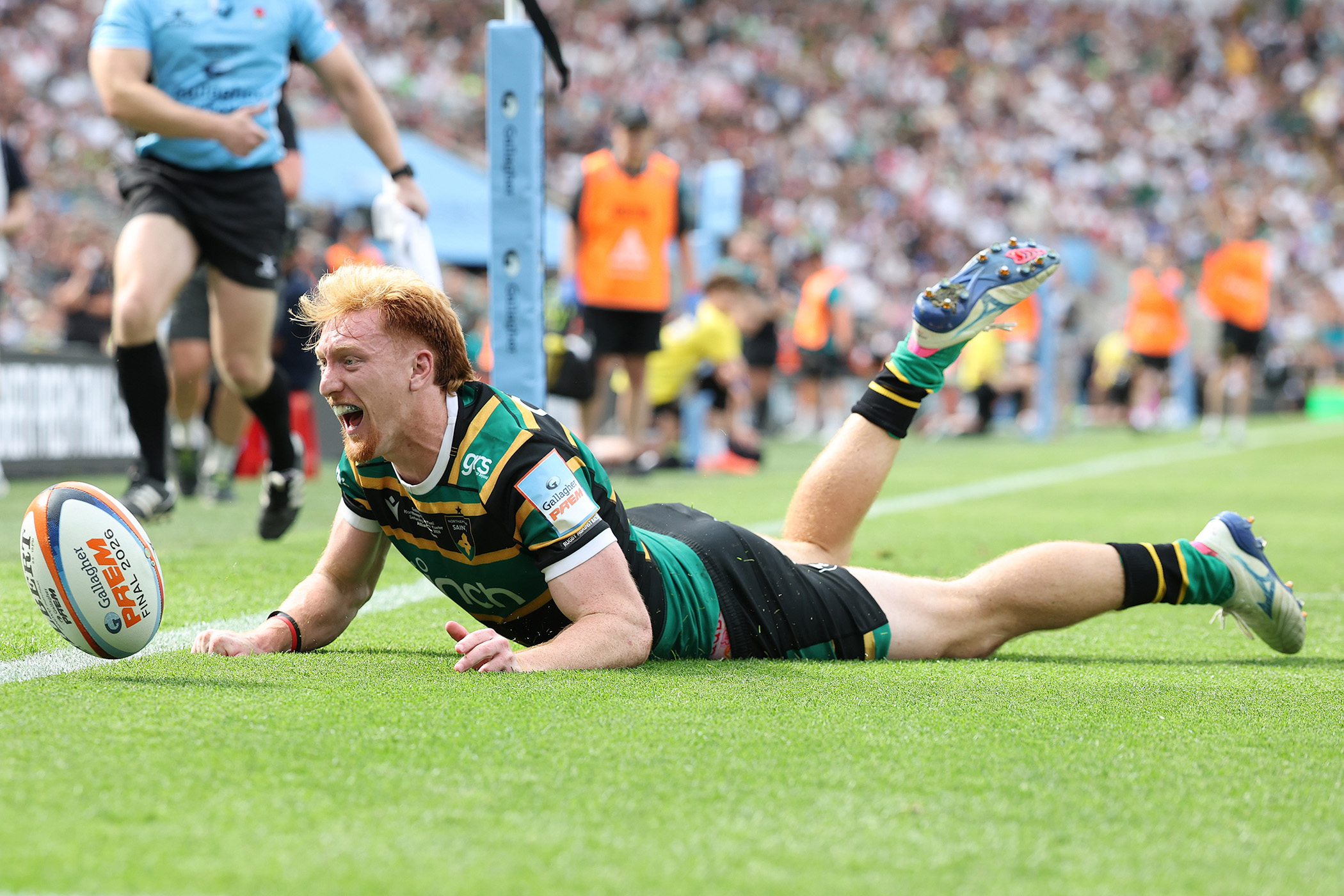
Here was a thought: what if Northampton started taking the right options? For once they executed multiple passes down the line before George Hendy squeezed into the corner. Then he was back in the same spot minutes later, latching on to Smith’s delicate grubber. That experience of a third major final in as many seasons began to shine through.The perfect farewell for their club captain George Furbank, a Prem champion for the second time on his final appearance. Last week Northampton showed a montage to the squad of Furbank going from season ticket holder to academy graduate to leading the club.
“A lot will be made of how he plays on the field as a rugby, but the thing I’ve been most impressed with is his resilience, leadership, how he’s been off the field. An exceptional person,” Northampton’s director of rugby Phil Dowson said after the match. Henry Pollock was named player of the match because of course he was, popping as ever with key moments. But he was one of a number of Northampton contenders who still have much ahead of them.
Northampton on the whole were not great. But when the clutch switch had to be flicked, they delivered. And Exeter, after a season to feel proud of, gave everything.
Photograph by David Rogers/Getty Images