

This article is part of the Rory Smith on Football newsletter – a guide to help understand what is happening on the pitch, off the pitch, and why all of it matters.
Throughout the tournament, Rory will be travelling across America, delivering daily commentary on the biggest World Cup ever direct to subscribers. His colleague George Simms will report alongside him. Never miss a newsletter, subscribe now here.
Maybe everything’s going to be OK. Maybe this time will be fun, won’t bore and wound. Maybe set-pieces are ethical when England do them, artful in a way, simply exploring and exploiting the sport’s full gamut. Under the AT&T’s greenhouse roof, Thomas Tuchel’s arch-pragmatism morphed into something eerily hopeful and romantic, logic and exacting planning breeding chaos and brio and beauty.
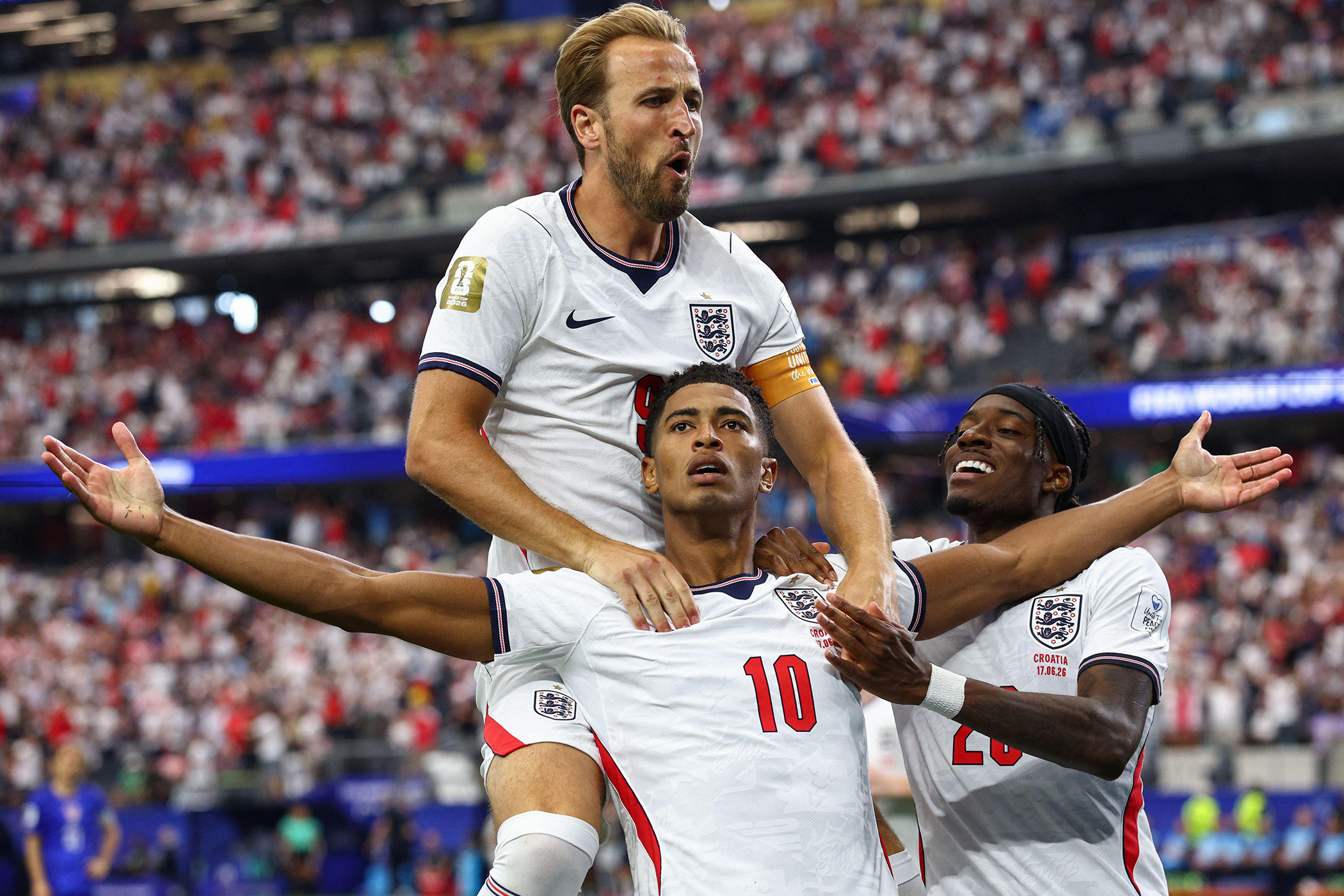
Post-match, Harry Kane stared into the adoring, writhing mass and grinned, glowing with potent relief. Morgan Rogers motioned to congratulate Jude Bellingham but couldn’t pierce his euphoric bubble, enraptured by 50,000 or so fans singing Hey Jude, which a generation of children might feasibly grow up believing was written for a player born 23 years after John Lennon’s assassination. Here is an athlete and human you want to write songs about, that makes you feel and express.
For all Tuchel has attempted to feign otherwise, this is Bellingham’s team, the spiritual centre and leader, titles he claims by divine right. At Euro 2024 there was a jarring psychological disconnect between Bellingham and everyone else, as though he functioned on some inaccessible plane, but this squad has become more like him, more confident and comfortable as he has mellowed and aged. This was the performance Tuchel has agonised for 18 months to incite, angry and proud at his supremacy being questioned, that Rogers might be considered something approaching an equal. His goal was an imposition of brute force and clinicality, of power and will, a statement that he can do this alone, actually. His celebration, even lacking the “who else?”, is an invitation to worship, arms outstretched like Christ the Redeemer demanding love and respect.
We still don’t really understand Bellingham, an athlete basically without comparison in English sport, a confidence so American in its directness and gaudiness it can confuse and grate. Four of his seven England goals have been scored at major tournaments, three of which have won their respective games – Serbia, Slovakia and now Croatia. He is the youngest European player to play in four major tournaments, possibly available for seven or eight more. He is everything to everyone in the right light, lacking obvious soft spots. Jordan Henderson once called Bellingham “an elite human being”, a smooth reflection of how it feels to exist in his orbit, the way light and drama trails him like a shadow. Time seems to bend towards him.
Every major tournament squad has a different vibe and character, fresh colours and vibes – this side is still yet to decide quite how to define itself. The first half was ambitious yet brittle, the patterns unclear and habits unformed, dependent on set pieces because passes were not quite landing, systems not wired right. Anthony Gordon repeatedly ran into space only to be ignored. Noni Madueke repeatedly received the ball in space and found inventive ways to waste it.
Croatia are, against a low bar, the best team England have faced under Tuchel in a competitive match. By half-time assistant coach Anthony Barry was telling ITV about “nervous energy” and “fearful patterns”, four words to summarise English football’s modern history, a rising sense that this was a new route to the same destination.
Yet Bellingham said “the team we want to be showed in the second half”, perhaps because he underpinned almost everything good. Gareth Southgate’s England created few chances but were monastically efficient – even in the two World Cup matches they scored six goals, they only had seven shots on target. Yet this was oddly wasteful – England’s second-most shots on target in a World Cup match since 1966 (12), their most big chances in the same period (seven). For all he claimed post-match that he knew Dominik Livaković often came off his line against stuttered run-ups, Kane’s first penalty attempt was uncharacteristically meek, fleetingly transported to his last 10 minutes in a World Cup.
At which point we have to talk about the bad thing, peer into the void. Croatia scored both of their shots on target in the first 70 minutes, neither of which should have come particularly close to happening. John Stones looked like he had started one Premier League match since last October, particularly in an unfamiliar left centre-back role. Reece James, somehow only his second major tournament appearance at 26, was uncharacteristically drawn towards the ball for Croatia’s second, leaving Petar Musa unmarked. The defence were not comfortable with each other, Tuchel’s decision not to start Marc Guehi the most reasonable criticism he should face. A better team – and there are plenty – would have found more space and time, probed harder.
Newsletters
Choose the newsletters you want to receive
View more
For information about how The Observer protects your data, read our Privacy Policy
For all Euro 2024 systematically beat it from our memories, we have been here before. England scored 12 goals in their first four games in Qatar and only conceded twice, their opener a whirling 6-2 win over Iran. Gareth Southgate did fun too, once, but perhaps not coupled with this unfettered optimism, the joy of starting afresh, of infinite possibilities. England should win their group now, on collision course for Mexico at the Azteca, a prospect that triggers tremors and sweaty palms in anyone who’s previously watched England in a World Cup, or Euros, or any football match.
Before this game Tuchel said he wouldn’t put the performance “in the bigger picture – just put it where it is”. And in isolation this was fun and relieving, a reminder of what English football can be, that talent does not have to limit, that you are supposed to enjoy this. Kane became just the second Englishman to score in three World Cups, after David Beckham, now joint-tenth all-time alongside Gary Lineker and Gabriel Batistuta (ten each). Do you know the last time England won 4-2 in a World Cup? 1966. Makes you think. Maybe everything’s going to be OK.
Photograph by Craig Mercer/ Alamy