
This article is part of the Rory Smith on Football newsletter – a guide to help understand what is happening on the pitch, off the pitch, and why all of it matters.
Throughout the tournament, Rory will be travelling across America, delivering daily commentary on the biggest World Cup ever direct to subscribers. Never miss a newsletter, subscribe now here.
Written deep in Fifa’s labyrinthine regulations sits the little-known Rule 14, subsection D. Its wording is designed to leave no wriggle room, no gray areas. It dictates: should a manager be fired during the Sacral Month of the Fifa World Cup™ – brought to you by Visa – they must immediately be replaced by Hervé Renard.
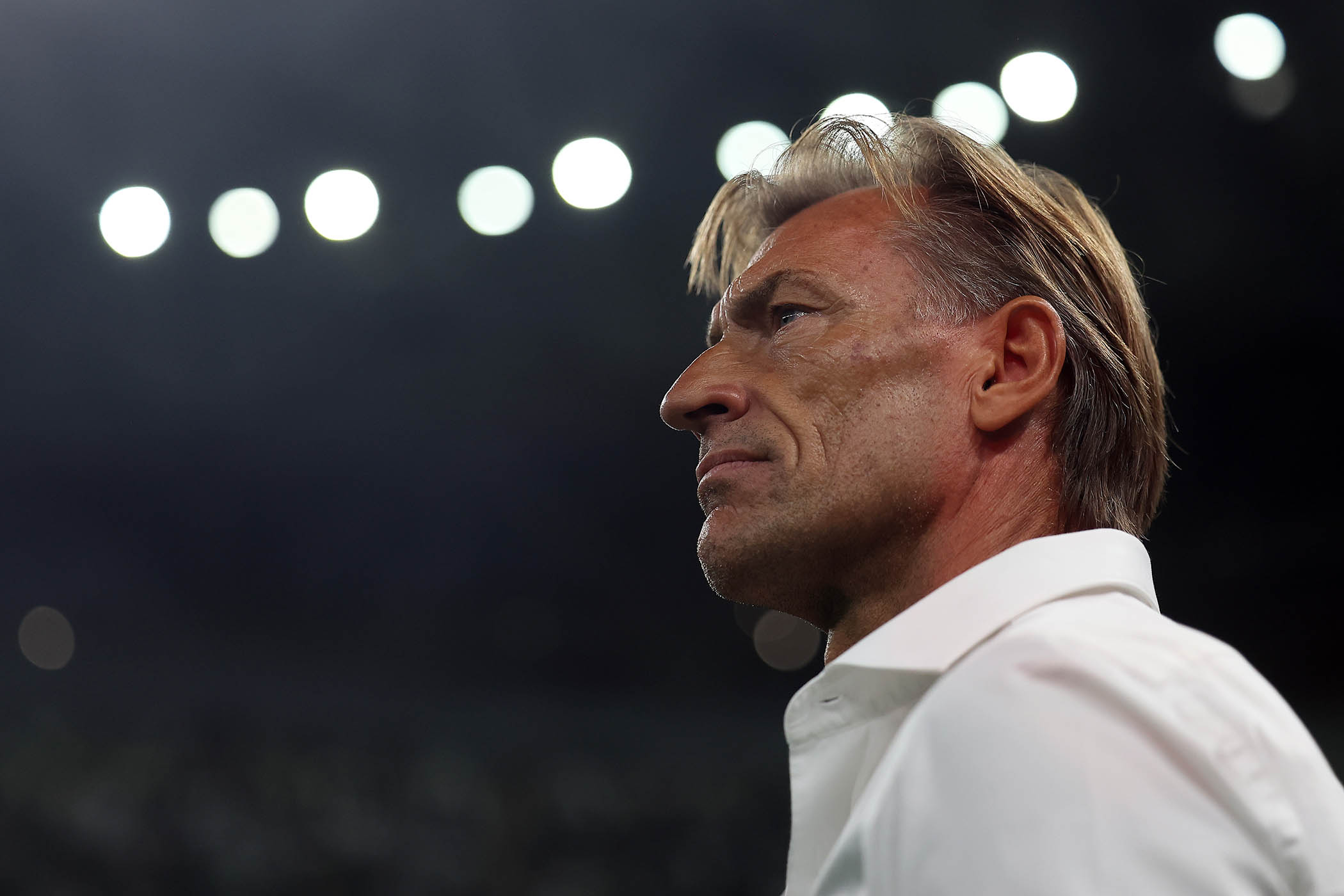
And so, when Tunisia decided the humiliation of being beaten 5-1 by a team coached by Graham Potter was too much to bear, they had no choice. They fired Sabri Lamouchi and sent up the signal of a louche fox wearing an open-necked shirt. Renard, one of the game’s great itinerant managers, picked up his velvet jacket and left whatever smoke-wreathed jazz club he was currently inhabiting.
The 53-year-old is one of those characters without whom the World Cup feels just slightly mundane. He is the paradigmatic gun for hire. His dress sense, his redolent of cigars, long nights on the verandah, muttered warnings that he is not to be crossed. This is his fourth World Cup, with as many different countries. He is the man to turn to in a crisis.
This time around, even his powers might be stretched. Tunisia’s capitulation in Monterrey was both complete and anomalous. As things stand, it is one of just two games that have resulted in what our American cousins call blowouts. The other, of course, was Germany’s thumping of Curaçao, and even that involved the smallest nation ever to compete at the finals drawing level at one point.
That aside, this tournament has been characterised by a pronounced competitive balance. The fear that a World Cup bloated to satiate Gianni Infantino’s need to boost Fifa’s revenues would be littered with mismatches has not really materialised. Very few of those teams regarded as cannon fodder for the genuine contenders have been swatted aside as easily as expected.
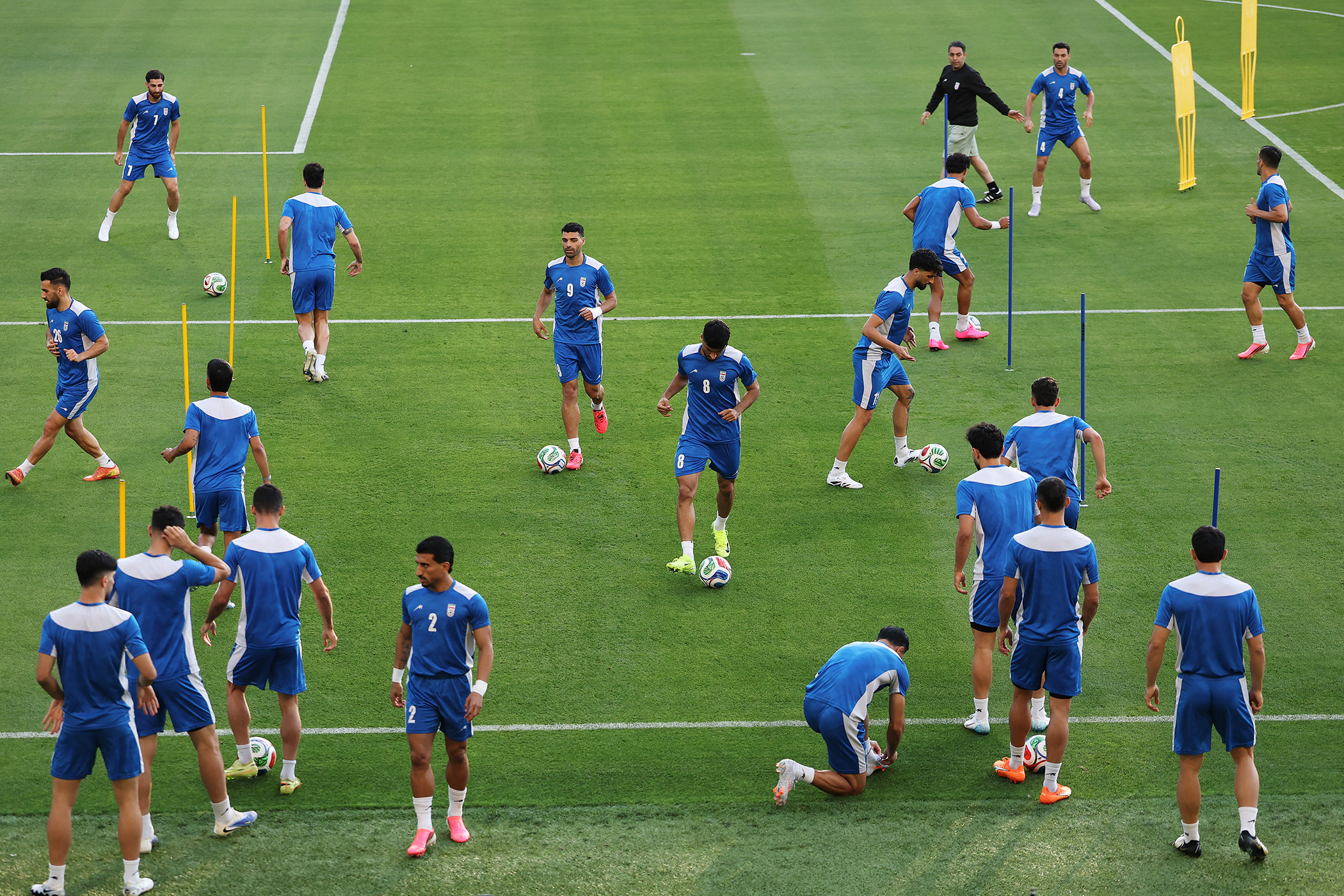
That culminated, of course, in Cape Verde’s remarkable draw with Spain, but there is enough evidence, now, to suggest it is a pattern. On Monday, the lowest-ranked side here, New Zealand, took a point against Iran, not long after Saudi Arabia had done the same against Uruguay and Egypt against Belgium. Even in defeat, Haiti did very little for Scotland’s heart health in Boston.
It is far too early, the sample size far too small, to be drawing sweeping conclusions about the shifting power balance of the world game. The overwhelming likelihood is that the tournament will revert to type soon enough, that the traditional powers will assert themselves, that might will – as it tends to do – make right.
But it’s important to remember that what we’ve seen over the last week has not happened in isolation. International football is not so much distinct from club football as downstream of it. And the dynamic that we have seen at the World Cup is one that has been playing out for some time in Europe’s major leagues.
Newsletters
Choose the newsletters you want to receive
View more
For information about how The Observer protects your data, read our Privacy Policy
We could, perhaps, think of it as the Brightonisation of the World Cup. Smaller teams may not have access to the very best talent, but they can narrow the gap to the game’s established giants by more judicious use of the resources they do have: coaching, conditioning, nutrition, scouting, data, tactical nous, strategic innovation. They can be more flexible, more inventive, less hidebound by tradition and expectation.
The net effect of that, of course, is that Brighton – as well as the other standard-bearers of the data-driven game, Brentford and Bournemouth – are now regular features of the top half of the Premier League. They do not qualify as big clubs by virtue of their history; they have become paragons of the game’s modernity.
In truth, that process has been running in parallel at international level for some time. Smaller nations might not have the star quality of the great powers – although it is possible to make the case that the world’s most in-form player is Georgian – but they can afford to run cutting-edge fitness and analysis and sports science departments.
They cannot, obviously, sign players in quite the same way as Brighton, scouring the globe for untapped potential, but they can make use of their diaspora populations. Cape Verde’s population might only be 490,000 or so. But there is a much deeper pool of players with origins in the country.
All of this has had the same impact on international football as the ingenuity of Brighton and the others has had on the Premier League. There has been a flattening, one that pre-dates this World Cup: the Faroe Islands beat Czechia in qualifying; theoretically larger teams, such as Italy and Serbia, have found their mistakes punished by the likes of Bosnia and Albania.
There is a ceiling to this, of course. Just as Bournemouth’s intelligence can only carry them so far in the Premier League, Japan’s will not result in winning the World Cup. As Norway proved against a plucky Iraq, quality generally wins out in the end. But that does not negate the fact that there are no minnows any more, not as we might once have thought of them. Nobody is here to make up the numbers. This World Cup might still be too long. But it is not, as far as we can see, too shallow.
Photograph by Mohamed Farag/Fifa via Getty Images