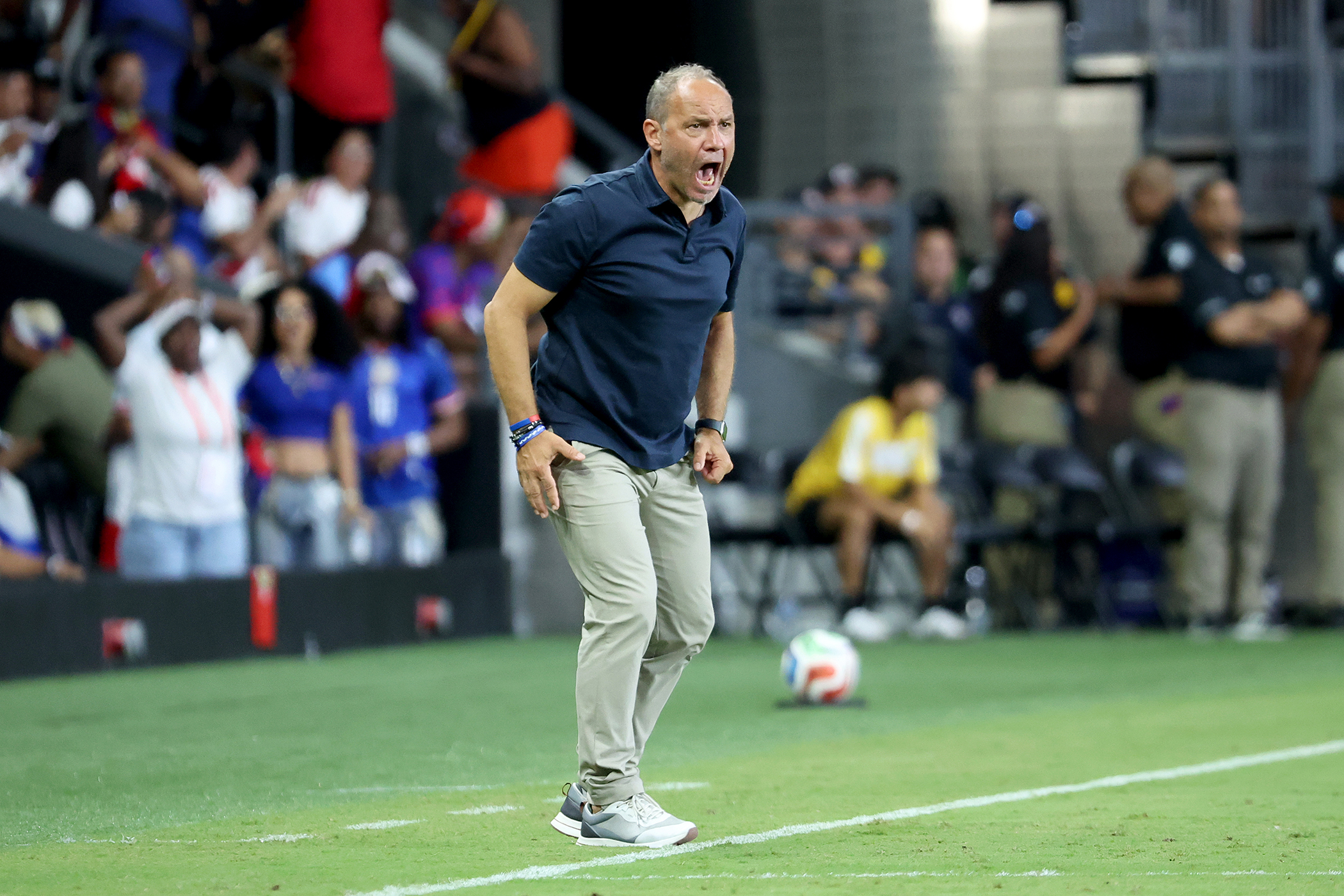


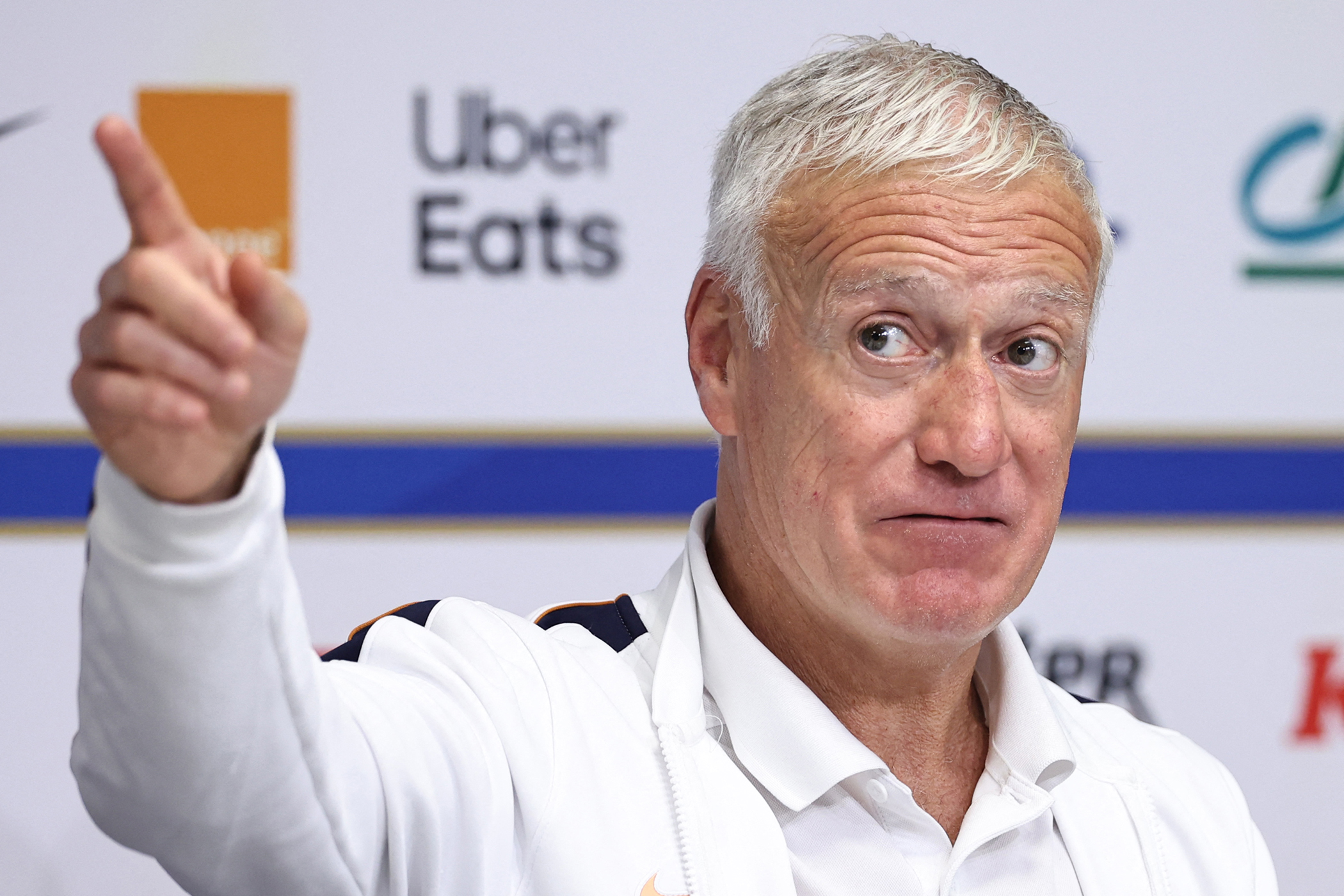
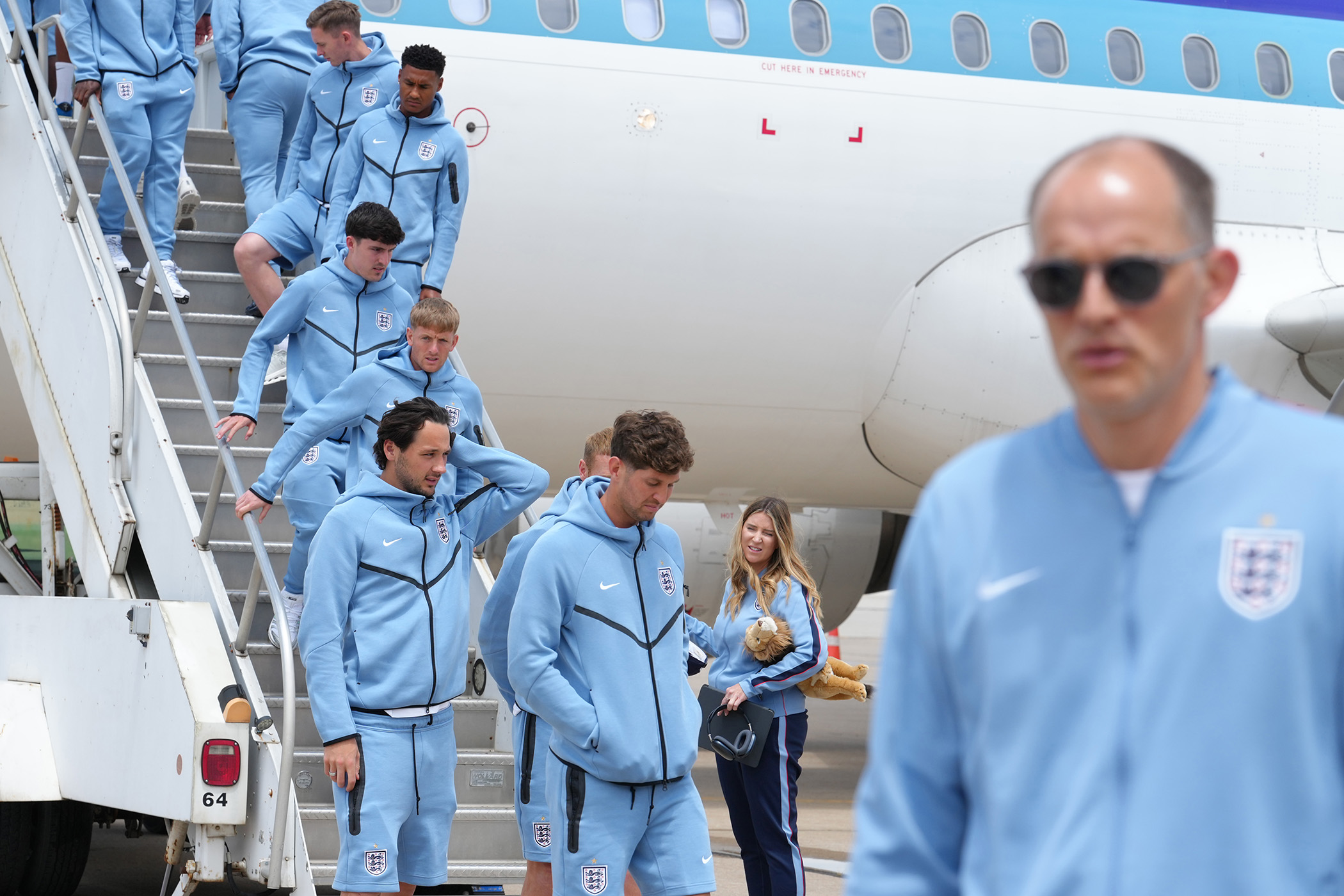
Sébastien Migné’s experience might have got him the interview, but it was not what landed him the job. He met most of the criteria that the committee tasked with appointing the next head coach of Haiti had set. He had been a head coach. He had worked at big tournaments. But what made him stand out was that, when they laid out the unique challenges of the role, he did not flinch.
Admittedly, the circumstances of the interview would have forewarned the 53-year-old Frenchman about the nature of the job. When he spoke to the Haitian Football Federation (FHF), in June 2024, it was over Zoom: the threat of violence in the country’s capital, Port-au-Prince, meant it was not safe for him to travel to meet them in person.
Even being willing to discuss it, then, cleared a significant hurdle. “He had worked in difficult situations before,” said Jérôme Salbert, a French-Guadeloupean agent who helped the FHF with its search. “He had managed Equatorial Guinea, been an assistant in Syria and the Democratic Republic of Congo. It did not worry him.”
Still, Haiti was an extreme case. Migné’s task would not just be to take the nation to the World Cup for the first time since 1974, but to do so from what is essentially an enforced exile. The security situation meant he would have to manage the country from afar while the team played all their qualifying games elsewhere. He took the job anyway.
Within two years, he had fulfilled his brief. Haiti qualified for the World Cup in November, and play their first game at the tournament for more than half a century against Scotland in Boston on Sunday. Migné is a hero in a country he has never visited.
The World Cup is never short of remarkable underdog stories, of course, but it is almost impossible to underestimate the scale of the achievement of Migné and his players merely in reaching the tournament.
The crisis in Haiti ranks as one of the world’s worst humanitarian disasters, according to the International Rescue Committee. Armed gangs control as much as 90% of Port-au-Prince. The government’s attempts to wrest control from the gangs using drones and airstrikes have led to thousands of civilian deaths.
The fighting has driven an estimated 1.4 million people, a tenth of the population, from their homes. More than six million are in need of humanitarian assistance; three-quarters say that they feel unsafe where they sleep. Food and water are scarce in the displacement camps where they have taken shelter.
“Wearing the Haiti shirt is a responsibility,” the striker Frantzdy Pierrot, whose career has taken him to clubs in France, Belgium, Greece and Turkey, told The Observer. “We want to show that despite everything the country is going through, there is still something positive to believe in. For many people, the national team represents hope.”
The details of Pierrot’s personal journey to the World Cup are all the more harrowing because they are not especially unusual. His mother went into labour with him on the side of the road, the 31-year-old said. The poverty that has afflicted the country for decades meant that she “could not afford transport to the hospital”.
Newsletters
Choose the newsletters you want to receive
View more
For information about how The Observer protects your data, read our Privacy Policy
Growing up, “I came from a place where we didn’t even have electricity. If you cooked food, you had to eat it straight away because there was no way to preserve it until the next day.” His mother often went hungry so that her children could eat.
“We played [football] barefoot in the streets, with no protection at all. Sometimes there was broken glass that would cut your feet. That happened to me a couple of times. I would spend days unable to walk properly. Other times, you would kick rocks so hard that your toenails would come off.
“Because we didn’t have a proper football, I would climb orange trees, pick the fruit and use it to play. If you kicked a rock and lost a toenail, you would cut an orange and place it on the wound as a way of treating the injury.” Pierrot was able to emigrate to Boston - near where Haiti’s game against Scotland will be held - as a child with his father, but is painfully aware that in Haiti there are still “many children living in the same reality” he experienced.
Migné has harnessed that sense in many of his players, the idea that they “see themselves as ambassadors for the country”, as he told the magazine SoFoot last year. “The national team’s results are one of the rare opportunities to bring positive attention to Haiti,” he said.
The majority of the Haiti squad either left the country as children, like Pierrot, or are second- or third-generation members of the country’s considerable diaspora community in North America and Europe. Only one still plays in Haiti. (It is home to one of just a handful of professional leagues in the Caribbean; Migné would like to tap into that resource more but has been stymied by the difficulty of obtaining visas.)
In recent years, the FHF has made a concerted effort to convince more players to commit their international allegiance to the land of their parents: the Sunderland forward Wilson Isidor, the Wolves winger Jean-Ricner Bellegarde and the former Arsenal youth player Yassine Fortuné, now playing in Portugal, have made their debuts recently.
Salbert has helped with that process, identifying candidates and pitching the idea to them; he has veered away from appealing to their emotions. “We talk to them about what being at the World Cup would mean for them in a sporting sense,” he said. Migné has said that the aim was not to “sell them a dream, but a project”.
That has created a disparate group: some of the players speak Haitian Creole, some English, and French is as close to a lingua franca as they get. What has bound them together is their shared identity. “If they have Haitian roots, they’re part of the family and we welcome them with open arms,” Pierrot said.
Thank you for reading. Tell us what you think by writing to letters@observer.co.uk
Photograph by Leonardo Fernandez/Getty Images