
When Arsenal played Tottenham last Sunday, it felt as if every Premier League fan had tuned in. The north London derby is, of course, a fixture steeped in history that many fans – neutral or not – enjoy watching, but this was about something else.
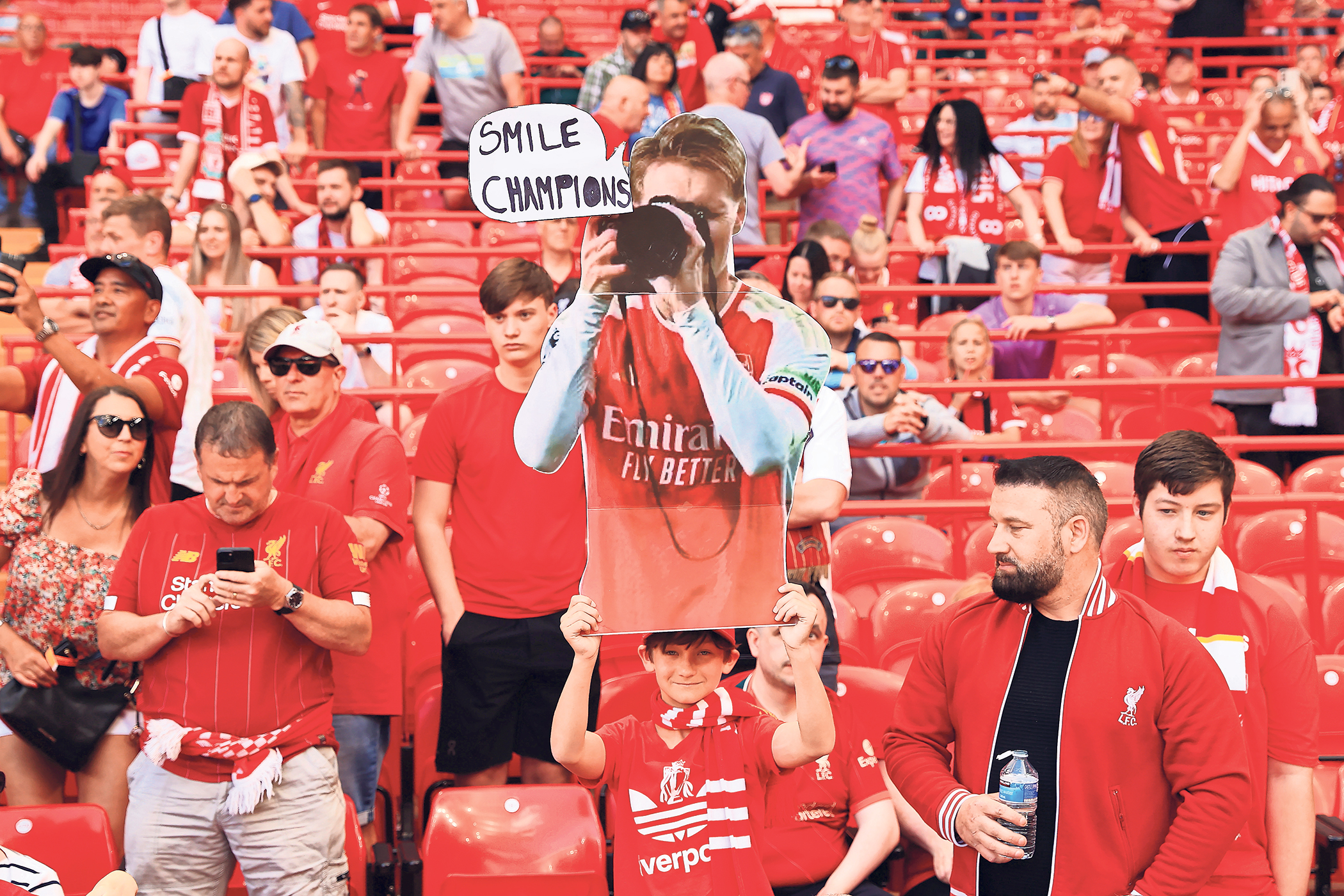
After consecutive Premier League draws with Brentford and Wolves, Arsenal’s gap above Manchester City at the top of the league was shrinking. Not that people are rooting for them to win the title. From now until the end of the season, Arsenal games will be appointment viewing for “hatewatchers”.
The concept of “hatewatching” is neither new nor limited to football. As a rough definition, it has typically involved consuming culture that you know you are going to dislike. When it comes to sport, it tends specifically to be about watching an athlete or a team you dislike in the hope that they lose.
Wanting a rival to lose is hardly a new idea. It can be neatly summarised by Sigmund Freud’s theory of the “narcissism of small differences”. This is the idea that communities are more likely to dislike those which have small perceived differences than those which are very different.
“Uncanny closeness can engender a feeling of wanting to distinguish oneself,” says Dr Matthew Butler, an expert in neuropsychiatry at King’s College London. “Minor differences become accentuated because they allow you to feel more secure in your identity. When you are different to someone it is evident that you are not the same. But when it’s closer, it’s more difficult, so you have to work harder to keep that identity separate.”
As a result, feelings of schadenfreude – joy at others’ hardship – and gluckschmerz – sadness at others’ success – are particularly common among football rivals. Research suggests that these feelings increase further if there is a perceived sense of inferiority to the rival. Former Tottenham head coach Ange Postecoglou landed on this exact conclusion when speaking on the Stick to Football podcast about fans wanting him to throw a match against Manchester City to prevent Arsenal from winning the title.
“That frustration comes not from Arsenal winning the league but again, Tottenham win nothing,” he said. “That’s the bigger problem. If we win, you’ll feel differently about that because you’ll see you’re competing on a level playing field.”
Evolutionary psychology suggests that we are hardwired to want our rivals to fail in order to keep hold of our own sense of self. But that does not explain why a unified hatewatch has become so popular. The answer for that, along with many modern phenomena, may lie in the internet.
The modern football fan lives in Plato’s cave, watching games as shadows on the wall
The modern football fan lives in Plato’s cave, watching games as shadows on the wall
The popularity of social media as a way of consuming football has only increased over the years. It has also given far more insight into the personalities of players and managers through the way that they represent themselves online.
“We can look at how players position themselves on social media and you can hate a player on a personal level,” says Dr Renan Petersen-Wagner, a senior lecturer in sports business and marketing at Leeds Beckett University. “It goes beyond the pitch. Social media fuels that by having that access.”
Newsletters
Choose the newsletters you want to receive
View more
For information about how The Observer protects your data, read our Privacy Policy
This extends to social media personalities, who have become figures in their own right. Whether it is the stars of Arsenal Fan TV or Mark Goldbridge streaming from his bedroom, consumption of football is increasingly mediated through the reactions of others to football. The modern football fan lives in Plato’s cave, watching games as shadows on the wall.
Our perceptions of fanbases coalesce around these images, and our enjoyment of their downfall increases when it is played out through their social media fan avatars.
“We’re biologically hardwired to pay attention to things that make us feel irritated or angry,” says Dr Butler. “Responding to that can be quite a rewarding experience, at least in the short term.”
This is then exacerbated through social media, as the algorithm throws up more content related to what has been responded to. Reactions become more extreme and hysterical as they are rewarded by the algorithm and served to more people. This solidifies our initial impressions of fanbases, which in the case of Arsenal, tend to be caricatured as entitled or above everyone else.
With the Premier League more unpredictable than ever before, the feelings of inferiority have also only strengthened, with teams like Chelsea or Manchester United, who have spent years expecting to compete at the top, spending seasons in mid-table mediocrity. It has been particularly rare this season for teams across the league to win back-to-back games. A sense of self as part of the “in-group” is even more threatened as a result, leading to enhanced focus on the successful “out-group”, in this case Arsenal.
So as you sit down to watch Arsenal play Chelsea on Sunday afternoon, perhaps with your fingers crossed for some kind of Chelsea result, just remember that you are not being a bitter hateful fan, but instead acting out your evolutionary imperative.
Photograph by Simon Stacpoole/Offside