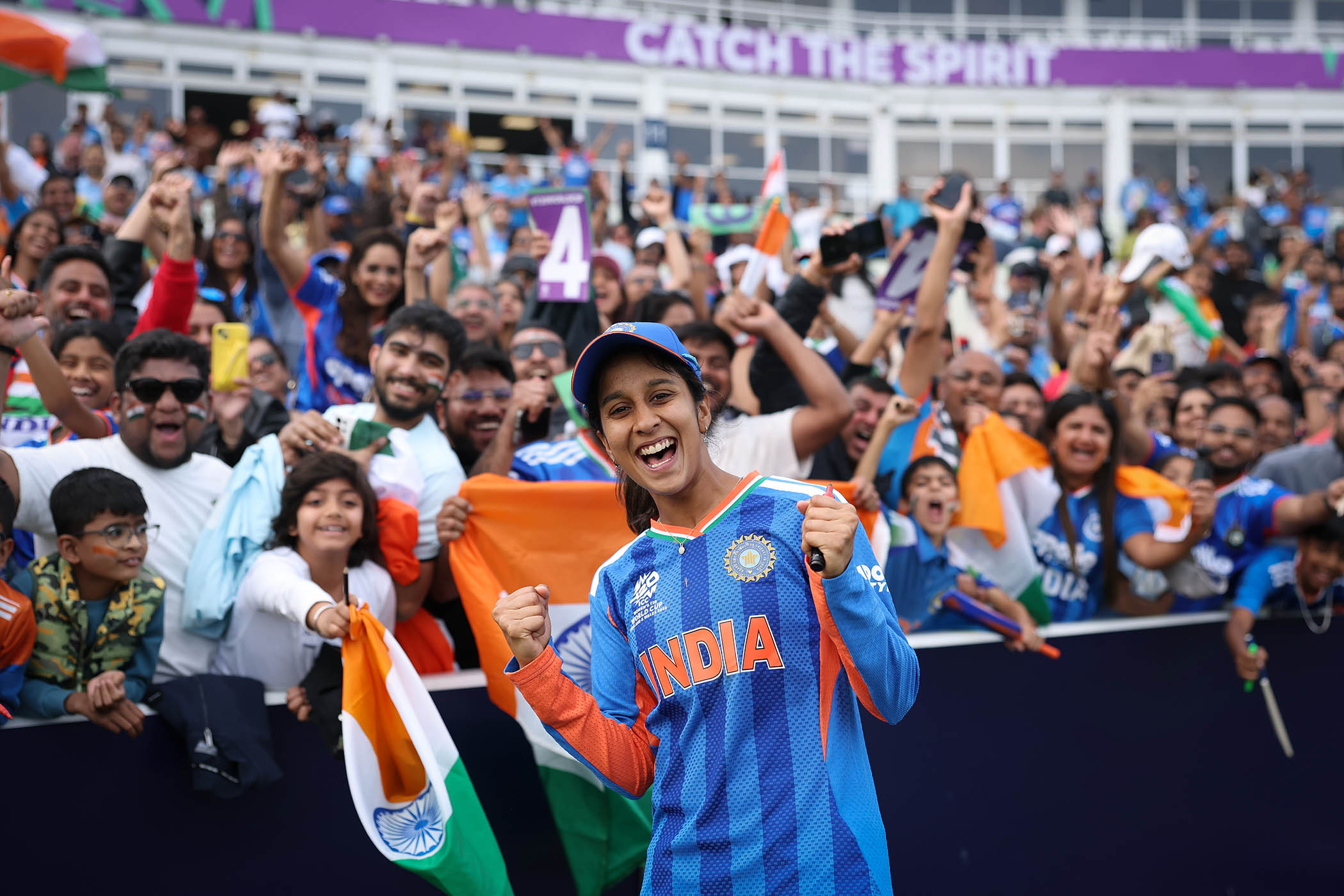


In Navi Mumbai, they had to wait more than two hours because of a rain delay. The anticipation was intense with 45,000 people preparing to watch a home cricket World Cup final. This was a nationalistic frenzy – they do not do these things by halves in India – and their women’s team had not reached this stage of a tournament in five years. They had never managed to win one.
That all came to an end last November as India beat South Africa in the 50-over tournament. It had been a long held anomaly, in a country that loves women’s cricket more than any other, that they had never won a World Cup in any format. Now the question is with that monkey off their backs, whether they can go on and deliver in England over the next month.
When it comes to T20 World Cups, it has been a particularly frustrating road for India. They have only made the final once, in 2020 in Australia, where they were soundly beaten by the hosts. In 2016, when they themselves hosted, they failed to make it out of the group due to a damaging DLS loss to Pakistan. Instead, a Hayley Matthews inspired West Indies team romped to one of women’s cricket’s most famous wins. They also failed to make it out of the group in 2024, with eventual winners New Zealand pipping them to the semi-finals alongside Australia.
A lot of the handwringing around international women’s cricket tends to centre on the gap between Australia, India and England, and the rest. Yet the actual story in recent years has been about how less well-funded teams have shown up their bigger and supposedly better rivals on the international stage. When South Africa lost to India in the 2025 ODI World Cup, it was a bitter moment because it was their third consecutive World Cup final that they had lost, having missed out to Australia and New Zealand in T20 finals in 2023 and 2024 too. For India and England in particular – Australia still wins a lot and wins well – the gap between what they should achieve and what they actually do is achingly stark.
To understand the pull of this India team, in England as much as in India, you only have to look at the attendance figures for the opening round of fixtures of this T20 Women’s World Cup. On Friday night, hosts England opened the tournament against Sri Lanka at Edgbaston in front of 14,865. On Sunday that attendance was eclipsed at the same ground, as India beat Pakistan. With a sell-out crowd of 18,814, it was the highest attendance at a group stage fixture in a Women’s World Cup ever. It is of course an historic fixture in a city with a thriving South Asian population, but it is still a staggering achievement to be significantly more popular than the home nation. Back home in India, 134 million people watched on television.
In Leeds on Wednesday, neither the fixture nor the timing offered quite the same allure with India playing the Netherlands at Headingley. Yet there was still a raucous group of fans ready to support. It is a unique benefit for India in terms of playing here in England, to get a slither of a home crowd. It is certainly something that was not afforded to Australia who destroyed the far better supported Bangladesh in the Wednesday morning game.
India cruised past Netherlands, setting their highest total in T20 Women’s World Cup history as they scored 209-5. Unsurprisingly, Netherlands were no match for the chase, as they were bowled out for 114. But India will know from past experience that their early tournament successes will mean little if they slip up further on in a group that contains South Africa, who they play on Sunday. The brutal World Cup format, where only two teams from each group progress to the semi-finals, means that India’s whole tournament could come down to that game, even though they still also have to play Australia on the final day of the group stage, at Lord’s. A number of warm-up match losses to England should serve as warning as to how prepared this team is for those higher level matches.
Many of the stars in this India team are coming into their prime age. Captain Harmanpreet Kaur is an outlier at 37, someone who seems like she would play cricket for India until someone pried the bat out of her hands. But for players like 29-year-old Smriti Mandhana and 28-year-old Deepti Sharma, this tournament represents a huge opportunity to show that among all the adulation that they justifiably receive, they can return in terms of performances. It felt telling that even as The Hundred has seen huge investment from Indian teams this summer, no Indian player in the women’s competition, because women’s players are permitted to participate unlike men’s, went for six figures. Yet on their day, this is a team who should surely be able to finally win.
Photograph by Alex Davidson/ICC via Getty Images
Newsletters
Choose the newsletters you want to receive
View more
For information about how The Observer protects your data, read our Privacy Policy